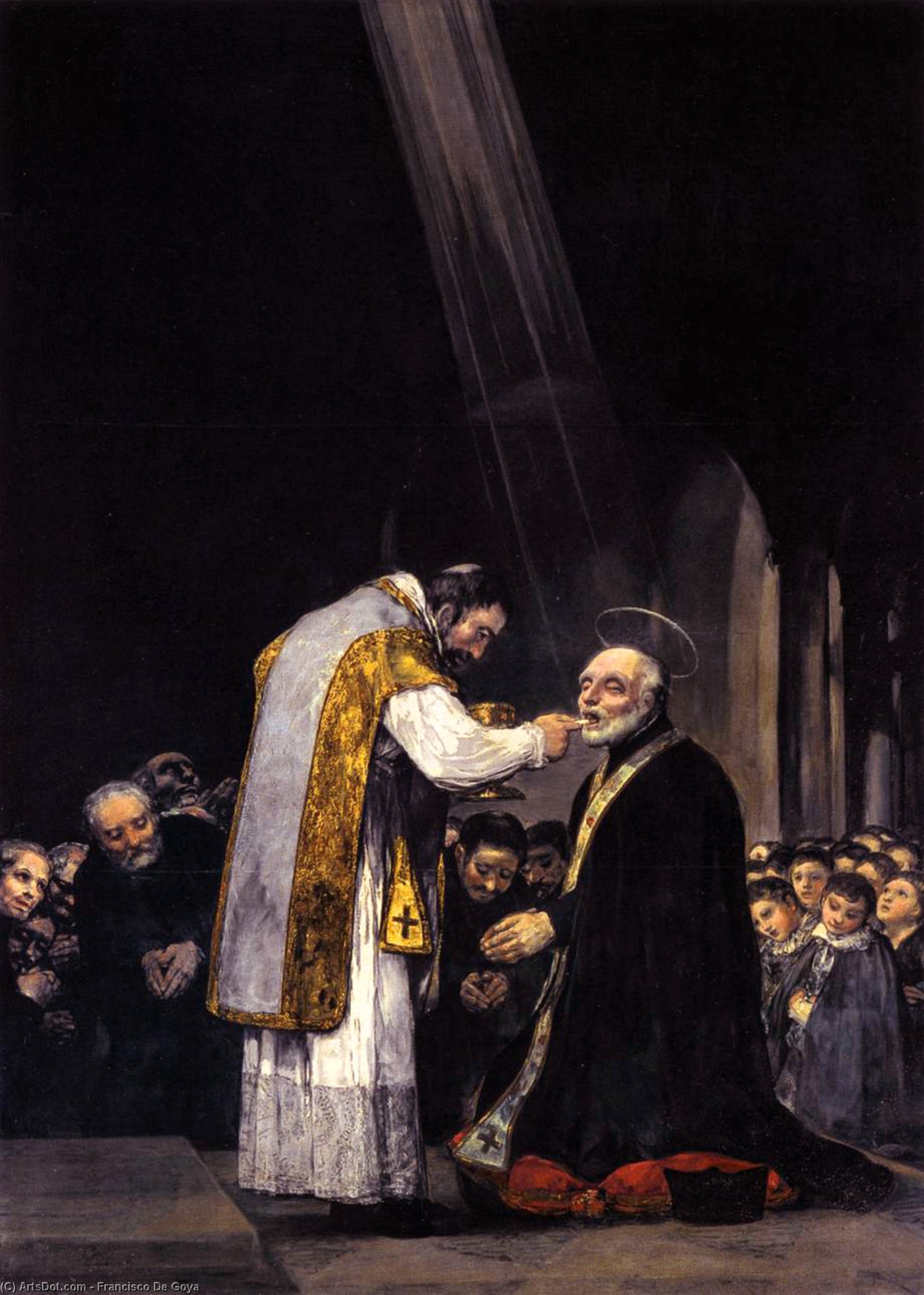
Francisco Goya’s haunting ‘The Last Communion of St. Joseph Calasanz,’ painted in 1819 during Spain's Romantic era, captures profound sorrow and spiritual devotion with expressive brushstrokes and muted colors—a timeless masterpiece to explore.
Francisco Goya (1746-1828): Explore the life & work of Spain's Romantic master. Known for portraits, dark satire & 'Disasters of War'. A pivotal figure in art history.
A Moment Frozen in Reverence: Analyzing Francisco Goya’s “The Last Communion of St. Joseph Calasanz”
“The Last Communion of St. Joseph Calasanz,” painted by Francisco José de Goya y Lucientes in 1819, transcends mere depiction; it embodies the very soul of Romanticism—a movement defined by its fervent embrace of emotion and its unflinching gaze upon the darker aspects of human experience. Measuring just 43 x 33 cm, this oil on panel work resides within the Musée Girodet in Montargis, France, a testament to Goya’s enduring influence on European art. More than simply capturing an ecclesiastical ritual, Goya's masterpiece delves into profound spiritual contemplation and offers a poignant glimpse into the anxieties of its time.
Historical Context: Spain Under Napoleon’s Shadow
The painting emerged during a period of immense upheaval in Spain – Napoleon’s invasion had shattered the Bourbon monarchy and plunged the nation into political turmoil. Amidst this instability, Goya served as court painter to Ferdinand VII, initially attempting to appease the monarch's desires for propagandistic art. However, disillusionment with the repressive regime fueled his artistic rebellion, culminating in works that confronted social injustice and psychological torment. “The Last Communion” reflects this broader shift toward introspection and emotional honesty—a departure from the idealized representations favored by earlier generations of artists. It speaks to a yearning for solace amidst chaos and underscores the importance of faith as a source of resilience.
Artistic Style: Romantic Expressionism
Goya’s stylistic choices powerfully communicate his artistic vision. Characteristic of Romantic Expressionism, the painting abandons meticulous detail in favor of loose brushstrokes that convey palpable emotion. The artist eschews linear perspective, opting instead for a flattened composition that emphasizes the immediacy of the scene and draws viewers into its emotional core. This deliberate disregard for convention aligns perfectly with the movement’s ethos—a rejection of academic formalism in favor of subjective experience. Goya's masterful use of oil paint on panel allows for remarkable textural richness, capturing subtle nuances of light and shadow that heighten the painting’s dramatic impact.
Technique: Layers of Color and Texture
The artist meticulously builds up layers of pigment—primarily muted browns, creams, and blacks—creating a tapestry of tonal variations that contribute to the overall atmosphere of solemnity. Touches of gold adorn the vestments worn by one figure, symbolizing divine grace and highlighting the sacred nature of the communion ritual. Goya’s brushwork is deliberately uneven, conveying movement and dynamism within the stillness of the tableau. The artist skillfully blends colors to achieve subtle gradations of tone, creating a luminous effect that illuminates the faces of the participants and underscores their spiritual devotion.
Symbolism and Emotional Impact: Faith Amidst Darkness
Beyond its formal qualities, “The Last Communion” resonates with profound symbolic significance. The central figures—St. Joseph Calasanz kneeling before receiving communion—represent humanity’s quest for spiritual nourishment during times of hardship. The gesture of the attendant placing his hand on St. Joseph's head signifies paternal care and divine blessing. The darkened background serves as a visual metaphor for the anxieties and uncertainties of the Napoleonic era, emphasizing the importance of faith as a beacon of hope amidst darkness. Ultimately, Goya’s painting compels viewers to confront questions of morality, compassion, and the enduring power of spiritual belief—a legacy that continues to inspire admiration and contemplation centuries later.