Francisco de Goya’s Enigmatic Milkmaid: A Portrait of Quietude and Mystery
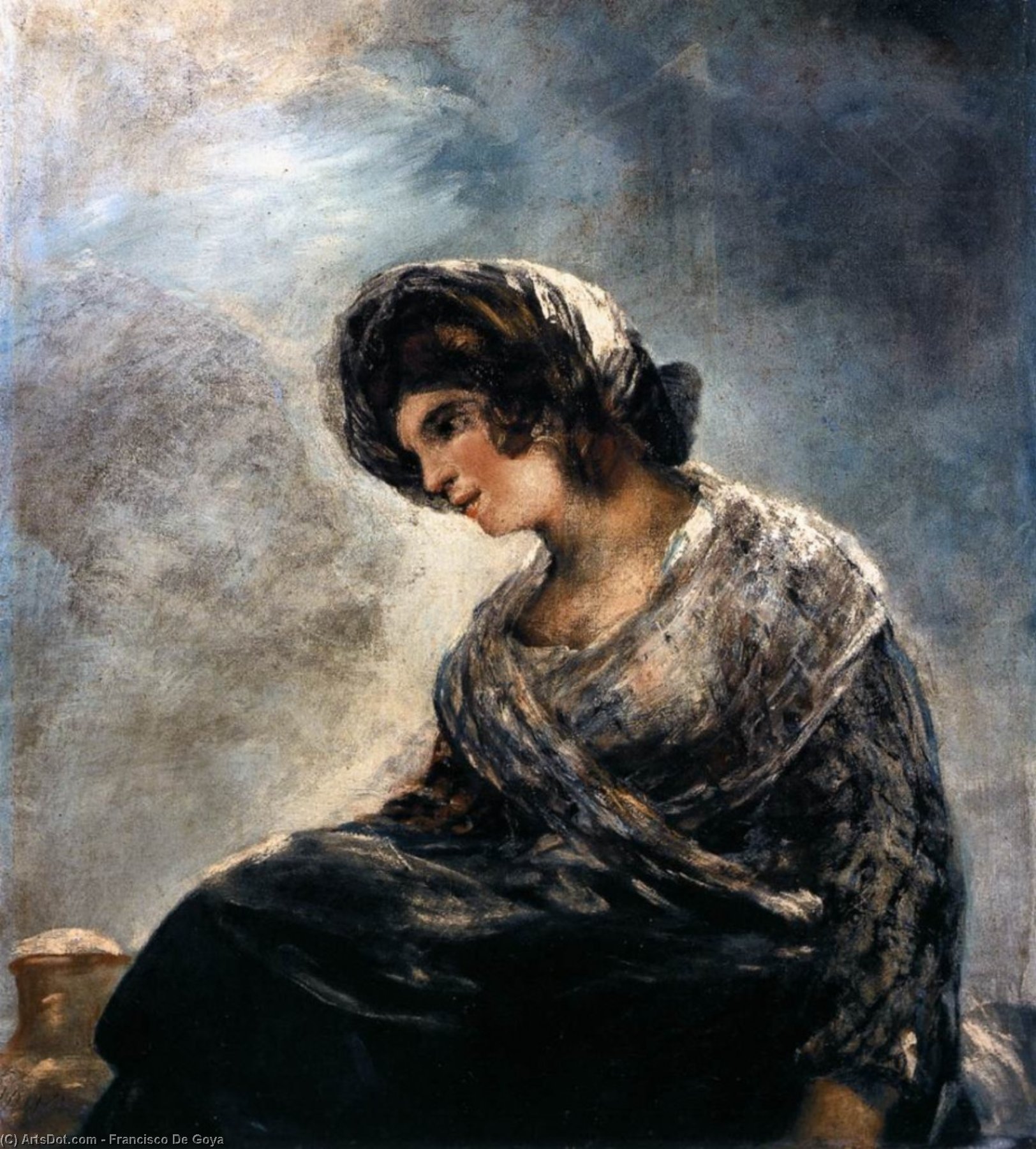
The “Milkmaid of Bordeaux,” painted between 1825 and 1827 by the Spanish master Francisco de Goya, is far more than a simple depiction of rural life. It's a profound meditation on solitude, introspection, and the subtle complexities of human emotion – a cornerstone of Goya’s later, intensely personal artistic vision. Often shrouded in debate regarding its authenticity (some scholars question whether it was truly painted by Goya himself), this captivating oil-on-canvas work remains a powerfully evocative piece, offering a glimpse into the artist's evolving style and his fascination with the ordinary.
The painting immediately draws the eye to its subject: a young woman seated beneath a cloudy sky, her gaze lowered as if lost in deep thought. Her attire – a simple dress, shawl, and a small jug likely containing milk – speaks of a modest existence, yet there’s an undeniable dignity about her posture and expression. Goya masterfully captures the interplay of light and shadow, creating a sense of atmospheric depth that elevates the scene beyond a mere snapshot of daily life. The muted palette—dominated by earthy tones and soft blues—contributes to the painting's overall mood of quiet contemplation.
A Romantic Revelation: Style and Technique
“The Milkmaid of Bordeaux” is firmly rooted in the Romantic movement, a period characterized by an emphasis on emotion, individualism, and the sublime. Goya’s brushwork is loose and expressive, eschewing the rigid formality of earlier academic painting styles. Notice how he uses rapid, gestural strokes to convey the texture of the fabric and the fluidity of the woman's form. This technique, combined with his masterful use of chiaroscuro (the dramatic contrast between light and dark), creates a sense of immediacy and psychological depth.
Goya’s innovative approach to composition is also noteworthy. The placement of the figure within the frame—slightly off-center and partially obscured by the background—draws the viewer in, inviting them to share in her private moment of reflection. The cloudy sky, rendered with a hazy, almost dreamlike quality, adds to the painting’s sense of mystery and emotional resonance. It's not just a backdrop; it seems to mirror the woman’s internal state.
Historical Context: Goya at a Crossroads
To understand “The Milkmaid of Bordeaux,” we must consider Francisco de Goya’s life during this period. He had served as court painter for decades, producing portraits of royalty and nobility – works that reflected the grandeur and formality of the Spanish court. However, in his later years, Goya grew increasingly disillusioned with the political turmoil and social injustices he witnessed. He retreated from public life, suffering a debilitating illness that left him deaf and largely isolated.
This period marked a significant shift in Goya’s artistic focus. His paintings became darker, more introspective, and often explored themes of human suffering, mortality, and the horrors of war. “The Milkmaid of Bordeaux” can be seen as a transitional work, bridging the gap between his earlier courtly commissions and his later, intensely personal explorations. It reflects a growing awareness of the fragility of life and the complexities of the human condition.
Symbolism and Emotional Resonance
While Goya rarely offered explicit explanations for his paintings, art historians have proposed various interpretations of “The Milkmaid of Bordeaux.” Some believe that the woman’s downward gaze represents a sense of melancholy or resignation. Others suggest that she embodies the quiet dignity of rural life—a stark contrast to the superficiality and corruption of the court. The jug of milk itself could symbolize nourishment, both physical and spiritual.
Ultimately, the painting's power lies in its ambiguity. It doesn’t offer easy answers or definitive interpretations; instead, it invites viewers to contemplate the woman’s inner world and draw their own conclusions. The image resonates with a universal sense of loneliness, introspection, and the enduring search for meaning – qualities that continue to captivate audiences centuries after its creation.
Experience Goya's Masterpiece: High-Quality Reproductions Available
For those seeking to bring the beauty and emotional depth of “The Milkmaid of Bordeaux” into their homes or offices, ArtsDot offers meticulously crafted, hand-painted oil painting reproductions. Each reproduction is created by skilled artisans who painstakingly recreate Goya’s techniques and color palette, ensuring that you receive a faithful representation of this iconic masterpiece. Explore our collection today and own a piece of art history.
Further Exploration:
- Museo del Prado: Discover more about this prestigious Spanish museum and its collection of Goya’s works.
- Francisco De Goya: Delve deeper into the life and legacy of this influential Spanish artist.