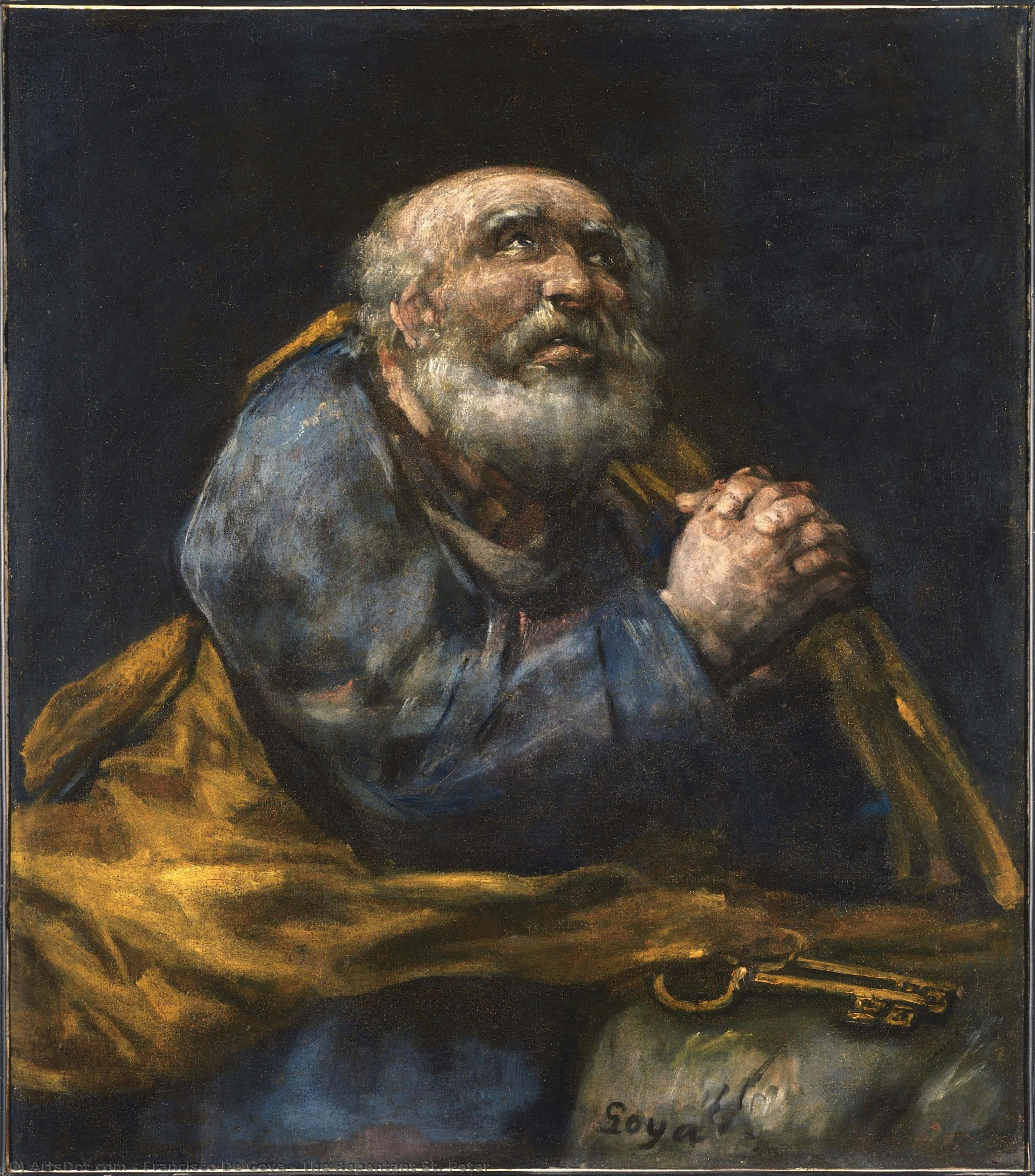
A Portrait of Penance: Goya’s ‘The Repentant Saint Peter’
Francisco José de Goya's “The Repentant Saint Peter,” painted circa 1824, is more than a simple depiction of a biblical scene; it’s a raw and profoundly moving exploration of human vulnerability and spiritual struggle. Created during a turbulent period in Goya’s life – marked by political upheaval, personal tragedy, and a growing disillusionment with the established order – this work embodies the Romantic sensibility's fascination with emotion, suffering, and the darker aspects of the human condition. The painting’s power resides not just in its subject matter but in Goya’s masterful manipulation of light, shadow, and gesture to convey an overwhelming sense of anguish.
- Subject Matter: The scene depicts Saint Peter, moments after his betrayal, kneeling in profound remorse. He is not presented as a heroic figure, but rather as a man consumed by shame and regret – a vulnerability rarely depicted with such unflinching honesty in religious art of the time.
- Style & Technique: Goya’s brushwork is loose and expressive, characteristic of his later Romantic style. The use of impasto—thickly applied paint—adds to the textural quality of the work, emphasizing the physicality of Peter's suffering. Notice the stark contrast between the illuminated areas of his face and hands, and the deep shadows that engulf the rest of the composition – a technique employed to heighten the drama and focus attention on the central figure.
Historical Context & The Shadow of Napoleon
“The Repentant Saint Peter” was painted in Bordeaux shortly after Goya’s departure from Spain, following his experiences serving the French occupation under Napoleon. This period profoundly shaped his artistic vision. Witnessing the devastation and moral decay brought about by war fueled a deep sense of pessimism within him, reflected powerfully in his later works. The painting can be interpreted as a commentary on the corruption and betrayal that permeated European society at the time – not just within the Church but also amongst political leaders.
- Political Undertones: Some scholars suggest the keys depicted in the background represent the loss of power and authority, mirroring Goya’s own disillusionment with the French monarchy.
- Romanticism's Embrace of Suffering: The work aligns perfectly with the burgeoning Romantic movement’s emphasis on emotion, individualism, and the sublime – a fascination with intense experiences, both beautiful and terrifying.
Symbolism & Emotional Resonance
Beyond its biblical narrative, “The Repentant Saint Peter” is rich in symbolic meaning. The posture of kneeling represents humility and submission to divine judgment. The yellow cloth draped over the figure could symbolize repentance or mourning. Most significantly, Goya’s portrayal of Peter's face – contorted with pain, his eyes filled with despair – transcends mere religious iconography; it speaks to the universal human experience of guilt, regret, and the struggle for redemption. The artist doesn’t offer a comforting resolution but instead confronts us with the uncomfortable truth of human fallibility.
Duncan Phillips famously described this piece as a “stepping stone” between the Old Masters and the great Moderns, highlighting Goya's innovative approach to portraying emotion and psychological depth.
Bringing ‘The Repentant Saint Peter’ into Your Space
A hand-painted reproduction of “The Repentant Saint Peter” offers a unique opportunity to experience the power and emotional intensity of Goya’s masterpiece in your own home or office. ArtsDot.com provides meticulously crafted reproductions using archival quality materials, ensuring that this iconic work will retain its beauty and impact for generations to come. Consider how this evocative image can serve as a focal point – a reminder of the complexities of human nature and the enduring power of repentance.