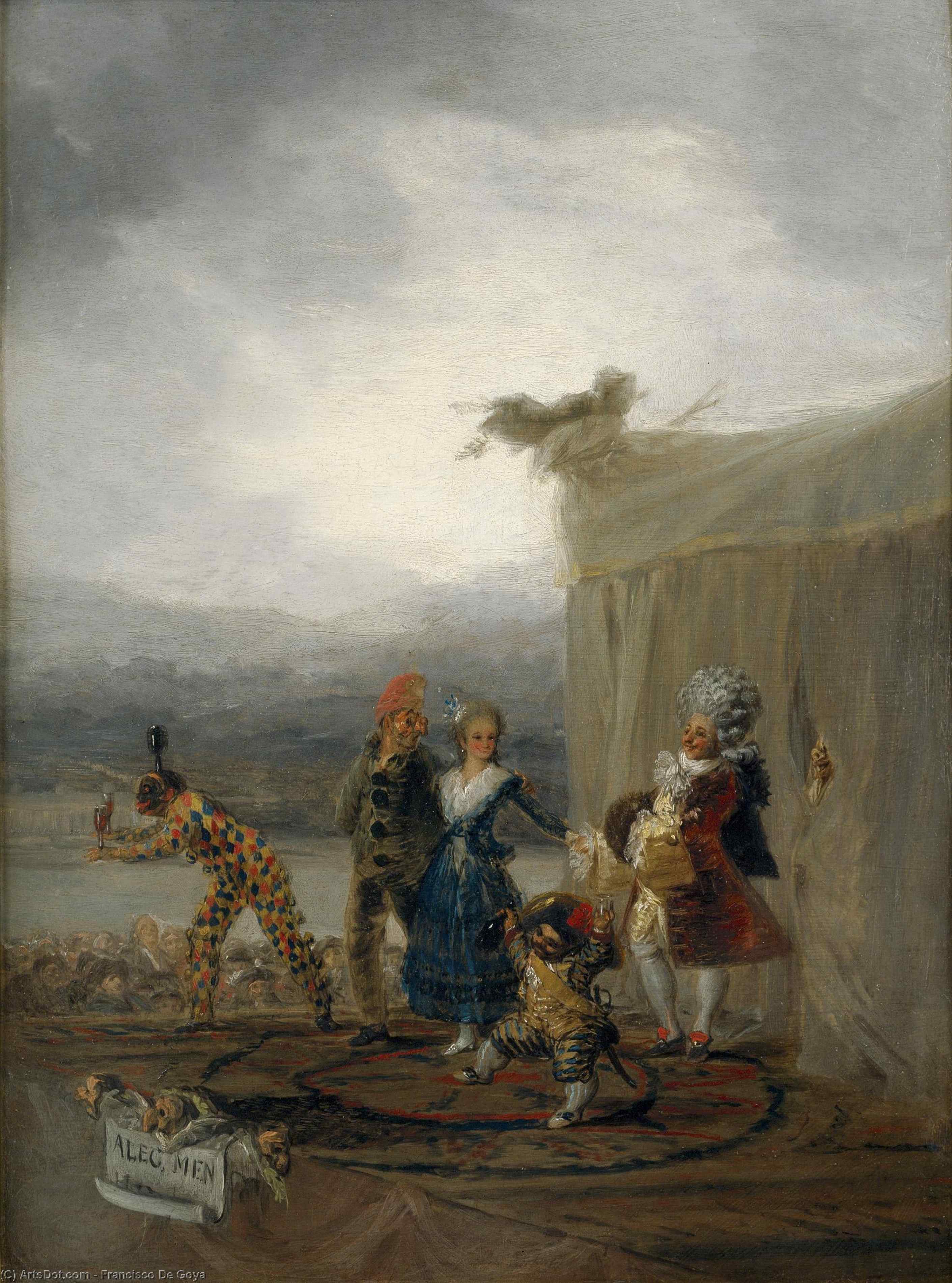
A Glimpse into a World of Intrigue: Francisco Goya’s *The Strolling Players*
Francisco de Goya's *The Strolling Players*, painted in 1793, is far more than a simple depiction of itinerant performers; it’s a subtly unsettling commentary on Spanish society and the complexities of human interaction. This captivating oil on canvas (43 x 32 cm) offers a window into a world brimming with both charm and veiled deception, characteristic of Goya's evolving artistic vision during the Romantic period.
Decoding the Scene: Subject & Composition
The painting presents a lively gathering centered around what appears to be a traveling theatrical troupe. Figures are arranged in a dynamic composition – some closely engaged, others receding into a hazy background featuring a river and distant hills. A man adorned in an elaborate powdered wig dominates the scene, seemingly orchestrating events with a knowing glance. He interacts with a woman and a small dog, creating a focal point of potential manipulation. The presence of a bird perched atop the tent adds a whimsical touch, yet doesn’t entirely dispel the underlying sense of unease. Goya masterfully uses this arrangement to draw the viewer's eye through the scene, inviting speculation about the relationships and motivations at play.
Goya’s Artistic Style & Technique
*The Strolling Players* exemplifies Goya’s transition towards a more expressive and personal style. While rooted in the Rococo tradition of his earlier work, it foreshadows the emotional intensity of Romanticism. His brushwork is loose and fluid, creating rich textures and atmospheric effects. The color palette, though relatively subdued, is skillfully employed to create depth and highlight key figures. Goya’s technique prioritizes capturing a *feeling* rather than meticulous detail – a hallmark of his mature style. This approach is reminiscent of other works from this period, such as *Vagabonds Resting in a Cave* and *The Forge*, where he similarly focuses on the human condition and everyday life.
Historical Context & Social Commentary
Created during a turbulent period in Spanish history – just before the French Revolution and Napoleonic Wars – *The Strolling Players* reflects a growing sense of social unrest and skepticism towards the aristocracy. Traveling players were often viewed with suspicion, associated with both entertainment and potential disruption. Goya subtly critiques the superficiality and moral ambiguity of the upper classes through this scene. The painting is part of a series focusing on everyday life, demonstrating his interest in portraying the realities faced by ordinary people while simultaneously offering veiled commentary on societal norms.
Symbolism & Emotional Impact
The circular arrangement of figures can be interpreted as symbolic of a trap or game, hinting at hidden agendas and manipulative behavior. The man’s actions suggest deceit, while the dog's presence might symbolize loyalty or vulnerability. Beyond these specific elements, the painting evokes a broader sense of transience and illusion – the fleeting nature of entertainment and the masks people wear in social interactions. *The Strolling Players* doesn’t offer easy answers; instead, it invites viewers to contemplate the complexities of human relationships and the darker undercurrents beneath seemingly cheerful facades.
Goya's Legacy & Collecting Today
Francisco de Goya remains one of Spain’s most important and influential artists. His work bridges the gap between the Old Masters and modern art, paving the way for future generations of painters and printmakers. *The Strolling Players* is a prime example of his genius – a captivating blend of technical skill, social commentary, and emotional depth.
For collectors and interior designers, a high-quality reproduction of this painting offers a sophisticated touch, adding a layer of historical intrigue and artistic refinement to any space. It’s a piece that sparks conversation and invites contemplation, embodying the enduring power of Goya's vision.
- Explore more of Francisco de Goya’s masterpieces.
- Discover the rich cultural heritage of Spain through its art.
- Consider how this painting might complement a classic or contemporary interior design scheme.