A Masterpiece of Romanticism
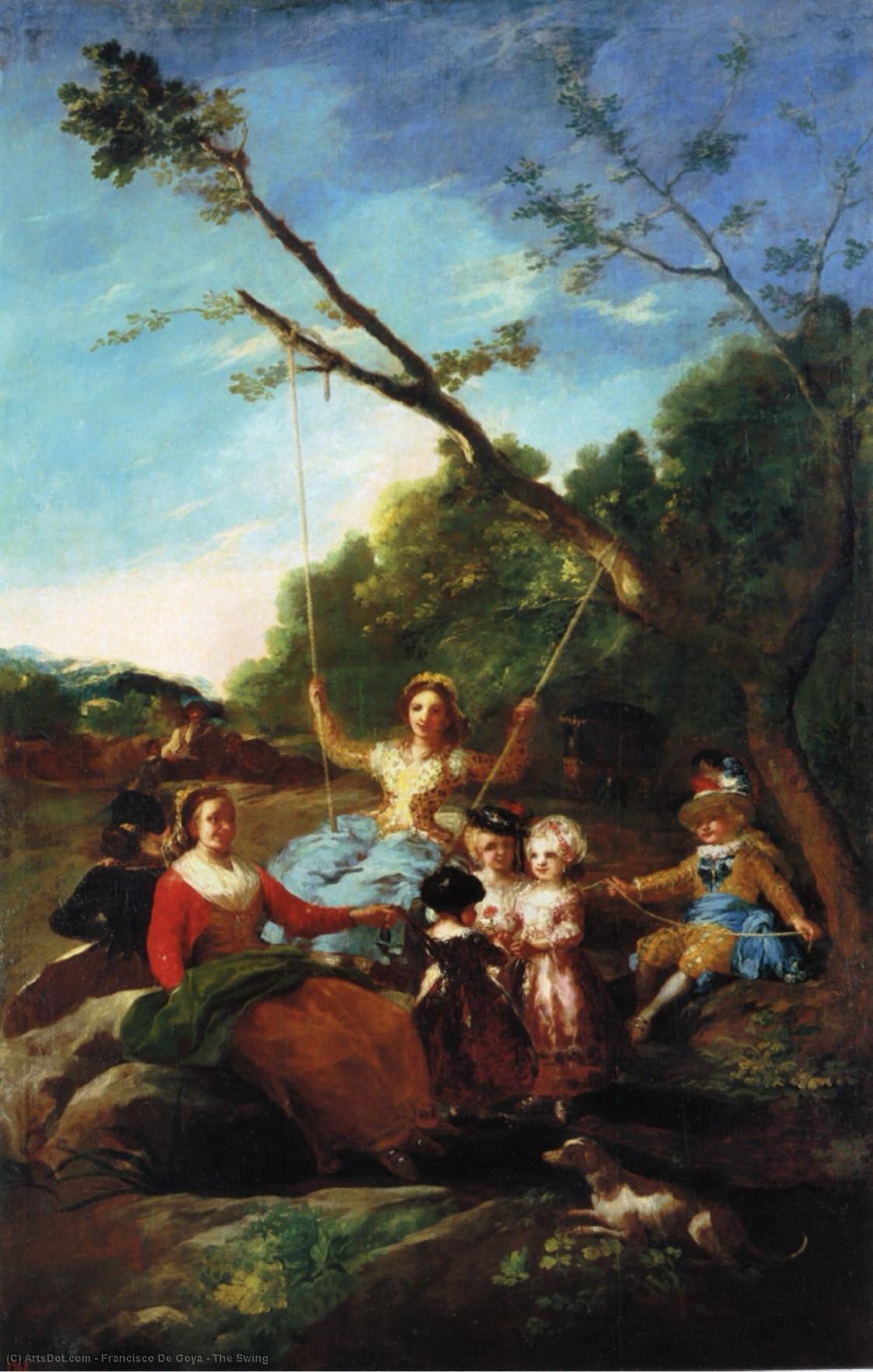
The Swing, a captivating oil on canvas painting by the renowned Spanish artist
Francisco De Goya, is a quintessential representation of the Romantic era. Created in 1779, this artwork measures 260 x 165 cm and is characterized by its dreamy, ethereal quality, which has fascinated art enthusiasts for centuries.
The Artistic Vision
Goya's vision in
The Swing is a blend of the mundane and the mystical. The painting depicts a serene scene where a woman sits on a horse surrounded by her children, while other figures are seen standing or lying down in the background. A dog is prominently placed near the bottom right corner, adding to the sense of domestic tranquility. The overall atmosphere exudes warmth and familial love, inviting the viewer into a peaceful world.
Symbolism and Interpretation
The painting's symbolism is open to interpretation, much like many of Goya's works. While some see it as a simple family gathering, others have interpreted it as a representation of Adam and Eve with their children, symbolizing the innocence and purity of human existence. The presence of the horse and dog may signify protection and loyalty. The chair in the middle of the scene could indicate that this is an outdoor setting, further emphasizing the connection between nature and humanity.
Artistic Technique
Goya's use of oil on canvas allows for a rich, textured quality that enhances the emotional depth of the painting. His brushstrokes are bold yet delicate, capturing the subtleties of light and shadow. The color palette is muted, with earthy tones dominating the scene, which adds to the sense of natural harmony.
Legacy and Preservation
The Swing is part of a larger collection of Goya's works that have been preserved and admired for their artistic and historical significance. The
Museo del Prado in Madrid, Spain, houses many of his notable pieces, including
The Colossus,
The Drunk Mason, and Summer. These works are a testament to Goya's innovative style and his influence on the development of Romanticism in art.
Conclusion
The Swing by
Francisco De Goya is a masterpiece that encapsulates the essence of Romantic art. Its enigmatic beauty, rich symbolism, and masterful technique make it a compelling piece for both art historians and enthusiasts alike. As part of the extensive collection at
https://ArtsDot.com, this painting continues to inspire and captivate audiences worldwide.
ArtsDot.com offers high-quality, handmade oil painting reproductions of these and other masterpieces. Visit
https://ArtsDot.com to explore the world of art in detail.
For more information on Goya's works and their historical context, refer to: -
The Colossus (painting) [https://en.wikipedia.org/wiki/The_Colossus_(painting)] -
The Drunk Mason (Goya) [https://en.wikipedia.org/wiki/The_Drunk_Mason_(Goya)] -
Summer (Goya) [https://en.wikipedia.org/wiki/Summer_(Goya)]