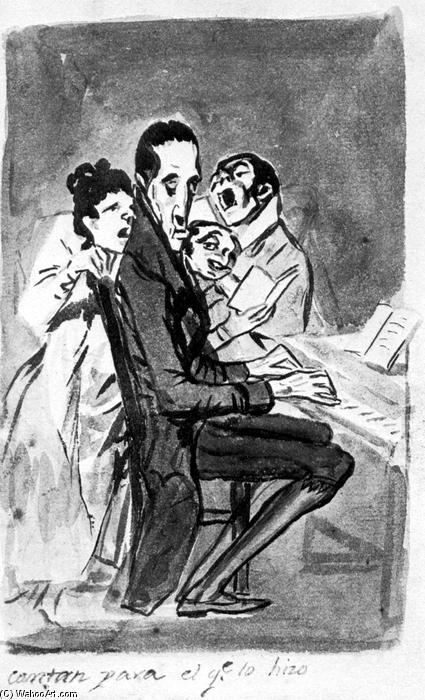
They Sing for the Composer

Francisco de Goya’s "They Sing for the Composer" (1797) – a dramatic lithograph depicting familial betrayal. Explore its satirical style, distorted perspective & powerful emotional impact.


Francisco José de Goya y Lucientes (1746 - 1828)

Francisco Goya (1746-1828): Explore the life & work of Spain's Romantic master. Known for portraits, dark satire & 'Disasters of War'. A pivotal figure in art history.

A Scene of Domestic Discord: Unveiling Goya’s “They Sing for the Composer”

  • Subject & Narrative: Francisco de Goya's 1797 lithograph, “They Sing for the Composer,” presents a deeply unsettling depiction of familial betrayal and moral decay. The composition centers on a seated man – presumably the composer referenced in the title – surrounded by three figures whose expressions range from calculating to openly scornful. This is not a celebratory gathering; rather, it’s a moment of insidious undermining, where flattery masks contempt and self-interest reigns supreme. The text at the bottom reinforces this interpretation, directly addressing themes of deceit within the family unit.
  • Style & Technique: Executed as a lithograph, “They Sing for the Composer” showcases Goya’s mastery of tonal variation and precise linework achieved through stone etching. The artwork is distinctly satirical, employing exaggerated features and distorted perspectives reminiscent of his later *Disasters of War* series. The heavy emphasis on line – sharp angles, dramatic shadows created by hatching and cross-hatching – contributes to the overall sense of unease and psychological tension. This deliberate distortion isn’t merely stylistic; it serves to amplify the emotional weight of the scene and critique societal ills.

Historical Context & Goya's Evolving Vision

  • A Shift in Perspective: Created during a period of significant political and social upheaval in Spain, “They Sing for the Composer” reflects Goya’s growing disillusionment with the aristocracy and the hypocrisy he observed within courtly life. Having served as a court painter since 1786 – initially focusing on portraiture like The Count of Tajo – Goya was uniquely positioned to witness the inner workings of power and privilege. This lithograph marks a departure from his earlier, more conventional work, signaling a shift towards darker, more critical themes.
  • Precursor to Modern Satire: While rooted in 18th-century artistic traditions, Goya’s approach anticipates the biting social commentary found in later satirical works. His willingness to expose human flaws and challenge established norms paved the way for future generations of artists who sought to use their work as a vehicle for critique.

Symbolism & Emotional Resonance

  • Broken Bonds: The fractured relationships depicted in “They Sing for the Composer” symbolize the disintegration of family values and the corrosive effects of ambition. Each figure embodies a different facet of betrayal – avarice, envy, and feigned affection – creating a complex web of deceit.
  • A Universal Theme: Despite its specific historical context, the artwork’s exploration of familial discord resonates with audiences across time and cultures. The themes of manipulation, self-preservation, and the fragility of trust remain universally relevant, making this lithograph a powerful and enduring statement about the human condition.
  • Emotional Impact: The unsettling atmosphere created by Goya’s masterful use of line, shadow, and distorted perspective evokes feelings of anxiety, distrust, and moral outrage. It is not a comfortable image; it demands introspection and challenges viewers to confront uncomfortable truths about human nature.