The Raw Essence of Human Struggle
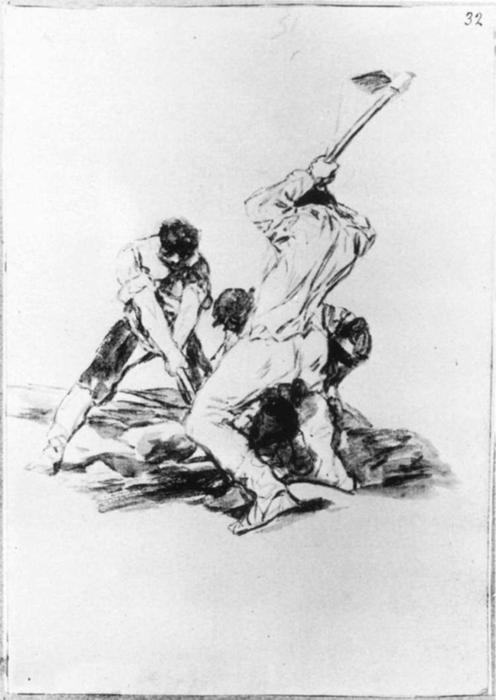
Francisco de Goya’s “Three Men Digging,” painted in 1819, is not merely a depiction of manual labor; it's a visceral exploration of human endurance and the quiet desperation that can reside within even the most commonplace tasks. Rendered in stark black and white – a deliberate choice reflecting the artist’s evolving style and perhaps a commentary on the loss of color and vitality during a turbulent period – the scene unfolds with an arresting immediacy. The figures, three anonymous men engaged in the arduous process of digging into the earth, are presented not as heroic laborers but as embodiments of relentless effort, their bodies strained and etched with the marks of physical exertion. The composition itself is dynamic, utilizing a diagonal thrust that pulls the viewer directly into the action, mirroring the upward sweep of their shovels and conveying a sense of urgent movement.
A Masterclass in Expressive Line and Texture
Goya’s technique here is profoundly revealing. Abandoning the polished surfaces and precise details of his earlier court commissions, he embraces a looser, more gestural style—a hallmark of his later work. Loose, almost frantic lines define the figures, their limbs contorted in moments of strain, while cross-hatching and hatching build up layers of shadow and texture, creating a palpable sense of volume and physicality. Notice how the shading isn’t concerned with photographic realism; instead, it serves to amplify the emotional weight of the scene, suggesting not just the physical exertion but also the weariness and perhaps even despair inherent in their task. The circular motions used for shading contribute to this feeling of cyclical labor, a relentless repetition that drains both body and spirit.
Echoes of History and Social Commentary
“Three Men Digging” emerged during a period of immense upheaval in Spain – the Napoleonic Wars, the restoration of the monarchy under Ferdinand VII, and widespread political instability. Goya, who had served as court painter for decades, witnessed firsthand the suffering and disillusionment that gripped his nation. This work can be interpreted as a commentary on the social realities of the time, highlighting the plight of ordinary people caught in the currents of power and conflict. The anonymity of the figures—they are not individuals but representatives of a broader class—underscores this sense of collective struggle. The image resonates with themes explored in his “Disasters of War” series, reflecting a growing cynicism about human nature and the futility of violence.
Symbolism of Weariness and Perseverance
Beyond its historical context, "Three Men Digging" is rich in symbolic meaning. The act of digging itself represents not just physical labor but also the relentless pursuit of survival, the constant struggle against adversity. The figures’ bowed postures and strained faces convey a profound sense of weariness—a testament to their unwavering dedication despite the apparent lack of reward. Yet, there's also an undeniable element of perseverance within them; they continue to dig, driven by necessity or perhaps simply by habit. The absence of any clear destination or purpose adds to the painting’s haunting quality, suggesting a life lived in a state of perpetual toil.
A Timeless Portrait of Human Condition
“Three Men Digging” is more than just a historical record; it's a profoundly moving meditation on the human condition. Goya masterfully captures the dignity and resilience of those who labor tirelessly, reminding us of the often-overlooked realities of everyday life. Its stark simplicity and emotional intensity continue to resonate with viewers today, cementing its place as one of the artist’s most powerful and enduring works. Reproductions offer a remarkable opportunity to experience this masterpiece firsthand, bringing its evocative imagery into any space and prompting reflection on themes of labor, struggle, and the quiet heroism found in the lives of ordinary people.