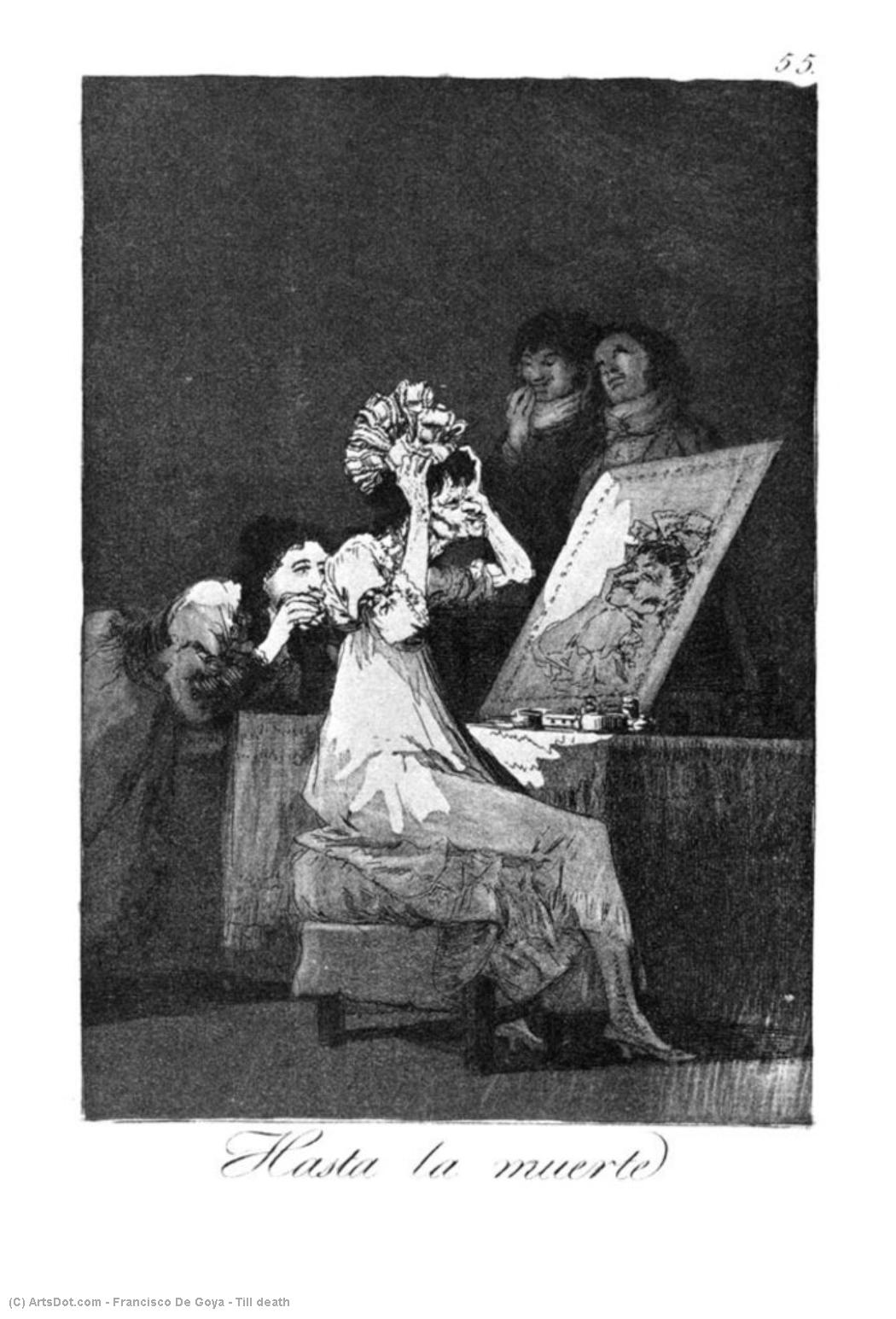
A Descent into Shadow: Goya’s “Till Death”
Francisco de Goya's "Till Death," etched in 1799, isn’t merely a depiction of mourning; it’s a profound and unsettling exploration of mortality, vanity, and the precariousness of human existence. This work, rendered as a stark black-and-white photograph capturing an etching, immediately draws the viewer into a claustrophobic interior scene – a room saturated with unspoken anxieties and simmering despair. The composition is deliberately tight, focusing on a central group of figures arranged around a table dominated by a mirror reflecting a painted portrait, creating a visual loop that speaks to themes of self-reflection and the illusion of permanence. Goya masterfully employs cross-hatching, a hallmark of his etching technique, building up tonal variations with incredible precision, conveying not just form but also the texture of velvet upholstery, the sheen of polished wood, and the palpable weight of grief.
The Language of Line and Shadow
Goya’s genius lies in his manipulation of line. The etching process itself – incising lines into a metal plate and then transferring them to paper – inherently lends itself to a dramatic, almost skeletal quality. Here, those lines aren't simply delineating shapes; they are actively constructing mood. Dense cross-hatching creates areas of deep shadow, obscuring details and suggesting hidden depths within the scene. The use of lighter lines defines the edges of figures and objects, yet even these are subtly blurred, contributing to a sense of unease and uncertainty. The flattened perspective, typical of etchings, further enhances this feeling of confinement, as if we’re trapped within the room alongside the grieving figures.
Symbolism Within the Frame: Vanity and Mortality
“Till Death” is rich in symbolic resonance. The central figure, a woman seated at the table, embodies profound sorrow – her posture suggests both physical exhaustion and emotional collapse. The mirror reflecting the painted portrait introduces a crucial layer of interpretation. Portraits were often symbols of vanity and an attempt to capture eternal beauty; here, it’s presented as a mocking reminder of life's fleeting nature. The painting within the mirror itself could be interpreted as a self-portrait, or perhaps a representation of the idealized image that contrasts sharply with the reality of her grief. The title, “Till Death,” is not simply a statement of fact but a chilling meditation on the inevitability of mortality and the desperate human desire to defy it.
A Goyaesque Vision: Baroque Roots and Modern Anxiety
Goya’s style in "Till Death" reflects a fascinating synthesis of influences. While rooted in the formal conventions of Baroque art – particularly its dramatic use of light and shadow, and its emphasis on emotional intensity – he pushes beyond these traditions to express a distinctly modern sensibility. The work anticipates the anxieties and psychological depth that would characterize Romanticism and later movements. The dark palette, the unsettling subject matter, and the exploration of inner turmoil all point towards Goya’s growing disillusionment with society and his profound awareness of human suffering. This etching is not just a portrait; it's a window into the soul of an artist grappling with the complexities of his time – and perhaps, with the universal anxieties that transcend them.
ArtsDot offers meticulously hand-painted reproductions of “Till Death,” capturing the nuances of Goya’s masterful technique and ensuring that this powerful work of art continues to resonate for generations to come. Explore our collection today and bring a piece of this iconic image into your home or office.