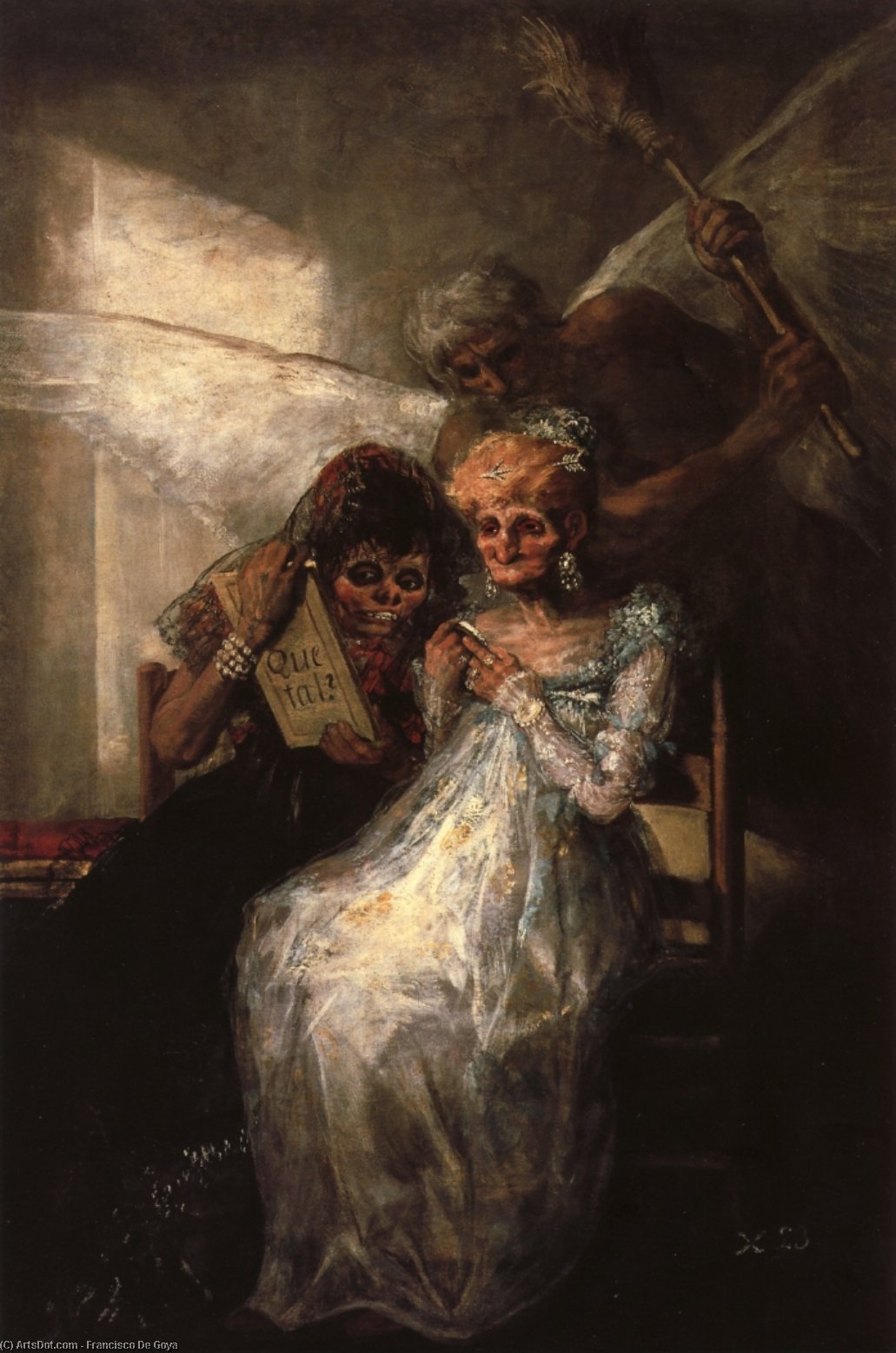
Time and the Old Women
Francisco de Goya’s
Time and the Old Women is a profoundly contemplative oil painting that delves into the weighty themes of aging, vanity, and the inescapable march of time itself. Created in 1810 during Spain’s turbulent Napoleonic Wars—a period marked by political upheaval and societal anxieties—this masterpiece resides at the
Palais des Beaux-Arts de Lille in France, ensuring its preservation for future generations to appreciate.
The Composition and Symbolism
The painting depicts three women: one seated gracefully on a chair, absorbed in reading a book; another standing behind her, gazing intently outwards; and the third positioned slightly to the right, observing the scene with quiet contemplation. The woman seated embodies stillness and intellectual engagement—a deliberate contrast against the backdrop of societal decay. Her gaze is fixed downwards, seemingly oblivious to the grandeur surrounding her, representing perhaps a detachment from worldly concerns. The two women standing behind her are dressed in similar attire, mirroring each other’s posture and conveying a sense of shared experience. Their eyes meet, hinting at unspoken conversations and mutual understanding—a subtle acknowledgment of their own mortality. Dominating the upper right corner is an angelic figure, bathed in ethereal light, adding a layer of mysticism to the composition. This celestial presence serves as a poignant reminder of spiritual transcendence amidst earthly limitations.
The painting’s dark atmosphere is powerfully accentuated by the pervasive black background, which sharply juxtaposes with the luminous colors of the figures' clothing—primarily creams and golds—creating an ironic commentary on beauty and youthfulness. The elongated dresses worn by the women contribute to this visual effect, emphasizing their elegance while simultaneously underscoring the passage of time. Goya’s masterful use of chiaroscuro—the dramatic interplay between light and shadow—intensifies the emotional impact of the artwork, drawing the viewer's eye towards key details and fostering a sense of solemn contemplation.
Artistic Style and Influence
Goya’s distinctive artistic style is characterized by his innovative exploration of light and shadow, coupled with an unparalleled ability to convey profound psychological depth within his subjects.
Time and the Old Women exemplifies this approach brilliantly—a testament to Goya’s genius as a painter. The painting's expressive facial expressions capture the subtle nuances of emotion, reflecting inner turmoil and confronting existential questions. It stands as a cornerstone of Romanticism, influencing subsequent artists with its dramatic visual language and emotive resonance.
Goya’s technique involved meticulous layering of paint—a hallmark of his oeuvre—allowing him to achieve remarkable textural richness and luminosity. He skillfully blended pigments to create subtle gradations of color, capturing the delicate nuances of light and shadow with breathtaking precision. This painstaking attention to detail elevates the painting beyond mere representation, transforming it into a powerful vehicle for conveying psychological states and philosophical ideas.
Other Notable Works by Goya
Francisco de Goya was an extraordinarily prolific artist, producing numerous canvases throughout his lifetime—spanning from portraits of royalty to unsettling depictions of human suffering. Among his most celebrated paintings include:
These artworks can be found on our website, https://ArtsDot.com, where you can explore a vast collection of meticulously crafted oil painting reproductions—bringing Goya’s visionary artistry into your home.
Conclusion
Time and the Old Women remains a timeless masterpiece—a poignant meditation on mortality and the ephemeral nature of beauty. As an enduring symbol of Romantic artistic ideals, it continues to captivate audiences with its masterful composition and profound psychological insight. For more information about Francisco de Goya and his extraordinary artistic legacy, visit our website: https://ArtsDot.com.