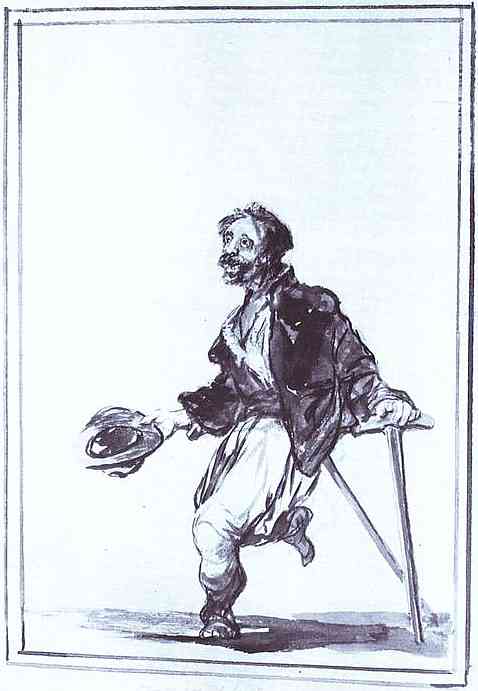
‘Trabajos de la querra,’ or ‘The Consequences of War,’ is a poignant etching by Francisco Goya showcasing human suffering following conflict. Featuring a solitary figure crippled by injury, it exemplifies Goya’s Romantic style—characterized by expressive lines and emotional depth—through meticulous detail and masterful hatching.
Trabajos de la Querra (Consequences of War): A Portrait of Suffering Under Romantic Eyes
Francisco José de Goya y Lucientes’s “Trabajos de la Querra,” or “The Disasters of War,” stands as a chilling testament to the horrors inflicted upon Spain during its turbulent Restoration period. Completed between 1810 and 1823, this series of etchings—a staggering 82 prints—represents more than just visual documentation; it’s an unflinching psychological exploration of human misery and moral decay, firmly rooted in the Romantic movement's preoccupation with emotion and individual experience.
- Subject Matter: The image depicts a single figure – ostensibly a soldier – lying prone on barren earth amidst a desolate landscape. He is surrounded by vultures, grotesque hybrids symbolizing death and decay, consuming his flesh. This visceral depiction confronts viewers with the brutal realities of war’s aftermath—the physical devastation and psychological torment endured by those who fight it.
- Style & Technique: Goya's masterful use of etching on ivory wove paper showcases a technique characterized by meticulous line work and tonal gradation achieved through hatching and cross-hatching. These methods imbue the artwork with remarkable depth and texture, mirroring the emotional intensity of its subject matter. The artist’s unwavering commitment to capturing human anatomy and expression aligns perfectly with Romantic ideals.
- Composition & Symbolism: The composition centers around the central figure, positioned diagonally across the frame—a deliberate choice that conveys vulnerability and instability. The vultures circling overhead serve as potent symbols of mortality and judgment, highlighting the inescapable consequences of conflict. Even the hat held by the man – a poignant detail – represents lost dignity and status, underscoring the profound impact war has on human identity.
- Historical Context: Created during Goya’s exile from Madrid following Napoleon's invasion, “Trabajos de la Querra” reflects his disillusionment with political ambition and aristocratic decadence. The series functioned as a scathing critique of Spanish society—particularly the monarchy—and served as a powerful indictment of violence and oppression.
- Emotional Impact: Viewing "Trabajos de la Querra" evokes a profound sense of sorrow and horror. Goya’s unflinching portrayal of suffering compels contemplation on the human condition, prompting viewers to confront uncomfortable truths about brutality and despair. It remains an enduring masterpiece of Romantic art—a haunting reminder of the devastating cost of conflict and a testament to Goya's unparalleled ability to convey emotion through visual form.
Further Information: Explore more about Francisco Goya’s life and artistic legacy at
Francisco José de Goya y Lucientes. Discover the inspiration behind “Trabajos de la Querra” and its place within the broader context of Romantic art history. You can find a high-quality reproduction
here.