Discover 'untitled (8211)' by Francisco Goya, a captivating historical scene showcasing the artist's mastery of portraiture and storytelling. Explore this intriguing piece today!
Francisco Goya (1746-1828): Explore the life & work of Spain's Romantic master. Known for portraits, dark satire & 'Disasters of War'. A pivotal figure in art history.
A Glimpse into Spanish Life: Unveiling Goya’s “untitled (8211)”
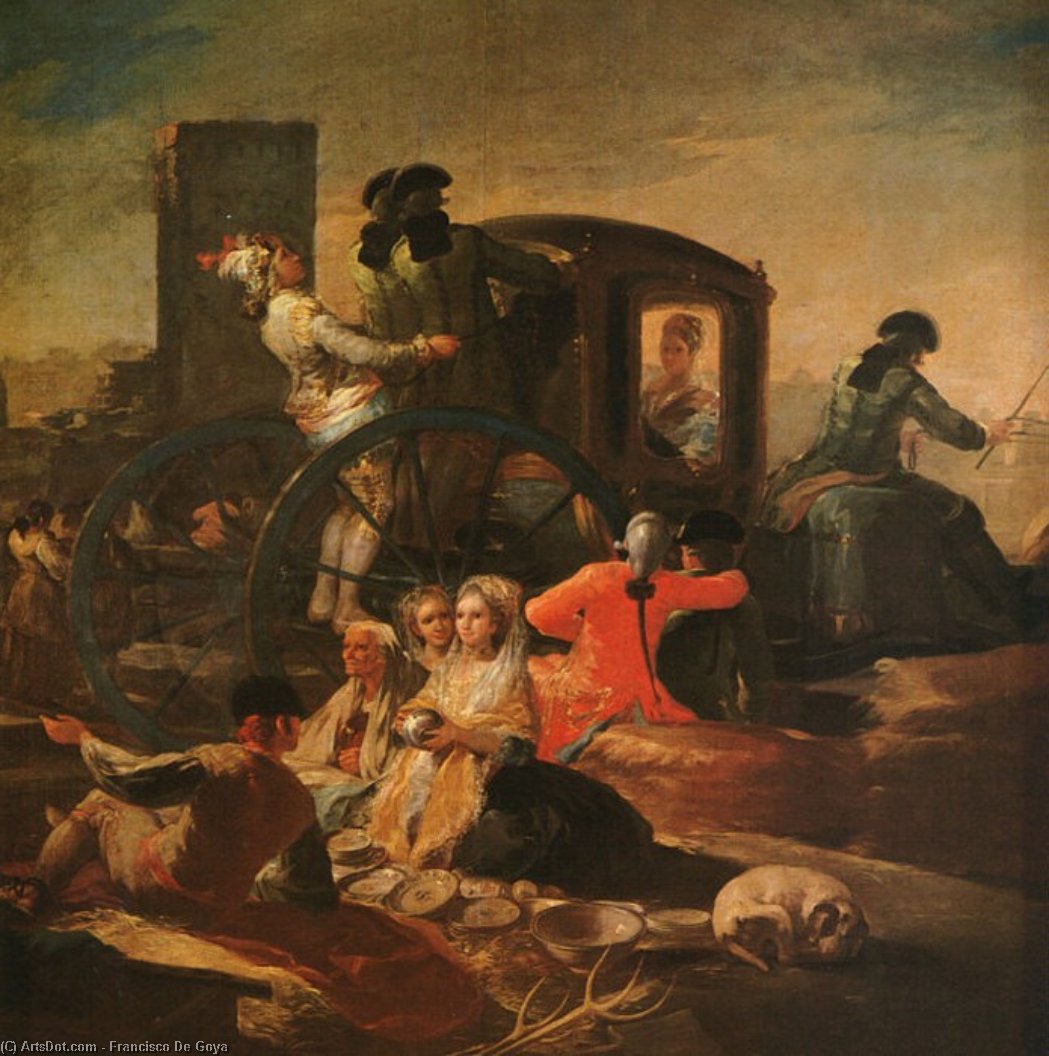
Francisco de Goya, a name synonymous with both the grandeur of courtly portraiture and the haunting depths of human experience, remains one of Spain's most celebrated and influential artists. While often remembered for his dramatic depictions of war or his intensely personal *Black Paintings*, Goya’s broader oeuvre reveals a keen observer of Spanish society, capturing its nuances with remarkable skill. “untitled (8211),” also known as "Il Mercante di stoviglie" ("The Dish Merchant"), offers precisely this glimpse – a seemingly simple scene that resonates with the complexities of 18th-century life and Goya’s evolving artistic style. The painting depicts a small gathering around what appears to be a merchant's stall or wagon, laden perhaps with household goods. Individuals dressed in the fashions of the era are engaged in conversation, their gestures suggesting both curiosity and appraisal. A horse stands patiently nearby, adding to the sense of everyday activity, while a bowl placed centrally draws the eye, potentially symbolizing abundance or hospitality.
The Brushstrokes of Observation: Style and Technique
Goya’s technique in “untitled (8211)” is characteristic of his earlier period, before the profound shifts brought about by illness and political turmoil. The painting demonstrates a mastery of Rococo-influenced aesthetics blended with an emerging Romantic sensibility. His brushwork is fluid and confident, capturing the textures of clothing and the subtle play of light across faces. While not as overtly dramatic as some of his later works, there’s a palpable sense of realism in the depiction of the figures – they are not idealized portraits but rather individuals caught in a moment of everyday life. The color palette is restrained yet warm, dominated by earthy tones that evoke the Spanish landscape and the humble setting of the scene. Goya's ability to convey character through subtle facial expressions and body language is particularly noteworthy; each figure seems to possess a distinct personality, contributing to the painting’s overall narrative richness.
A Window into 18th-Century Spain
To understand “untitled (8211)” fully, it’s essential to consider its historical context. Goya rose to prominence as a court painter during a period of significant change in Spain. The reign of Charles III and later Charles IV saw attempts at modernization and reform, but also underlying social tensions and political instability. This painting offers a glimpse into the lives of ordinary people – not the aristocracy or the powerful, but those who formed the backbone of Spanish society. The presence of the merchant suggests a thriving local economy, while the interactions between individuals hint at the importance of community and commerce. It’s a scene that feels both specific to its time and place, yet universally relatable in its depiction of human interaction.
Symbolism and Emotional Resonance
While seemingly straightforward, “untitled (8211)” invites deeper interpretation. The bowl placed prominently within the composition could symbolize prosperity or perhaps the simple pleasures of life. The gathering itself might represent a moment of respite from daily toil, a chance for social connection and exchange. Goya’s genius lies in his ability to imbue even seemingly mundane scenes with layers of meaning. There's a quiet dignity in the depiction of these individuals, a sense that their lives – though perhaps modest – are worthy of artistic attention. The painting evokes a feeling of nostalgia, a longing for a bygone era and a reminder of the enduring human need for connection and community. It’s a work that invites contemplation, prompting viewers to reflect on their own place within the broader tapestry of history and society.