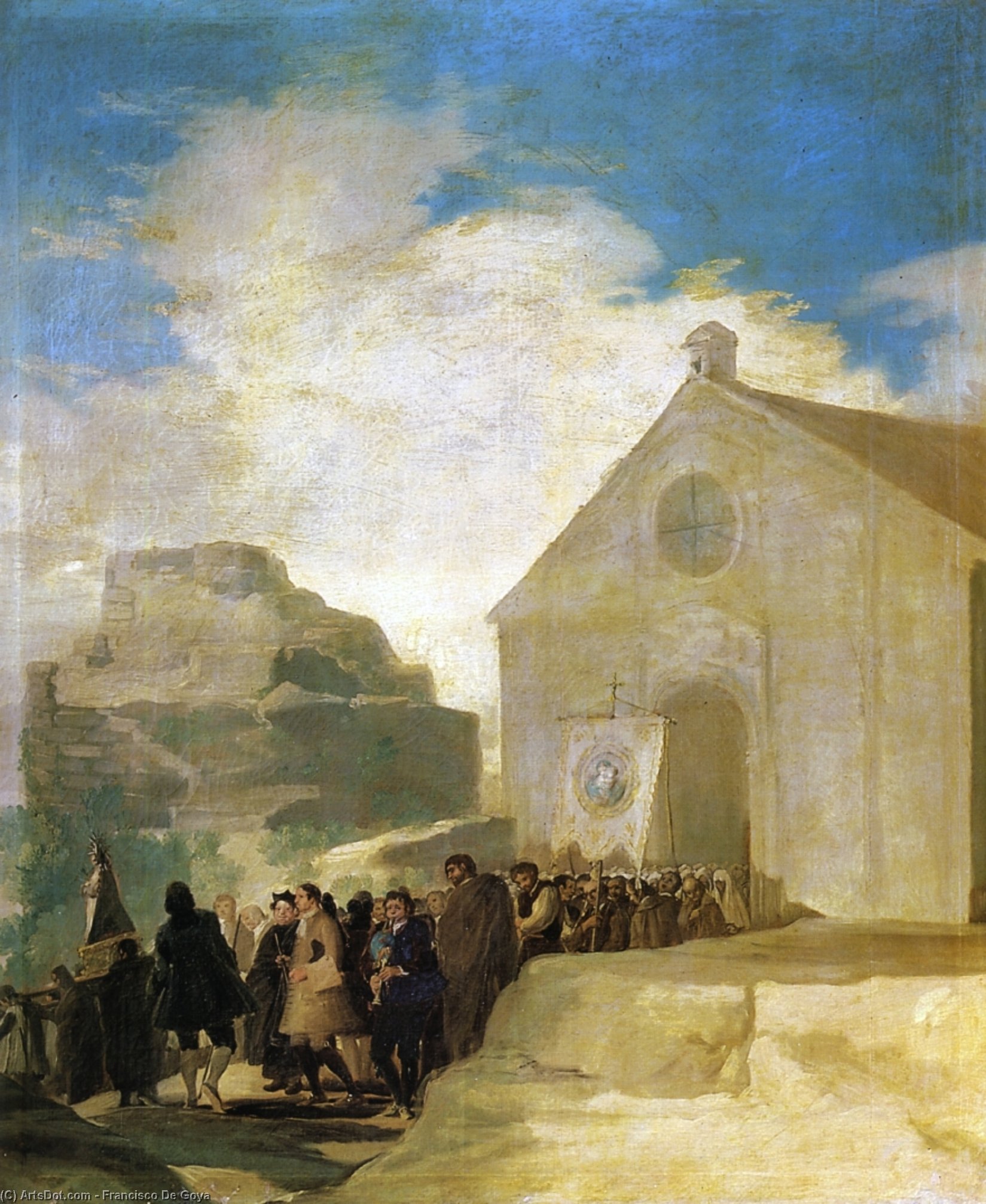
Village Procession
Francisco De Goya's
Village Procession stands as a cornerstone of Romanticism, embodying Goya’s unparalleled ability to distill the essence of community and tradition onto canvas. Painted in 1787, this monumental oil on canvas – measuring 169 x 137 cm – transcends mere depiction; it's an immersive experience into the spirit of Spain during its pre-Romantic era.
Composition and Elements
The painting’s visual narrative unfolds with remarkable precision. At its core lies a procession of villagers traversing a cobblestone street, converging towards a church bathed in soft light. Goya meticulously rendered at least 14 individuals, capturing their postures and expressions with astonishing realism. A horse, positioned prominently on the left side, serves as both a focal point and perhaps symbolic guide for this solemn pilgrimage. The church itself dominates the background, its steeple reaching upwards—a visual declaration of faith and spiritual significance—creating a palpable sense of depth that draws the viewer into the scene’s heart. Goya's masterful use of perspective contributes to this immersive quality.
Artistic Style and Influence
Goya’s technique is characterized by loose brushstrokes, prioritizing immediacy and emotional resonance over meticulous detail. This stylistic choice aligns perfectly with Romantic ideals—a rejection of Neoclassical restraint in favor of expressive color palettes and dynamic compositions. Warm hues dominate the palette – ochres, reds, and yellows – evoking feelings of warmth, solidarity, and reverence. The painting’s influence reverberates throughout subsequent artistic movements, inspiring artists to explore themes of social commentary and psychological complexity. It exemplifies Goya's commitment to portraying human experience with unflinching honesty.
Context and Significance
“Village Procession” emerged during a period marked by burgeoning interest in labor reform and the plight of rural populations—a crucial precursor to Romanticism’s broader critique of societal injustices. Goya, acutely attuned to these concerns, sought to capture not just visual beauty but also the palpable atmosphere of everyday life. The painting serves as a poignant reminder of the importance of communal rituals and traditions in shaping cultural identity—values that continue to resonate powerfully today.
Relevance to Modern Art Enthusiasts
For contemporary art aficionados, “Village Procession” offers more than simply a glimpse into 18th-century Spain; it’s an invitation to contemplate universal themes of faith, community, and human connection. Goya's bold stylistic choices—particularly his rejection of academic conventions—remain remarkably relevant, encouraging artists to embrace vulnerability and authenticity in their work. Consider how the painting’s emotive power speaks to our own desire for meaningful experiences and connections within a rapidly changing world.
- Acquiring a Piece of Art History: For those captivated by Goya's legacy, Francisco De Goya: Village Procession is available as a handmade oil painting reproduction at ArtsDot.
- Other Notable Works by Francisco De Goya: Explore Goya’s oeuvre with masterpieces like “The Drunk Mason,” “The Colossus,” and “Summer.”
Further Exploration: Visit
Museo de Bellas Artes de Santander and immerse yourself in Goya’s artistic world.