Francisco Goya (1746-1828): Explore the life & work of Spain's Romantic master. Known for portraits, dark satire & 'Disasters of War'. A pivotal figure in art history.
Why Hide Them.? – A Study in Satirical Observation
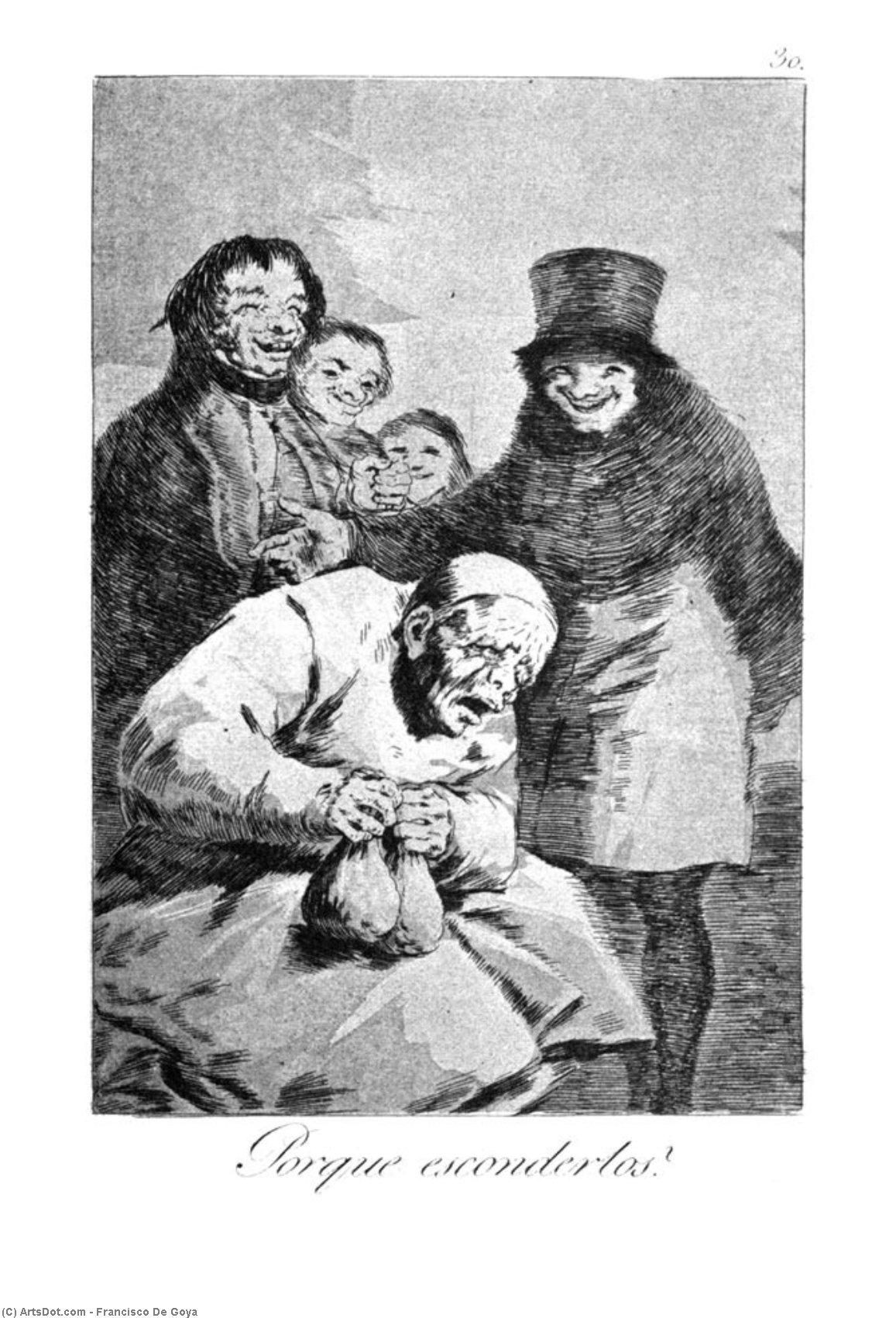
Francisco José de Goya y Lucientes’s “Why Hide Them?” (Plate 30 from Los Caprichos), etched and engraved in 1799, transcends mere visual representation; it embodies a profound interrogation of societal hypocrisy and the human condition. This striking print, currently housed at The Art Institute of Chicago, exemplifies Goya's masterful command of etching technique and his unwavering commitment to capturing the anxieties simmering beneath the surface of Enlightenment Spain.
Composition and Style: A Tight Frame of Discomfort
The artwork’s composition is deliberately constricted, focusing intently on a seated figure surrounded by several others. This claustrophobic arrangement immediately establishes a sense of unease and underscores the central subject's vulnerability within a group dynamic rife with unspoken tensions. Goya employs caricature extensively—exaggerated facial expressions and distorted features—to amplify his critique of social conventions. The style leans heavily into Romantic sensibilities, prioritizing emotional intensity over idealized beauty, mirroring Goya’s broader artistic trajectory toward confronting uncomfortable truths about human behavior.
Technique: Hatching and Cross-Hatching – Building Depth Through Texture
Goya's etching prowess is evident in the meticulous application of hatching and cross-hatching throughout the print. These techniques aren’t merely decorative; they are integral to conveying depth and texture, skillfully simulating the materiality of clothing and flesh. The energetic lines pulsate with expressive force, mirroring the psychological turmoil depicted within the scene—a characteristic hallmark of Goya's later oeuvre. The artist utilizes a monochromatic palette of grays, ranging from deep blacks to subtle whites, maximizing tonal contrast and intensifying the dramatic impact of the image.
Historical Context: Los Caprichos – A Critique of Morality
“Why Hide Them?” belongs to Goya’s monumental series “Los Caprichos,” published in 1799 during a period marked by intellectual ferment and social upheaval. This collection served as a scathing indictment of Spanish society—its religious dogma, aristocratic decadence, and pervasive corruption—challenging prevailing moral standards with unflinching honesty. The print's subject matter – a man concealing his gaze – speaks to the suppression of dissent and the fear of confronting uncomfortable realities—themes that resonate powerfully across centuries.
Symbolism: Unspoken Tension and Psychological Depth
Beyond its formal elements, “Why Hide Them?” is laden with symbolic significance. The seated figure’s averted eyes represent a refusal to engage in honest self-reflection or to acknowledge wrongdoing. The surrounding individuals embody the pressures of conformity and the anxieties associated with maintaining appearances. Goya's masterful use of line and shading invites contemplation on themes of guilt, shame, and the psychological cost of upholding societal expectations—a poignant reminder of humanity’s capacity for both cruelty and vulnerability.
Emotional Impact: Unease and Dark Humor – A Portrait of Discomfort
Ultimately, “Why Hide Them?” evokes a visceral response in the viewer—one of palpable unease mingled with darkly humorous observation. Goya doesn't offer easy answers or comforting illusions; instead, he confronts us with an unsettling tableau that compels us to confront our own complicity in upholding societal norms. This artwork remains a testament to Goya’s enduring legacy as one of art history’s most perceptive and courageous chroniclers of human experience.