The Enigmatic ‘L’: Rodin’s Dance of Form and Mystery
François Auguste René Rodin's “L” stands as a deceptively simple yet profoundly complex sculpture, born from the turbulent artistic landscape of late 19th-century Paris. Initially met with skepticism and intrigue within the Parisian salons, this seemingly straightforward depiction of a male nude sparked debate over its origins and meaning – a testament to Rodin’s revolutionary approach to sculpting the human form. More than just a study in anatomy, “L” embodies a pivotal moment in Rodin's artistic development, marking his shift towards capturing gesture and emotion with unprecedented immediacy. The sculpture’s enduring power lies not only in its technical mastery but also in the lingering questions it provokes about the nature of representation and the artist’s creative process.
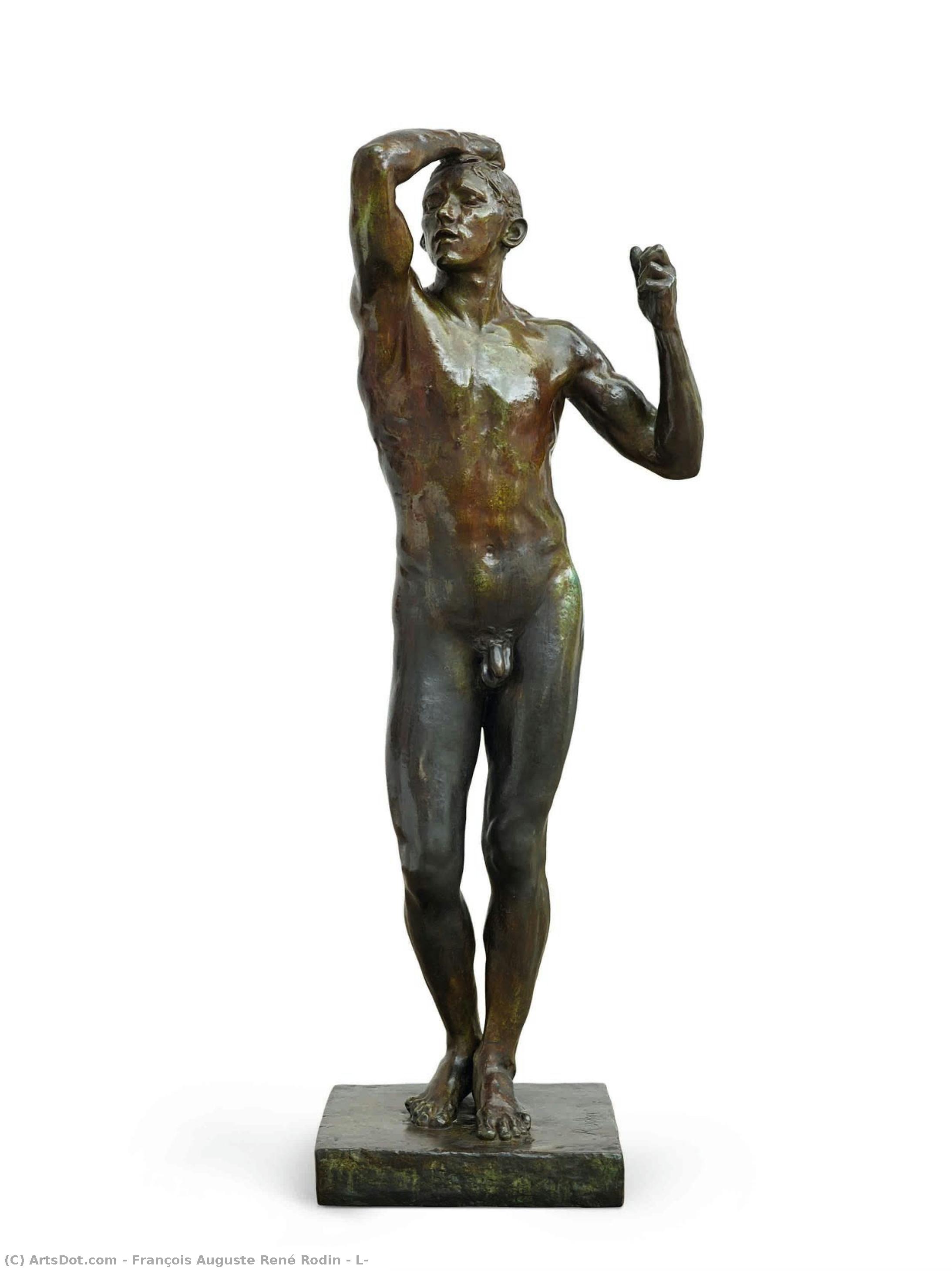
Rodin’s technique is immediately striking. Executed primarily in bronze, though likely cast from a wax model initially, “L” showcases an astonishingly detailed surface texture – a hallmark of Rodin's style. The musculature is rendered with remarkable realism, yet simultaneously imbued with a sense of dynamism and movement. Notice the subtle shifts in weight distribution, the delicate curve of the spine, and the almost palpable tension in the limbs. This isn’t a static representation; it feels as though the figure is caught mid-action, poised on the brink of a gesture or perhaps even a silent scream. The artist's use of negative space – the areas left deliberately unworked – further enhances the sculpture’s expressive power, drawing attention to the contours and planes of the body.
A Scandalous Revelation: Gesture and the Birth of Modern Sculpture
The initial controversy surrounding “L” stemmed from its apparent lack of narrative context. Unlike many sculptures of the era, which typically depicted mythological scenes or historical events, this figure presented a purely abstract form – a nude male with his left hand resting on his head. This unconventional approach raised immediate questions about Rodin’s methods. Rumors circulated that he had employed a live model, capturing a fleeting gesture in its rawest form, a technique previously unheard of in the formal sculptural traditions of the time. The photograph documenting the raised left hand, discovered decades later, solidified this suspicion and cemented “L”'s place as a groundbreaking work.
Rainer Maria Rilke, one of Rodin’s closest confidantes, famously described “L” as marking "the birth of the gesture in Rodin’s work.” He recognized that this seemingly simple pose represented a fundamental shift in the sculptor's approach – a move away from static representation towards capturing the dynamism and emotional intensity inherent in human movement. The upward tilt of the hand, often interpreted as questioning or contemplation, becomes a powerful symbol of introspection and the search for meaning. It’s a gesture that resonates with viewers long after they’ve first encountered it.
Echoes of the Renaissance: Form and Inspiration
Despite its radical departure from traditional sculptural conventions, “L” reveals a deep engagement with classical art. Rodin consciously drew inspiration from the idealized figures of Italian Renaissance sculpture – particularly those depicting athletes and warriors. The figure’s athletic build, balanced stance, and powerful musculature recall the works of masters like Michelangelo and Donatello. However, Rodin deliberately subverts these established conventions by stripping away any narrative context or symbolic meaning. He presents a purely human form, devoid of specific identity or story, inviting viewers to project their own interpretations onto the sculpture.
The choice of bronze as the medium further contributes to the work’s timeless quality. Bronze possesses an inherent gravitas and durability that lends itself perfectly to capturing the essence of the human body. It also allows for a remarkable level of detail, enabling Rodin to meticulously render every muscle fiber and subtle nuance of expression. “L” is not merely a sculpture; it's a testament to the enduring power of form, gesture, and the artist’s ability to capture the fleeting beauty of the human experience.
A Timeless Masterpiece: Reproduction and Artistic Legacy
ArtsDot offers meticulously crafted hand-painted reproductions of “L,” allowing art lovers worldwide to appreciate Rodin's genius in stunning detail. Our artists replicate the sculpture’s nuanced textures, subtle tonal variations, and evocative atmosphere with unparalleled skill. Whether displayed in a private collection or incorporated into an interior design scheme, this reproduction captures the essence of Rodin’s masterpiece – its mystery, its dynamism, and its profound emotional impact. Explore our range of sizes and finishes to find the perfect representation for your space.