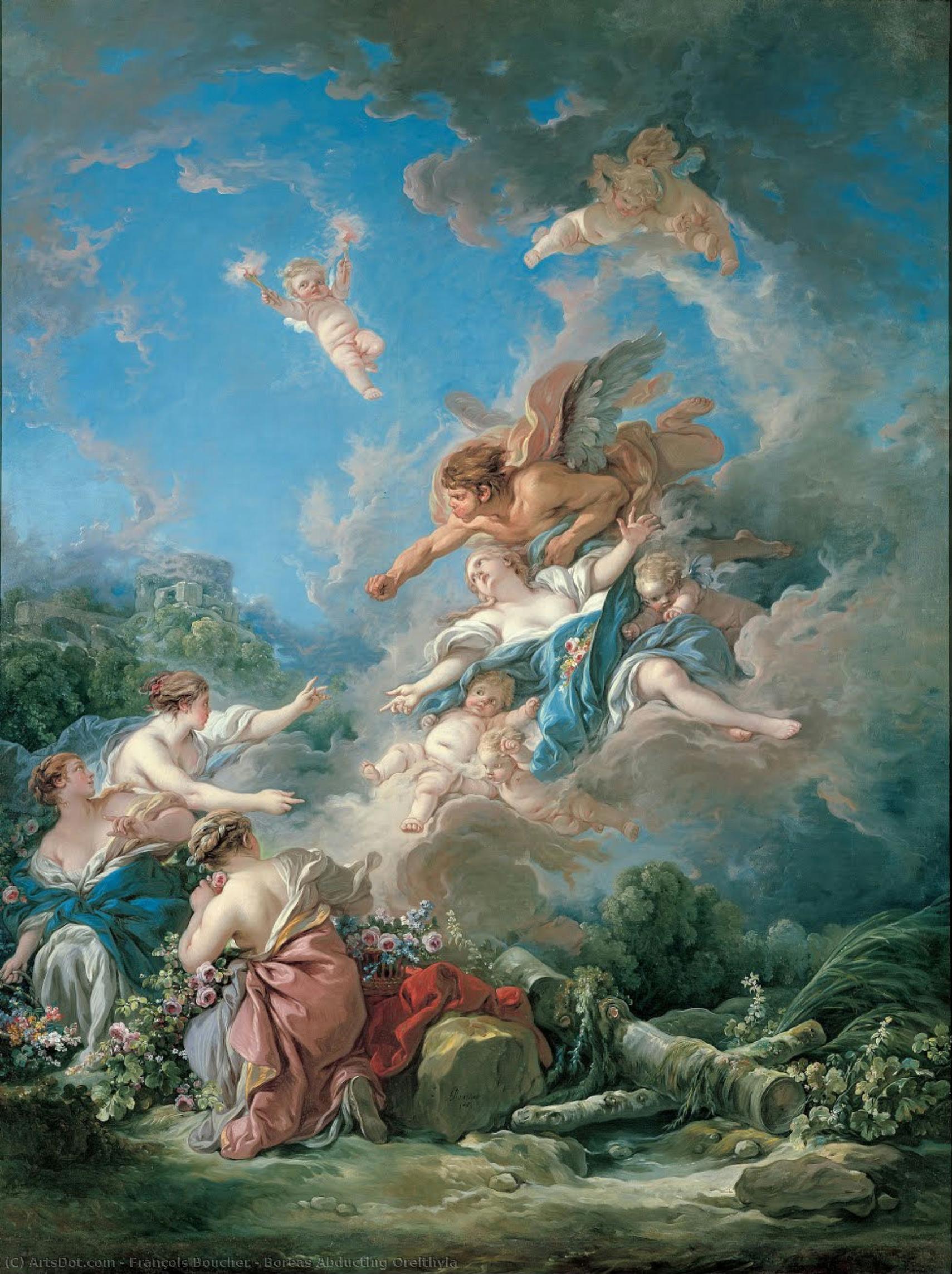
A Tempestuous Embrace: Boucher's "Boreas Abducting Oreithyia"
François Boucher’s “Boreas Abducting Oreithyia,” completed in 1769, is a captivating distillation of classical mythology rendered with the characteristic exuberance and sensual grace that defined the Rococo style. This painting, measuring an impressive 273 x 205 cm, transports us to a moment of violent disruption – a dramatic retelling of Ovid’s tale from the *Metamorphoses*, where the icy North Wind god, Boreas, forcibly claims the Athenian princess Oreithyia.
- The Narrative Core: The scene unfolds with arresting immediacy. Boreas, cloaked in swirling, storm-laden clouds, descends upon the unsuspecting Oreithyia as she gathers flowers alongside her sisters. His action is not merely a snatching; it’s an assertion of brutal power, a rejection of gentle courtship, and a visceral representation of the clash between order and chaos.
- Boucher's Technique: Boucher masterfully employs loose, fluid brushstrokes – a hallmark of Rococo – to convey movement and emotion. The composition is dynamic, with diagonal lines created by the falling tree and the figures’ gestures contributing to a sense of unrestrained energy. Notice the delicate rendering of Oreithyia’s dress and the flowing drapery, juxtaposed against Boreas's forceful presence.
Symbolism Woven into Myth
Beyond a simple narrative depiction, “Boreas Abducting Oreithyia” is rich in symbolic meaning. The felled tree, prominently positioned at the forefront, acts as a visual anchor and a potent symbol of destruction – a deliberate act of violence against nature and beauty. Its gnarled form suggests the raw power of Boreas and the irreversible consequences of his rage. The presence of putti, particularly those holding torches, subtly alludes to the birth of Boreas’s twin sons, reinforcing the theme of transgression and the unexpected outcome of divine intervention.
- Divine Intervention: The inclusion of angels, positioned strategically in the corners, elevates the scene beyond a mere mythological tale. They represent a higher power observing – perhaps judging – the unfolding drama, adding another layer of complexity to the composition.
- Color and Emotion: Boucher’s palette is dominated by cool blues and greens, reflecting Boreas's icy nature, contrasted with warmer tones in Oreithyia’s garments, highlighting her vulnerability and beauty. The overall effect is one of heightened emotional intensity.
Historical Context and Artistic Significance
Created during the height of the Rococo period, “Boreas Abducting Oreithyia” reflects the era's fascination with classical mythology and its emphasis on sensuality, elegance, and playful narrative. Boucher was one of the most sought-after artists of his time, commissioned by royalty and nobility across Europe. His ability to capture both dramatic action and delicate beauty cemented his legacy as a master of the Rococo style. This particular painting demonstrates his skill in translating classical themes into a visually stunning and emotionally resonant work.
This hand-painted reproduction offers an unparalleled opportunity to experience the power and artistry of François Boucher’s masterpiece, bringing this dramatic scene into your home or office with exceptional detail and fidelity.