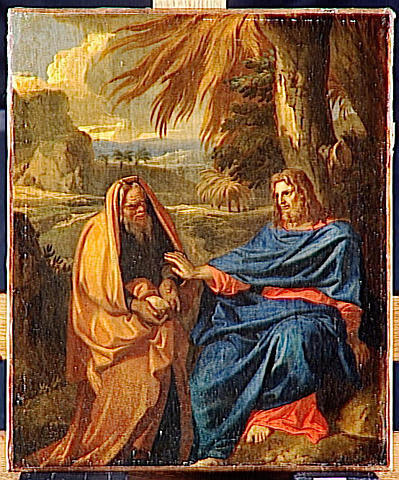
François Verdier's 'La Tentation du Christ,' painted around 1700, showcases Baroque elegance blended with Rococo fluidity. Explore the dramatic lighting and rich colors depicting Jesus’s struggle against temptation in a landscape setting.
François Verdier (1651-1730) was a French painter & draftsman, student of Charles Le Brun. Known for mythological scenes, allegorical figures, and religious works. Explore his drawings at the Louvre!
Explore the Louvre Museum in Paris! Home to iconic masterpieces like the Mona Lisa & Venus de Milo, journey through art history from ancient Egypt to Renaissance icons. Plan your visit today!
François Verdier’s “La Tentation du Christ”: A Baroque Masterpiece Reflecting Faith and Doubt
“La Tentation du Christ,” attributed to François Verdier, is a monumental oil painting completed around 1700 that resides within the Louvre Museum's collection (RF 3835), offering an arresting glimpse into the artistic sensibilities of the Baroque period. More than just a depiction of biblical narrative, this artwork embodies the complex interplay between faith and doubt—a characteristic tension prevalent in European art during the Enlightenment’s nascent stages. The painting immediately captivates with its dramatic composition and masterful use of chiaroscuro, techniques honed by Verdier's collaboration with Rubens himself, cementing Antwerp’s reputation as a crucible for artistic innovation.
Composition and Setting: A Wilderness of Emotion
The canvas presents a meticulously crafted landscape backdrop—a desolate wilderness dominated by a towering tree—serving not merely as an ornamental element but as a crucial component of the artwork’s emotional resonance. This deliberate choice underscores the psychological drama unfolding within the scene, mirroring the internal struggles faced by Christ amidst temptation. Two figures occupy the central space: an older woman cradling a baby on the left and Christ seated opposite her on the right. The positioning is deliberately asymmetrical, directing the viewer's gaze towards Christ’s face—illuminated with radiant light—emphasizing his vulnerability and resilience. Verdier skillfully employs perspective to create depth, drawing the eye into the scene and amplifying its sense of grandeur.
Style and Technique: Baroque Elegance Infused with Psychological Depth
Verdier’s artistic style firmly anchors itself within the Baroque tradition, characterized by theatricality and an obsession with conveying emotion through visual means. The painting's execution demonstrates exceptional technical prowess—particularly evident in the meticulous rendering of drapery folds and skin tones—reflecting the prevailing standards of Flemish artmaking at the time. Verdier’s masterful manipulation of light and shadow—the hallmark of chiaroscuro—transforms the landscape into a stage for psychological exploration, highlighting Christ's inner turmoil while simultaneously conveying a profound sense of solemnity. The artist’s brushstrokes are deliberate and expressive, capturing subtle nuances of emotion that transcend mere visual representation.
Symbolism: Temptation, Innocence, and Divine Resistance
“La Tentation du Christ” is laden with symbolic significance. The woman represents temptation—a force attempting to undermine faith and virtue—while the baby symbolizes innocence and vulnerability—representing Christ’s divine compassion amidst suffering. The tree serves as a visual metaphor for resilience and endurance, mirroring Christ's unwavering commitment to his mission despite facing adversity. Verdier skillfully integrates these symbols into the broader narrative, prompting contemplation on themes of morality, spirituality, and human experience.
Historical Context: Antwerp’s Artistic Legacy
Painted during Antwerp’s golden age—a period marked by unparalleled artistic flourishing—Verdier's masterpiece reflects the intellectual currents shaping European culture. Rubens’ influence is palpable in Verdier’s stylistic choices, demonstrating the interconnectedness of artistic traditions within the Flemish Republic. The painting stands as a testament to Antwerp’s enduring legacy as a center for Baroque art and its contribution to the broader canon of Western visual culture. Its enduring appeal lies not only in its aesthetic beauty but also in its profound exploration of human psychology and spiritual conviction—a timeless reflection on faith, doubt, and the struggle for moral integrity.