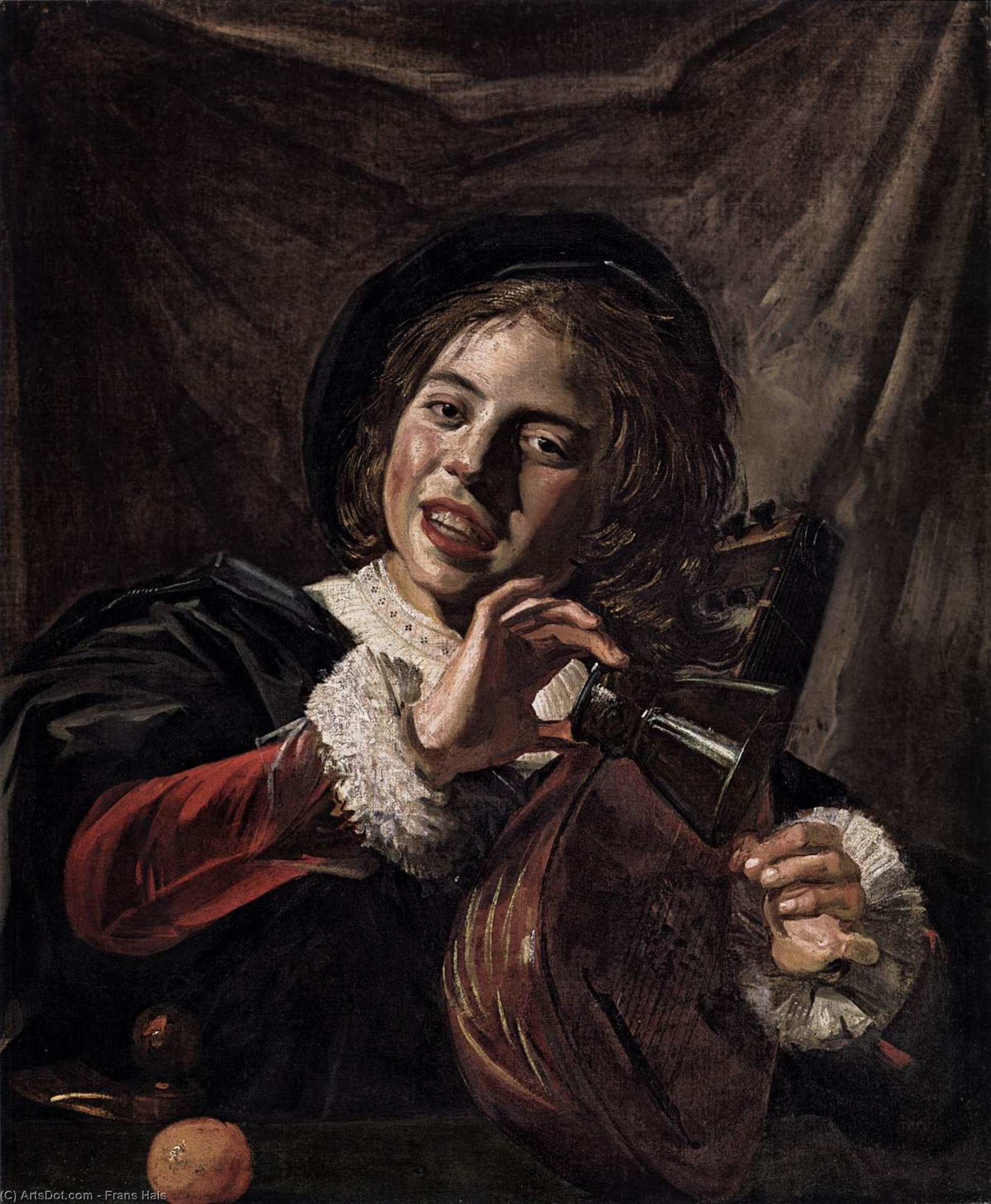
Experience the vibrant, loose brushwork of Frans Hals's Boy with a Lute (1625), capturing Dutch Golden Age immediacy; discover this masterpiece today.
Explore Frans Hals I: Dutch Golden Age master of portraiture & genre scenes. Known for loose brushwork & capturing personality! #FransHals #DutchArt
Explore The Metropolitan Museum of Art: 5,000 years of art from around the world! Discover masterpieces, ancient artifacts & immersive exhibitions – a global art destination awaits.
A Snapshot of Haarlem’s Artistic Soul: Frans Hals and ‘Boy with a Lute’
Frans Hals I, born in Antwerp around 1580, stands as an undeniable titan amongst Dutch Golden Age painters. Though biographical details remain elusive – his early years shrouded in the mists of time – he swiftly established himself as a visionary artist, forever changing perceptions of portraiture and genre scenes alike. His legacy resides not merely in quantity but in quality; Hals’s canvases possess an unparalleled immediacy and vibrancy that continues to captivate audiences centuries later. This remarkable achievement stems from his revolutionary approach to technique—a deliberate rejection of meticulous detail in favor of loose brushstrokes that capture the very essence of human presence.
The Technique of Impressionism Before Its Time
Hals's distinctive style is arguably his most celebrated contribution to art history. Unlike many contemporaries who painstakingly layered paint upon paint, striving for photographic realism, Hals embraced a technique remarkably ahead of its time – what scholars now recognize as proto-impressionistic. He achieved this effect through rapid application of pigment mixed with turpentine and linseed oil, allowing the brushstrokes to blend subtly on the canvas surface. This method prioritized capturing fleeting moments of emotion and atmosphere rather than reproducing an exact likeness. The resulting texture is palpable; one can almost feel the artist’s hand moving across the linen fabric, conveying a dynamism absent in more conventional portraits.
A Portrait Steeped in Symbolism: Beyond Mere Representation
‘Boy with a Lute,’ painted in 1625, exemplifies Hals's masterful ability to imbue seemingly simple subjects with profound symbolic resonance. The young man depicted isn’t merely posed before the viewer; he embodies a carefully considered aesthetic ideal – youthful vigor and intellectual contemplation. The lute itself is more than just an instrument; it represents musical artistry and erudition, qualities highly valued during Hals's era. Furthermore, the inclusion of two apples—one positioned prominently at the bottom left corner and another subtly placed near the top right—adds layers of meaning. Apples have long been associated with innocence, beauty, and fertility in European iconography, suggesting a celebration of youthful vitality and potential.
Haarlem’s Artistic Landscape: Contextualizing Hals's Vision
Hals’s artistic journey unfolded against the backdrop of Haarlem, a burgeoning center for commerce and art patronage during the Dutch Golden Age. The city’s Guild of St. Luke fostered an environment conducive to innovation and experimentation, attracting artists like Hals who dared to challenge established conventions. Haarlem’s prosperity fueled ambitious commissions—particularly portraits of wealthy merchants and civic leaders—driving artistic creativity and establishing Hals as a leading figure in his time. His work reflects not only individual talent but also the broader cultural values of Haarlem during this period of unprecedented artistic flourishing.
Emotional Resonance: Capturing the Soul Within
Perhaps most powerfully, ‘Boy with a Lute’ succeeds in conveying an emotional depth rarely achieved by artists of Hals's generation. The boy’s gaze—direct and unwavering—commands attention, inviting viewers to contemplate his inner thoughts and feelings. Hals expertly captures not just physical appearance but also psychological character, revealing a man absorbed in contemplation and imbued with quiet dignity. This ability to portray emotion authentically is what distinguishes Hals’s portraits from mere likenesses; they resonate with viewers long after the initial encounter, reminding us of the enduring power of art to illuminate the human condition.