A Glimpse into the Golden Age: The Radiance of Malle Babbe
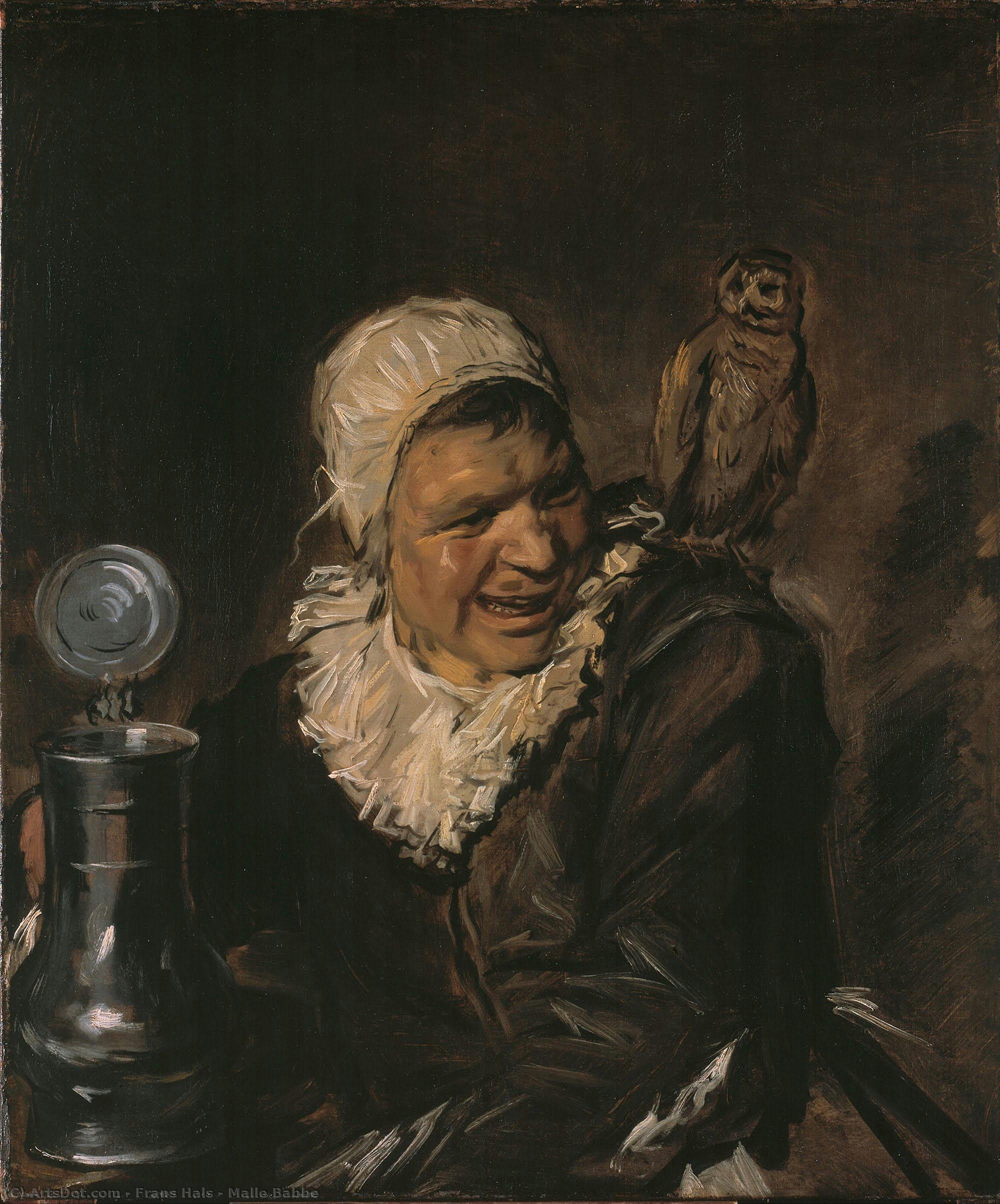
In the vast tapestry of the Dutch Golden Age, few portraits capture the raw, unbridled spirit of humanity quite like Frans Hals’s Malle Babbe. This masterpiece serves as more than just a likeness; it is a window into the vibrant, often gritty, and deeply expressive soul of seventeenth-century Haarlem. The subject, famously known as "Malle Babbe" (Mad Babbe), is presented not with the stiff, aristocratic poise typical of formal portraiture, but with a startling sense of immediacy. As she gazes toward the viewer, her expression—a mixture of mirth and wildness—breaks the fourth wall, inviting us into a moment of spontaneous life that feels as though it were captured by a modern lens rather than a seventeenth-century brush.
The composition is anchored by the woman’s commanding presence, her face illuminated by a light that seems to emanate from her very character. Perched upon her shoulder, a large bird adds a layer of whimsical complexity to the scene, acting as a symbolic companion to her untamed nature. While the background hints at the presence of others, they remain secondary to the psychological depth of the protagonist. The painting’s aged, vintage patina lends it an air of timelessness, making it a piece that does not merely sit on a wall but breathes within a room, offering a sense of historical weight and narrative mystery.
Mastery of the Loose Brushstroke
To behold Malle Babbe is to witness the revolutionary technique of Frans Hals at the height of his powers. Eschewing the painstaking, microscopic detail favored by many of his contemporaries, Hals embraced a loose and expressive brushstroke that would later inspire the Impressionists. His ability to use rapid, visible strokes to define texture—the softness of skin, the weight of fabric, and the intricate feathers of the bird—creates a sense of movement and vitality. This "alla prima" approach allows the light to dance across the canvas, catching the edges of her features and creating a rhythmic energy that keeps the eye constantly wandering through the composition.
For the discerning collector or interior designer, this technique offers an unparalleled emotional resonance. The painting does not demand attention through sheer scale or gold leaf, but through its textural richness and the palpable sense of motion. When rendered as a high-quality reproduction, these bravura brushstrokes retain their character, providing a sophisticated focal point that adds depth and a "lived-in" elegance to any curated space. It is a work that rewards close inspection, revealing new layers of light and shadow with every glance.
A Timeless Addition to the Modern Interior
Integrating a piece as historically significant as Malle Babbe into a contemporary setting requires an eye for balance and storytelling. For those designing luxury interiors, this portrait offers a magnificent contrast to minimalist or modern aesthetics. The warmth of the aged tones and the organic energy of the subject can soften the sharp lines of modern architecture, providing a soulful anchor to a room. It serves as a conversation starter, a piece of history that brings a sense of narrative complexity to a home or gallery.
Whether placed in a sunlit study or a moody, dimly lit library, the painting’s ability to evoke emotion remains constant. It is an investment in atmosphere. By bringing this work into a collection, one is not merely acquiring an image, but capturing a fragment of the Dutch Golden Age—a celebration of life, laughter, and the beautiful imperfection of the human spirit. It is a profound choice for those who seek art that transcends mere decoration to become a true inhabitant of their space.