Frans Hals I: A Master of Portraiture and Emotion
Frans Hals I (1580 – 1666) stands as one of the most celebrated figures of the Dutch Golden Age, an era defined by artistic innovation and cultural flourishing. Born in Antwerp, Belgium, Hals’s early life remains somewhat elusive, yet he swiftly established himself as a pivotal artist within Haarlem’s vibrant art scene—a city that served as a crucible for groundbreaking experimentation.
Hals distinguished himself through an unparalleled approach to portraiture, rejecting the meticulous detail favored by many of his contemporaries. Instead, he embraced a loose and expressive brushstroke technique – a revolutionary departure from convention – which imbued his canvases with a palpable sense of immediacy and psychological depth. This method wasn’t merely stylistic; it reflected Hals's profound understanding of human character and his ability to capture fleeting emotions.
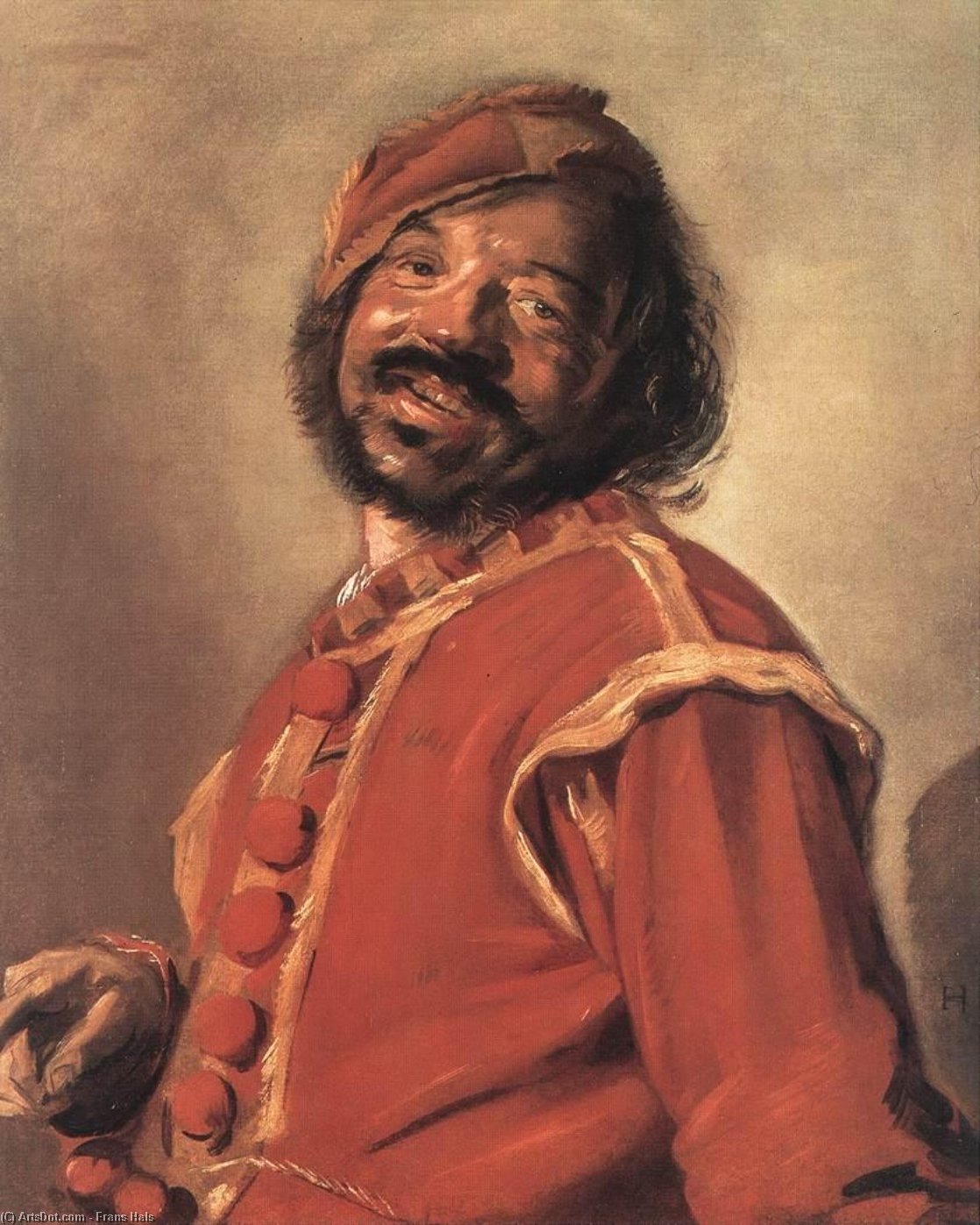
Mulatto (so-called): A Study in Character
“Mulatto (so-called)” is a portrait painted by Frans Hals I in 1628-30, currently housed at the Gemäldegalerie Alte Meister in Leipzig. The painting depicts a man dressed in opulent crimson attire adorned with gold trim—a visual statement of wealth and status typical for the period.
The subject’s gaze is direct and engaging, conveying confidence and intelligence. Hals skillfully utilizes chiaroscuro – dramatic contrasts between light and shadow – to sculpt the figure's face and torso, highlighting musculature and creating a sense of volume. Notice the subtle smile playing on his lips; this gesture speaks volumes about his demeanor and suggests an inner serenity.
Beyond its formal beauty, “Mulatto (so-called)” transcends mere representation. Hals’s technique captures not just physical appearance but also psychological nuance—a hallmark of his artistic vision. The inclusion of a chair in the background subtly reinforces the portrait's setting as one of refined leisure and social importance.
Technique and Innovation
Hals’s brushwork is characterized by its spontaneity and textural richness. He employed impasto – applying paint thickly onto the canvas – creating visible ridges and grooves that contribute to the painting’s tactile quality. This technique was uncommon for Hals's time, prioritizing capturing the essence of his subject over achieving photographic accuracy.
Furthermore, Hals’s masterful use of color—particularly reds and golds—creates a harmonious visual experience. The crimson robe commands attention while simultaneously conveying warmth and vibrancy. The gold trim adds an element of prestige and reinforces the portrait's grandeur.
Historical Context and Legacy
"Mulatto (so-called)" reflects the cultural anxieties surrounding racial identity during the Baroque period in Europe. The painting’s title itself – “Mulatto (so-called)” – underscores the complexities of classifying individuals based on appearance, highlighting societal prejudices prevalent at the time.
Despite its controversial subject matter, Hals's portrait remains a testament to his artistic genius and enduring influence. It exemplifies the Dutch Golden Age’s fascination with capturing human emotion and psychological realism—a legacy that continues to inspire artists today. Frans Hals I’s innovative approach solidified his place as one of history’s most important portrait painters.
Further Exploration
To delve deeper into Frans Hals I's artistic achievements, we encourage you to visit the Frans Hals Museum in Haarlem (https://www.franshalsmuseum.nl/) where you can admire reproductions of his masterpieces and gain insights into his life and career.
For additional information on Hals’s artistic style and techniques, explore articles such as “Frans Hals I: Innovation, Intimacy & the Dutch Golden Age Portrait” (https://www.wga.hu/html_m/h/hals/i/frans-hals-i-innovation-intimacy-%26-the-dutch-golden-age-portrait.html).