A Moment Frozen in Light: The Intimacy of Frans Hals
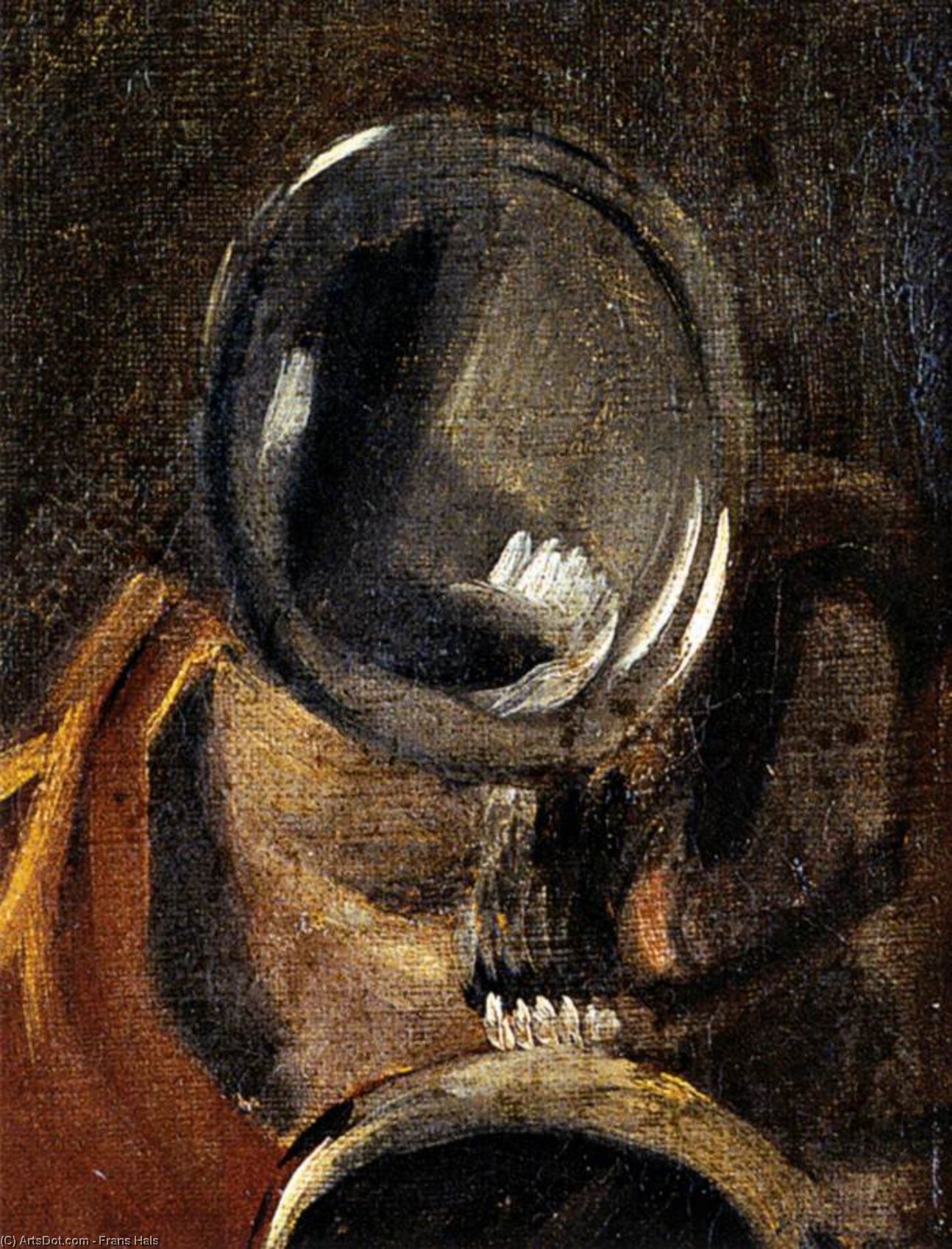
In the quiet corners of art history, certain details possess the power to command an entire room, much like a whispered secret shared between the viewer and the canvas. The detail from Peeckelhaering, painted by the legendary Dutch master Frans Hals in 1628, offers a profound glimpse into the virtuosity of the Dutch Golden Age. While the full composition of this work captures a sense of lively character, this specific fragment invites us to linger on the interplay of light and texture. At its heart lies a striking juxtaposition: the metallic, structured form of a trombone partially obscured by the crystalline clarity of a glass cover. It is a study in perception, where the artist uses a magnifying effect to draw our gaze into a world of concentrated focus and unexpected beauty.
The technique employed here is nothing short of breathtaking, showcasing the signature alla prima style that made Hals a revolutionary of his era. Rather than hiding his process beneath layers of invisible glazing, Hals embraced a loose, spontaneous brushstroke that breathes life into the inanimate. One can almost feel the weight of the brass and the cool, smooth surface of the glass through the visible, energetic application of oil paint. This painterly approach creates a sense of immediacy, as if the scene were captured in a fleeting heartbeat. For the collector or interior designer, this piece offers a sophisticated textural element that brings a dynamic, tactile energy to any curated space.
Symbolism and the Mastery of the Dutch Golden Age
Beyond its formal beauty, the work resonates with the intellectual curiosity of the seventeenth century. The presence of the glass cover, acting as a magnifying lens, serves as a powerful metaphor for the era's burgeoning scientific advancements and the desire to uncover the hidden truths of the natural world. It represents a moment of scrutiny, where the mundane—a musical instrument—is elevated to an object of intense investigation. This layer of symbolism adds a profound intellectual depth to the painting, making it much more than a mere still life; it is a meditation on sight, clarity, and the act of looking itself.
For those seeking to adorn a home or gallery with art that inspires conversation, this reproduction serves as an exquisite centerpiece. It bridges the gap between historical reverence and contemporary aesthetic appeal. The dramatic contrast between the dark, atmospheric background and the luminous highlights on the trombone creates a chiaroscuro effect that provides a sense of luxury and timelessness. Whether placed in a modern minimalist setting to provide a focal point of classical gravity or integrated into a traditional study to enhance its scholarly atmosphere, this work from the hand of Frans Hals remains an enduring testament to the magic of light and the enduring power of the human gaze.