A Glimpse into Seventeenth-Century Soul
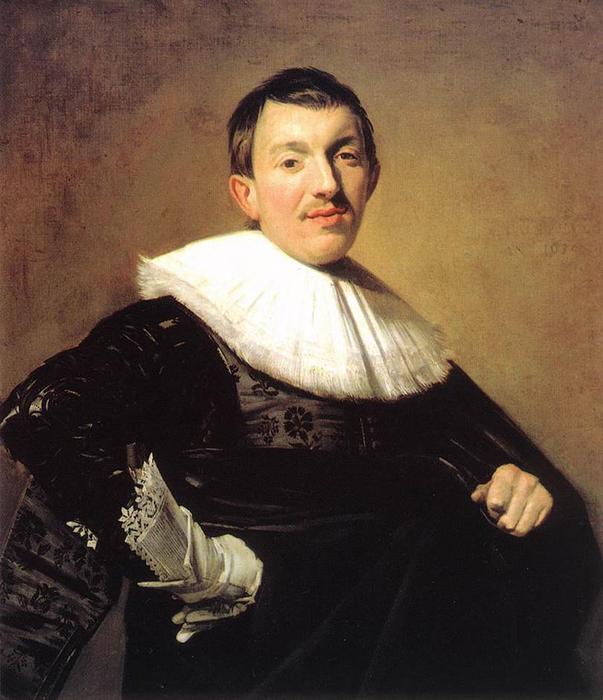
To gaze upon Frans Hals’s Portrait of a Man is to step through a portal into the vibrant, bustling heart of the Dutch Golden Age. Painted during an era when the Netherlands was emerging as a global titan of trade and culture, this work transcends the mere documentation of a face; it captures the very essence of a man defined by his era. The subject, presented with an air of quiet authority, wears the unmistakable attire of the upper class—a crisp, ruffled collar and a meticulously rendered white cravat that speak to a life of distinction and prosperity. His gaze, steady and serious, meets the viewer with an immediacy that feels startlingly modern, as if the centuries between his era and our own have momentarily dissolved.
The painting serves as more than a personal tribute; it is a window into the social fabric of seventeenth-century Haarlem. During this period, the rise of the merchant class brought about a new kind of portraiture—one that celebrated individual character and civic importance rather than just aristocratic lineage. In the subtle lines of his expression and the dignified posture of his frame, we see the embodiment of the burgeoning bourgeois values: stability, confidence, and a profound sense of presence within a rapidly changing world.
The Mastery of the Loose Brushstroke
What truly elevates this portrait from a historical record to a masterpiece is Hals’s revolutionary approach to technique. Eschewing the stiff, overly polished finish favored by many of his contemporaries, Hals embraced a signature style characterized by loose, expressive brushwork and an incredible sense of spontaneity. He did not merely paint a likeness; he painted movement and light. Through the skillful application of the impasto technique, the artist created palpable textures where thick layers of pigment catch the light, giving the fabric of the collar and the contours of the face a sculptural, three-dimensional quality.
This "sketchy" brilliance allows the viewer to see the artist's hand at work, creating a sense of vitality that breathes life into the canvas. The interplay of light and shadow—the chiaroscuro effect—is used not just for drama, but to direct the eye toward the subject's features, ensuring that his psychological depth remains the focal point. For the collector or the lover of fine art, this technique offers a sensory experience that feels alive, making every viewing an opportunity to discover new details hidden within the rhythmic strokes of the master.
An Eternal Presence for the Modern Interior
For the discerning interior designer or art enthusiast, a reproduction of this caliber offers much more than decoration; it provides a focal point of historical gravity and aesthetic sophistication. The rich textures and the classic palette of deep tones and brilliant whites allow this piece to integrate seamlessly into a variety of sophisticated settings, from a traditional study lined with books to a contemporary gallery-style living space. It brings an atmosphere of intellectual depth and timeless elegance to any room.
Investing in such a work is an act of preserving a legacy. The emotional impact of the portrait—its ability to command attention through understated strength—makes it a conversation piece that inspires reflection. Whether used to anchor a large-scale wall arrangement or as a singular, powerful statement in a minimalist room, this portrait remains a testament to the enduring power of the Dutch masters to capture the human spirit in all its dignified complexity.