A Portrait of Quiet Authority: Frans Hals’s “Portrait of a Standing Man”
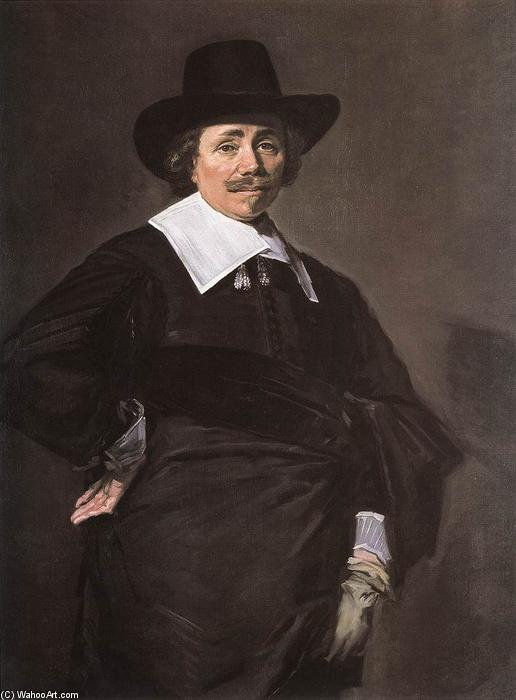
Frans Hals's "Portrait of a Standing Man," painted in the early 1650s, is more than just a likeness; it’s a carefully constructed tableau of status, composure, and subtle psychological depth. This remarkable work, now residing in the Scottish National Gallery, offers a captivating glimpse into the world of 17th-century Dutch society – a world where wealth, social standing, and an air of dignified restraint were paramount. Hals, a master of capturing fleeting moments and intense emotions with remarkably loose brushstrokes, elevates this portrait beyond simple representation, imbuing it with a palpable sense of presence.
The painting immediately draws the eye to its subject: a middle-aged gentleman, dressed in the fashionable attire of his time. The dark, enveloping cloak, trimmed with a broad white collar – a symbol of wealth and social position – dominates the composition, creating a powerful visual anchor. Beneath it, he wears a richly colored waistcoat and a ruffled shirt, indicative of his status and taste. Hals’s skill lies not just in rendering these details accurately but in conveying their significance through texture and color. The velvet of the cloak appears almost tactile, while the vibrant hues of the clothing speak to the subject's prosperity.
The Dance of Brushstrokes: Technique and Style
Hals’s signature style is brilliantly displayed here – a technique he termed “staccato,” characterized by short, broken brushstrokes that create an illusion of movement and immediacy. This approach isn’t about meticulous detail; rather, it's about capturing the *essence* of the subject. Notice how Hals uses these rapid strokes to define the contours of the man’s face, particularly around his eyes and mouth, lending them a remarkable expressiveness despite their apparent stillness. The background is deliberately muted, allowing the figure to command attention and emphasizing his presence within the frame.
The painting's composition is also noteworthy. Hals employs a frontal pose, a common device in portraiture of this era, but he subtly disrupts the formality by angling the subject slightly to the left. This creates a dynamic tension, preventing the image from feeling static or overly posed. The careful placement of his hands – one resting casually on his cloak, the other extended as if offering a gesture of confidence – further contributes to the sense of relaxed authority.
A Window into Dutch Society
“Portrait of a Standing Man” offers a valuable window into the social and cultural landscape of 17th-century Holland. The subject’s attire, his bearing, and even the setting (though largely undefined) all speak to his position within society – likely a successful merchant or member of the gentry. Hals was renowned for his ability to capture not just physical appearances but also the psychological nuances of his subjects, reflecting the growing interest in individual character during this period.
The painting’s creation coincided with a flourishing of artistic patronage and a burgeoning middle class eager to display their wealth and status through commissioned portraits. Hals was one of the leading artists catering to this demand, producing works that were both aesthetically pleasing and socially significant. His ability to capture the dignity and self-assurance of his subjects made him highly sought after by wealthy clients.
Symbolism and Emotional Resonance
Beyond its social context, “Portrait of a Standing Man” possesses a subtle emotional resonance. The subject’s gaze is direct and unwavering, suggesting confidence and perhaps even a hint of melancholy. There's an air of quiet contemplation about him – a sense that he is reflecting on his accomplishments and contemplating the future. Hals masterfully uses light and shadow to create depth and drama, drawing attention to key features of the face and enhancing the overall mood of the painting.
Ultimately, “Portrait of a Standing Man” is a testament to Frans Hals’s artistic genius – a captivating portrait that transcends mere representation and offers a profound insight into the complexities of human character and the social dynamics of 17th-century Holland. It remains a powerful example of how art can simultaneously document history and evoke enduring emotional responses.