A Glimpse Into the Dutch Golden Age Soul
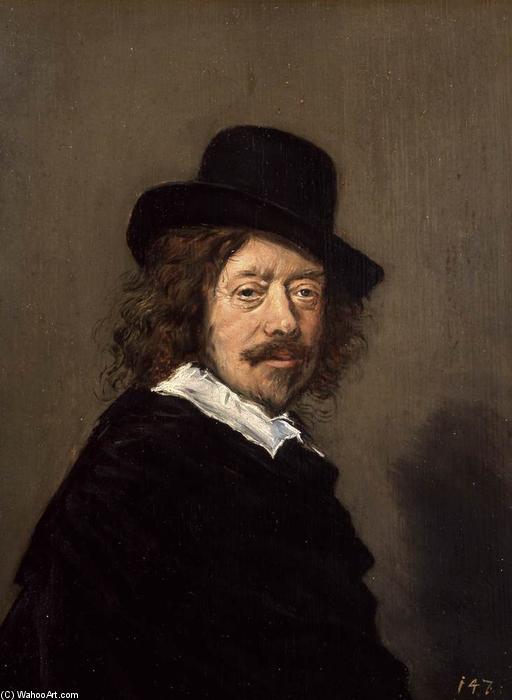
To gaze upon Frans Hals I’s Portrait of a Man is to step through a portal into the vibrant, bustling heart of seventeenth-century Haarlem. Completed in 1648, this masterpiece serves as an enduring emblem of the Dutch Golden Age—a period defined by unprecedented economic prosperity and a profound humanist spirit. The painting does not merely offer a likeness of a gentleman; it provides a window into the very essence of a man’s character. Dressed in the dignified black attire common among the era's wealthy merchants, the subject commands the space with an unflinching, direct gaze. His presence is felt immediately, as if he has only just paused his contemplations to acknowledge our presence, creating an intimacy that bridges the centuries between his world and our own.
The technical brilliance of this work lies in Hals’s revolutionary approach to the brush. Eschewing the meticulous, almost frozen detail favored by many of his contemporaries, Hals employed a signature alla prima technique. His loose, spontaneous brushstrokes allow for a sense of movement and life that is rare in portraiture of this period. Through the masterful use of chiaroscuro, he sculpts the man's face with light and shadow, emphasizing the subtle musculature and the weathered wisdom of his features. This interplay of light does more than create depth; it breathes vitality into the canvas, capturing fleeting nuances of emotion that suggest a complex, introspective inner life.
Symbolism and Social Standing
Every element within the composition is steeped in the social language of 17th-century Haarlem. The man's attire—the dark, somber coat and the hat adorned with delicate feathers—serves as a silent testament to his status and authority within the burgeoning mercantile class. In an era where clothing was a primary indicator of one's place in the social hierarchy, Hals uses these textures to communicate wealth and respectability. Even the subtle inclusion of a white ribbon or the way the light catches the fabric adds layers of meaning, reflecting the dignity and potential that characterized the humanist ideals of the Dutch Republic.
Beyond the material, the painting carries a profound psychological weight. The subject's gaze is often interpreted as a symbol of introspection and contemplation, hallmarks of the intellectual climate of the time. There is a quiet dignity in his expression, a sense of self-assuredness that avoids the trap of vanity. For the modern collector or interior designer, this piece offers more than just aesthetic beauty; it brings a sense of historical gravity and intellectual depth to any space. It is an invitation to reflect, making it a perfect centerpiece for those seeking to infuse their surroundings with a sense of timelessness and soulful character.
An Enduring Legacy for the Modern Collector
For those looking to adorn their homes or galleries with high-quality reproductions, this portrait offers an unparalleled opportunity to connect with art history. The emotional impact of the work—a blend of quiet strength and vivid immediacy—remains as potent today as it was in 1648. Whether placed in a contemporary setting to provide a striking historical contrast or within a classic study to enhance its scholarly atmosphere, the painting acts as a focal point of conversation and inspiration. Owning a piece that captures the very soul of the Dutch Golden Age is not merely an act of decoration, but an investment in the enduring power of human expression.