A Glimpse into the Soul of Haarlem
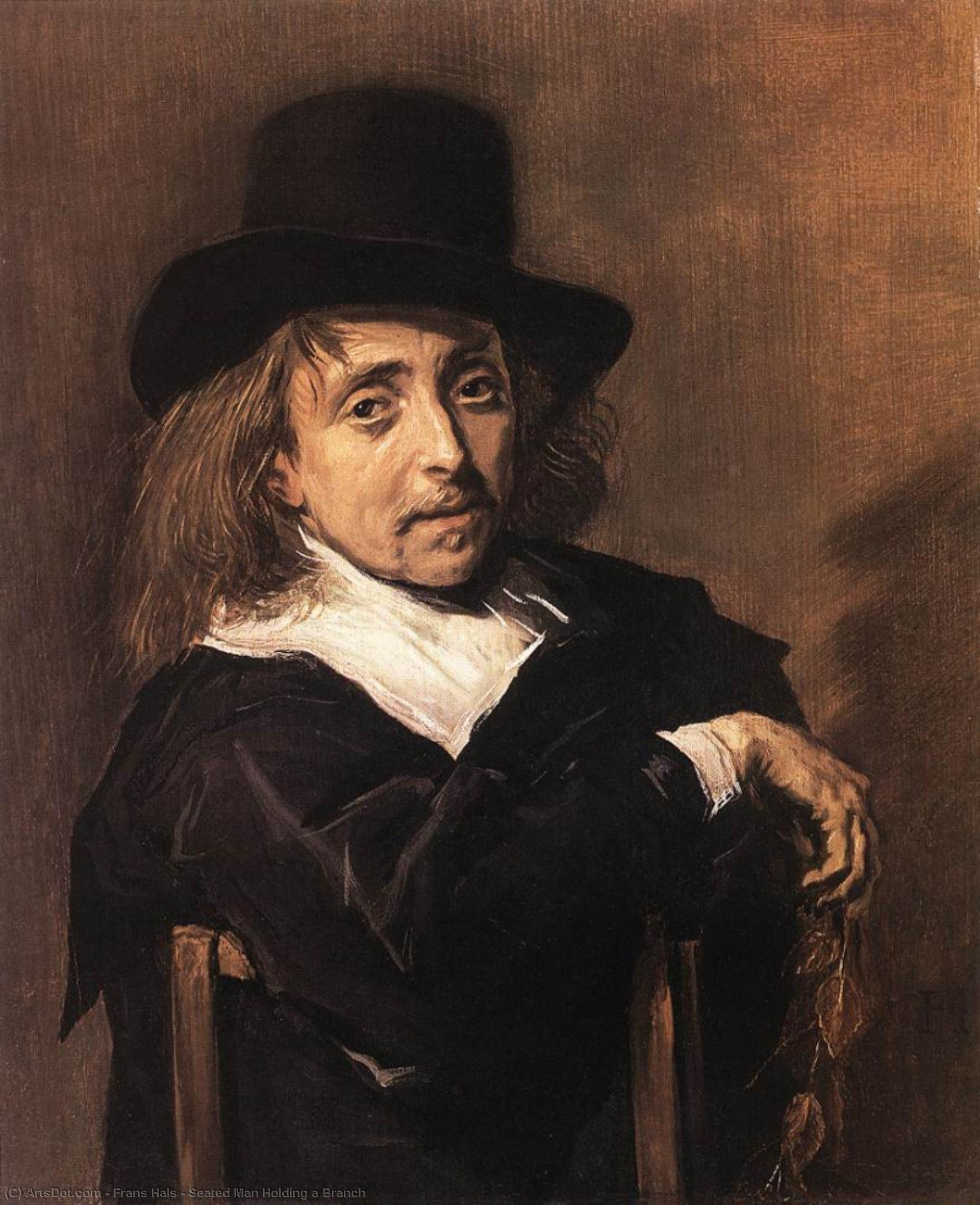
In the quiet intensity of Frans Hals I’s Seated Man Holding a Branch, painted in 1645, we encounter more than just a portrait; we step into the very heartbeat of the Dutch Golden Age. This masterpiece serves as a profound emblem of an era defined by unprecedented intellectual curiosity and artistic flourishing. As the man sits before us, his gaze possesses a captivating immediacy that seems to bridge the centuries, inviting the viewer into a private moment of reflection. The painting captures the essence of Haarlem—the artist's adopted home—a city that stood as a bastion of humanist ideals and burgeoning prosperity during a time when the Netherlands was forging its identity through trade, art, and a newfound sense of civic pride.
The subject, dressed in the elegant attire of the period, wears a black hat adorned with a delicate white ribbon, a detail that speaks to the refined tastes of the 17th-century merchant class. There is an understated dignity in his posture—relaxed yet profoundly attentive—suggesting a man of substance and character. The presence of the branch he holds introduces a subtle layer of symbolism, perhaps hinting at themes of growth, vitality, or the connection between humanity and the natural world, common motifs in the humanist discourse of the age.
The Revolutionary Mastery of the Brush
What truly distinguishes this work is Hals’s radical departure from the rigid, meticulous precision that dominated much of the academic style of his time. Instead of striving for a photographic, frozen accuracy, Hals embraced a remarkably spontaneous and loose technique. His brushwork is alive with movement; he applied paint in thick, textured impasto layers that allow the light to dance across the surface of the canvas. This method does not merely record a likeness but seeks to capture the flickering emotional state and the inner vitality of the sitter.
The interplay of light and shadow—the dramatic chiaroscuro—is masterfully manipulated to draw the eye toward the focal points of the composition: the man's face and hands. These areas are illuminated with a brilliance that contrasts sharply against the deep, rich shadows of his clothing and the background. This technique creates a palpable sense of three-dimensionality and atmosphere, making the portrait feel less like a static image and much more like a living, breathing encounter. For the discerning collector or interior designer, this dynamic energy offers a sophisticated focal point that brings a sense of historical depth and movement to any curated space.
An Enduring Legacy for the Modern Collector
To possess a reproduction of such a significant work is to bring a piece of art history into the contemporary home. The rich color palette—dominated by deep blacks, earthy browns, and crisp whites with subtle hints of red—complements a wide variety of interior aesthetics, from classic traditionalism to modern minimalist settings. The painting’s ability to evoke both intimacy and grandeur makes it an ideal choice for those looking to inspire conversation and emotional resonance within their decor.
Beyond its aesthetic appeal, Seated Man Holding a Branch remains a testament to the spirit of innovation. It reminds us that true beauty often lies in the imperfect, the spontaneous, and the human. Whether you are an art enthusiast drawn to the technical brilliance of the Dutch Masters or a designer seeking a work with profound narrative weight, this piece offers an unparalleled opportunity to celebrate the enduring legacy of Frans Hals and the luminous era of the Dutch Golden Age.