A Glimpse into the Soul of the Dutch Golden Age
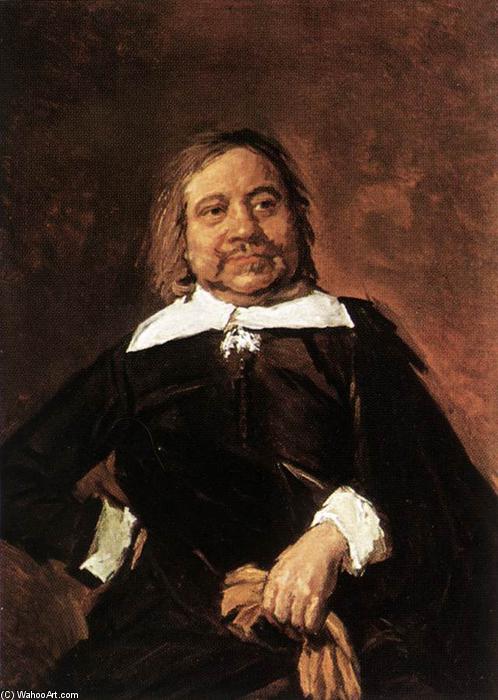
To stand before Frans Hals’s Willem Croes is to encounter more than just a portrait; it is to engage in a silent, profound dialogue with a man from a vanished era. Painted in 1662, this masterpiece serves as a breathtaking window into the Dutch Golden Age, a period defined by unprecedented mercantile prosperity and cultural flowering. The subject, Willem Croes, was not merely a sitter but a prominent Antwerp merchant and a pillar of Haarlem’s civic society. Through Hals’s masterful hand, we see more than the outward trappings of wealth; we witness a portrait of dignified resilience. The way Croes sits at his table, his gaze directed outward with an unwavering seriousness, commands the viewer's attention, projecting a sense of confidence and composure that reflects the stability of the burgeoning commercial landscape of the 17th century.
The emotional weight of the painting lies in its ability to capture the fleeting essence of human character. While many contemporary portraitists sought to freeze time through meticulous, almost clinical detail, Hals pursued something far more elusive: the vitality of life itself. There is an introspective quality to Croes’s expression, a quiet reckoning visible in the subtle lines of his face and the steady depth of his eyes. For the modern collector or interior designer, this piece offers a sense of gravitas and intellectual depth, making it an ideal centerpiece for spaces that value heritage, contemplation, and the timeless beauty of human experience.
The Revolutionary Brushstroke: Technique and Texture
What truly distinguishes Willem Croes is the revolutionary technique employed by Frans Hals. He was a pioneer of the loose, expressive brushstroke—a method that eschews rigid academic conventions in favor of spontaneity and movement. Upon closer inspection, one can see the visible traces of the artist's hand, where layers of thin glazes are applied over an underpainting to create a remarkable luminosity. This approach allows light to dance across the canvas, giving the skin tones a lifelike warmth and making the textures of his attire feel palpable.
The interplay of light and shadow in this work is nothing short of masterful. Hals utilizes the contrast between the dark, somber tones of Croes’s black suit and the crisp, bright white of his collar to draw the eye directly to the subject's face. The subtle inclusion of a yellow tie adds a singular note of color that breaks the monochrome elegance, much like a sudden spark of light in a quiet room. This textural richness—the way the paint seems to breathe upon the canvas—is what makes a high-quality reproduction of this work so captivating; it allows the viewer to appreciate the very movement and vitality that Hals worked so tirelessly to instill in his subjects.
A Legacy for the Modern Collector
Integrating a piece like Willem Croes into a contemporary interior is an exercise in timeless elegance. Whether placed in a sunlit study or a sophisticated gallery-style living room, the painting brings with it a sense of historical continuity and prestige. It is a work that does not merely decorate a wall but enriches the atmosphere of a home, offering a focal point that invites long periods of observation and thought.
For those seeking to honor the legacy of the Dutch masters, this reproduction serves as an exquisite tribute to the artistry of the 17th century. It embodies the perfect balance between historical significance and aesthetic splendor, making it a profound choice for art lovers who appreciate the intersection of technical brilliance and emotional depth. In every stroke, the spirit of Haarlem’s golden era lives on, inviting us to rediscover the dignity and resilience found within the human gaze.