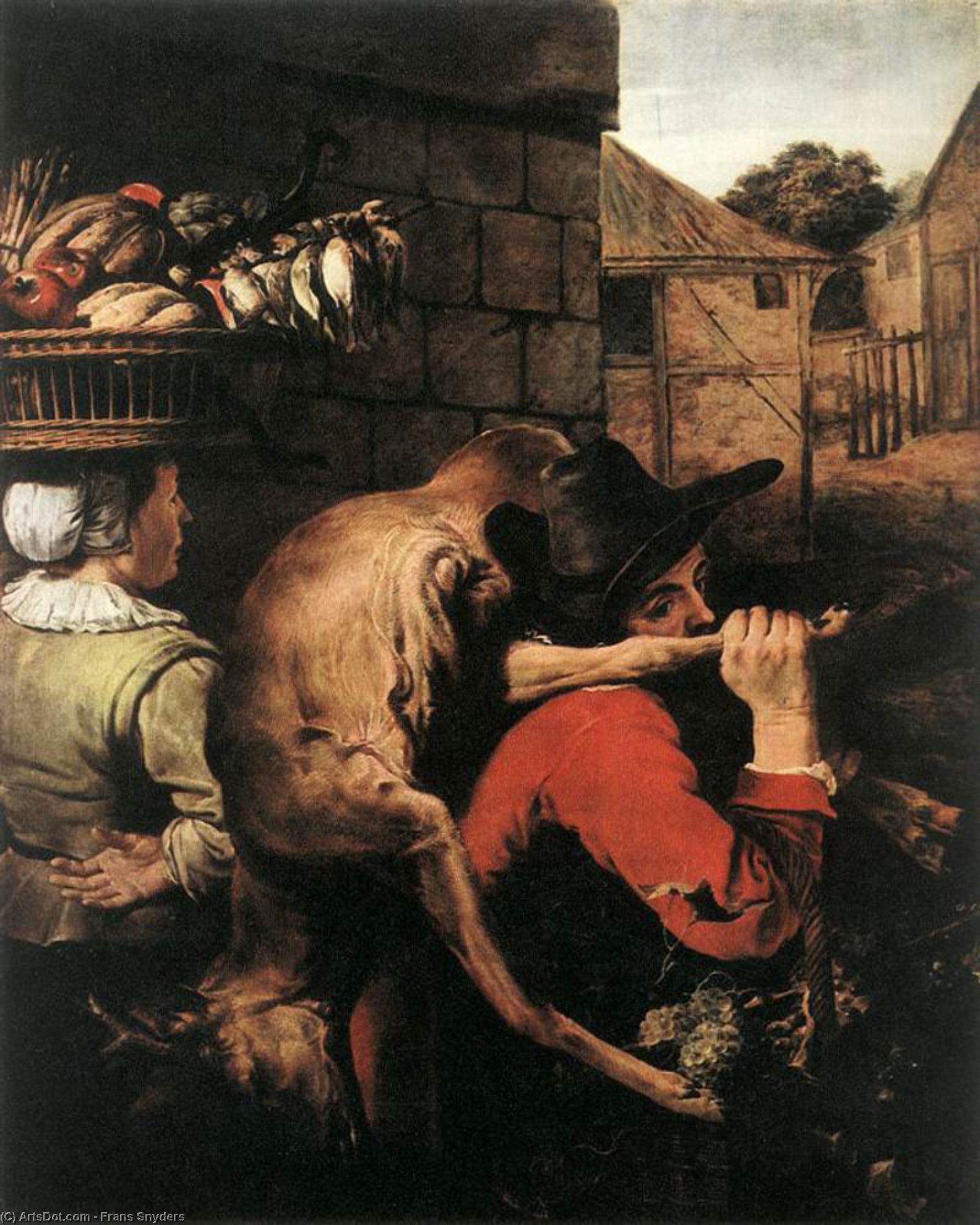
Return from the Hunt: A Symphony of Texture and Myth
Frans Snyders’ “Return from the Hunt,” completed around 1610, stands as a cornerstone of Flemish Baroque painting—a testament to an artist who elevated still life into a realm of profound observation and dramatic expression. More than just depicting animals and figures; it embodies the spirit of its time, reflecting the opulent tastes of aristocratic patrons and grappling with complex themes of beauty, mortality, and the sublime.
The painting’s immediate impact is undeniable—a vibrant tableau teeming with life. Snyders meticulously renders a hunting scene bathed in diffused light, capturing the fleeting moment after a successful pursuit. Dominating the composition are four women – Diana, accompanied by three nymphs – reclining amidst a richly textured forest floor. The artist's masterful use of chiaroscuro creates an illusionistic depth that draws the viewer into this idyllic landscape.
- Style: Baroque—characterized by dramatic lighting, opulent ornamentation, and a focus on realism. Snyders’ style aligns perfectly with the prevailing aesthetic sensibilities of Antwerp during the early 17th century.
- Technique: Oil paint on canvas—a technique perfected by Snyders that allowed for unparalleled tonal range and textural detail. The artist employed impasto, applying thick layers of pigment to create palpable surfaces that convey a sense of physicality and immediacy.
- Composition: Triangular—the arrangement of figures creates stability and visual harmony, guiding the eye across the canvas. Diana occupies the apex of the triangle, symbolizing regal authority and grace.
Beyond its technical brilliance, “Return from the Hunt” resonates with symbolic significance rooted in classical mythology. Diana represents Artemis, the Greek goddess of hunting and chastity—a figure revered for her independence and prowess. The nymphs embody feminine beauty and innocence, mirroring Diana’s idealized form. The presence of animals – a hare and a bird – underscores the connection between humanity and nature, highlighting themes of fecundity and renewal.
The painting's emotional impact is palpable—a celebration of sensual pleasure tempered by an awareness of mortality. Snyders captures not merely what he sees but what he feels—the exhilaration of the hunt combined with the tranquility of repose. The artist’s meticulous attention to detail elevates this scene beyond mere representation, transforming it into a meditation on beauty and existence. It's a piece that invites contemplation and rewards repeated viewing.
Considered alongside other works by Snyders and his contemporaries—particularly Rubens— “Return from the Hunt” exemplifies the Baroque ideal of grandeur and dynamism. Its enduring appeal lies in its ability to transport viewers back to a bygone era, capturing the essence of artistic innovation and humanist thought. Reproductions offer an opportunity to appreciate this masterpiece’s exquisite craftsmanship and profound symbolic depth.