A Masterpiece of Meticulous Detail
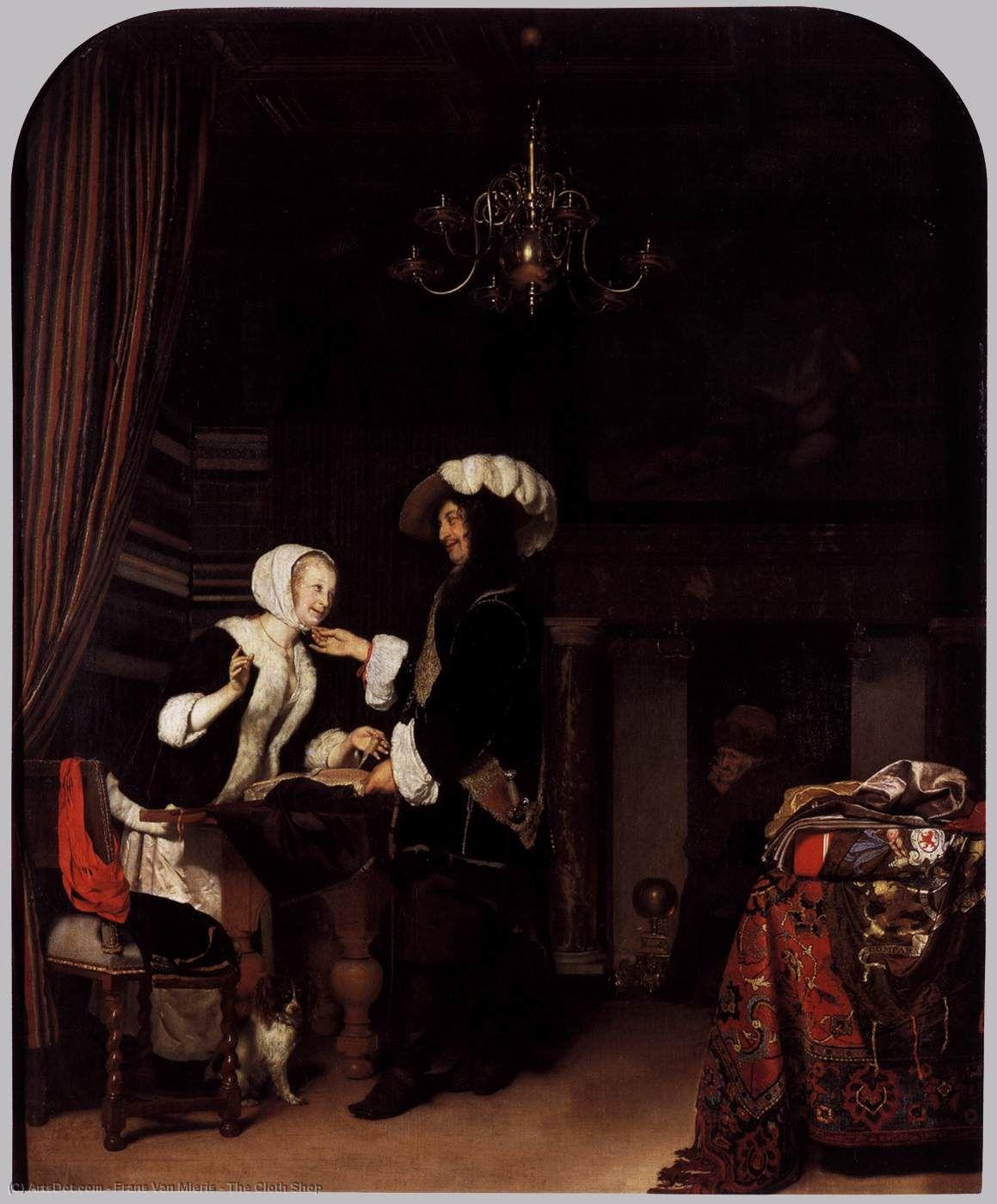
In the quiet, luminous world of the Dutch Golden Age, few artists captured the intimate textures of life with as much reverence as Frans van Mieris the Elder. His 1660 masterpiece, The Cloth Shop, is not merely a depiction of commerce; it is a breathtaking window into the soul of seventeenth-century Leiden. Executed on a gilt copper panel—a surface that allows for an almost supernatural level of precision—the painting serves as a pinnacle of the fijnschilder movement. This "fine painter" technique, characterized by incredibly smooth brushwork and microscopic detail, transforms a simple retail setting into a shimmering, tactile experience where every thread of fabric and every glint of light feels tangibly real.
The scene unfolds within a room that breathes with a warm, atmospheric glow. A large chandelier hangs suspended from the ceiling, acting as the primary source of illumination that dances across the polished surfaces of the shop. As the eye wanders through the composition, one is struck by the artist's masterful use of chiaroscuro. The dramatic interplay between deep, velvety shadows and brilliant highlights does more than just create depth; it sculpts the figures, lending them a monumental presence within their modest surroundings. For the discerning collector or interior designer, this play of light offers a sophisticated focal point that can imbue any space with a sense of historical grandeur and quiet drama.
Symbolism and the Social Fabric
Beyond its technical brilliance, The Cloth Shop is a complex narrative tableau rich with social commentary and subtle psychological tension. At the heart of the composition, an elderly gentleman, draped in opulent, heavy robes, engages with a younger man. The positioning of these figures is far from accidental; the elevation of the elder figure subtly reinforces the rigid social hierarchies of the era. Yet, Van Mieris introduces a layer of human intimacy that transcends mere transaction. A subtle, almost fleeting gesture—the gentleman’s hand brushing near his companion—hints at an unspoken connection, perhaps even a touch of eroticism or hidden desire, tucked away within the mundane act of inspecting fabric bolts.
The very subject matter—the cloth itself—serves as a powerful metaphor. The bolts of silk, satin, and wool displayed on the shelves are not just commodities; they represent wealth, status, and the interconnectedness of the Dutch Republic's global trade. To gaze upon this painting is to witness the intersection of private emotion and public prosperity. The meticulous rendering of these textiles invites the viewer to reach out and touch the canvas, making the artwork an immersive sensory experience that bridges the gap between the seventeenth century and the modern day.
An Eternal Inspiration for the Modern Interior
For those looking to curate a collection or design a room of distinction, a high-quality reproduction of The Cloth Shop offers much more than mere decoration. It brings with it an aura of intellectual depth and classical elegance. The painting’s warm palette and rich textures harmonize beautifully with both traditional period furnishings and contemporary minimalist settings, providing a sophisticated anchor for a well-curated interior. It is a piece that rewards repeated viewing, revealing new details—the glint of a brass fixture, the soft fold of a sleeve, or the quiet intensity in a subject's gaze—each time the light hits it differently.
Owning a reproduction of such a significant work allows one to celebrate the legacy of the Dutch masters. It is an invitation to surround oneself with the beauty of the fijnschilder tradition, bringing a sense of history, storytelling, and unparalleled craftsmanship into the home. Whether placed in a sunlit study or a moody dining room, this artwork remains a timeless testament to the power of art to capture the fleeting, beautiful moments of human existence.