Explore František Kupka's pioneering abstract art! A Czech painter known for Orphic Cubism & innovative use of color, shaping modern art’s foundations.
Dynamic of a ballet – Frantisek Kupka
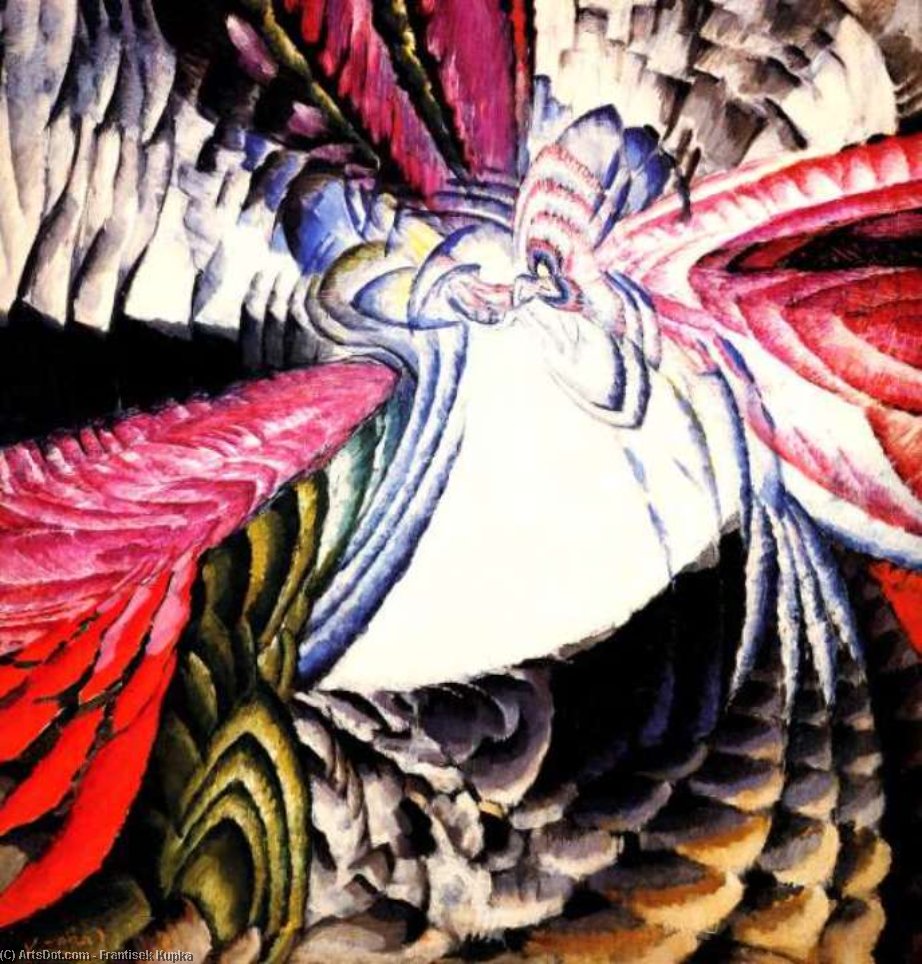
František Kupka’s “Dynamic of a ballet” isn't merely a depiction of dance; it’s an embodiment of Orphism, a revolutionary movement born from the crucible of early 20th-century artistic experimentation. Painted in 1912, this watercolor captures not a literal representation of performers but rather the very essence of movement and energy—the feeling itself—transformed into a visual language that defies conventional perspective. Imagine stepping into a studio bathed in diffused light as Kupka’s brushstrokes swirl across the canvas, mirroring the rhythm and grace of balletic motion.
Composition & Color Palette: A Symphony of Spirals
The artwork's dominant characteristic is its mesmerizing spiral composition. Like a dancer spinning effortlessly, concentric circles radiate outwards from a central point, creating an illusion of centrifugal force—a visual metaphor for dynamism itself. Kupka eschews traditional spatial relationships, prioritizing instead the flow and interconnectedness of shapes. This deliberate absence of perspective isn’t a flaw but rather a conscious decision to liberate the eye from constraints, inviting it to follow the spiraling patterns across the entire expanse of the canvas. The color palette is equally bold—a vibrant interplay of reds, pinks, blues, whites, and greens. These hues aren't blended smoothly; instead, they’re applied in distinct areas, mirroring the layering of fabrics or costumes during a ballet performance. The juxtaposition of warm reds and pinks against cool blues and greens generates visual tension and contributes to the overall feeling of excitement and movement.
Technique & Style: Orphic Cubism's Fluid Embrace
Kupka’s masterful technique—watercolor on paper—allows for subtle gradations of color and texture, creating a luminous quality that imbues the artwork with an ethereal glow. The brushstrokes are fluid and expressive, conveying a sense of spontaneity and capturing the fleeting beauty of motion. Evidence suggests layering techniques, hinting at a deliberate effort to build up depth and richness without resorting to traditional shading methods. Kupka’s style firmly anchors itself within Orphism—a branch of Cubism that prioritized color and rhythm over geometric form. This approach sought to distill visual experience into its purest elements, prioritizing emotional impact over literal depiction. The resulting image is less about capturing a specific ballet scene and more about conveying the intangible spirit of dance itself.
Symbolic Resonance: Movement Beyond Representation
“Dynamic of a ballet” transcends mere visual representation; it operates on a symbolic level. The swirling forms evoke not just physical movement but also concepts of transformation, energy, and perhaps even chaos—themes frequently explored in artistic endeavors during this period. Kupka’s deliberate abstraction serves as a conduit for conveying emotion rather than documenting reality. Like the graceful turns of a ballet dancer, the artwork invites contemplation and encourages viewers to engage with its underlying message: an exploration of pure form and color as vehicles for expressing profound feelings.
Historical Context & Legacy
Painted in 1912, “Dynamic of a ballet” reflects the broader artistic currents of its time—the burgeoning interest in abstraction and the influence of movements like Cubism and Futurism. Kupka’s pioneering approach paved the way for subsequent generations of artists to experiment with non-representational imagery and to prioritize emotional expression over visual accuracy. This artwork remains an enduring testament to the transformative power of art, demonstrating how a single image can capture not just what is seen but also what is felt—a timeless celebration of movement and beauty.