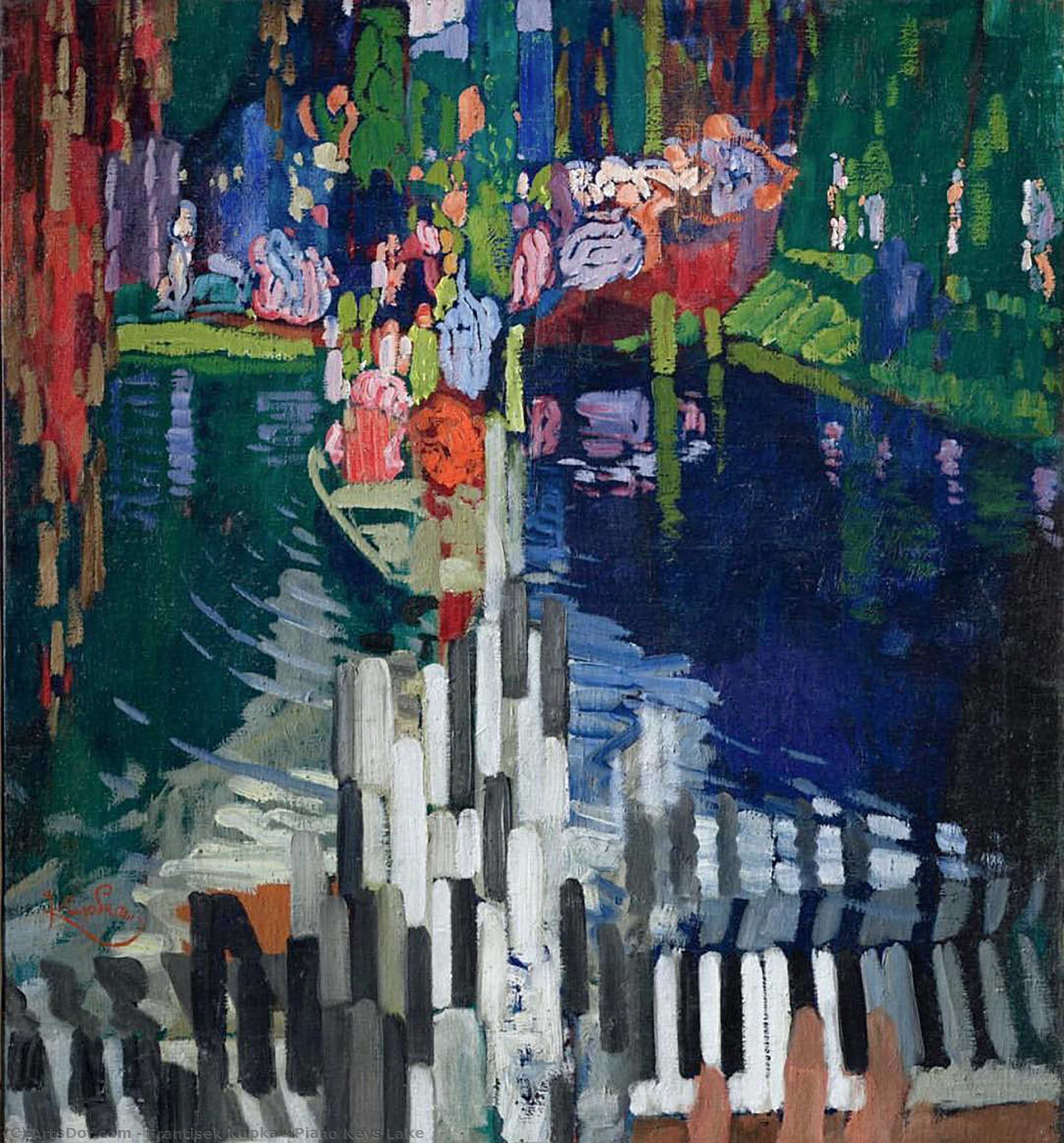
A Fragmented Reflection: Exploring Frantisek Kupka’s Piano Keys Lake
Piano Keys Lake, painted in 1905 by František Kupka, stands as a cornerstone of Orphism—a movement that boldly rejected representational art in favor of pure abstraction and vibrant color harmonies. This landscape isn't merely depicting a lakeside vista; it’s conveying an emotional state through a meticulously crafted visual language. The painting immediately captivates with its energetic brushstrokes, which dominate the canvas and create a palpable sense of dynamism—a characteristic hallmark of Kupka’s artistic vision. Thick impasto layers contribute to a textured surface that invites tactile engagement, mirroring the artist's desire to capture not just what he sees but how he feels.
- Style: Orphism – A Reaction Against Impressionism
- Technique: Oil on Canvas; Visible Brushwork; Impasto Texture
- Color Palette: Intense Saturation; Unconventional Combinations; Harmonious Vibrancy
The historical context surrounding Piano Keys Lake is crucial to understanding its significance. Kupka’s artistic trajectory began with academic training, reflecting the prevailing aesthetic sensibilities of his time—a deliberate contrast to the radical experimentation that would soon define Orphism. Influenced by Nietzsche and Kandinsky, Kupka sought to liberate color from descriptive function, believing it possessed inherent expressive power. This pursuit aligns perfectly with the broader intellectual currents of the era, where philosophers questioned traditional notions of reality and championed subjective experience. The painting embodies this spirit of inquiry, prioritizing emotional resonance over literal depiction.
- Historical Context: Fin-de-Siècle Paris; Nietzsche’s Influence; Kandinsky's Vision
- Symbolism: Subtle Representations of Nature; Exploration of Color Harmony; Suggestion of Movement and Emotion
Beyond its formal qualities, Piano Keys Lake possesses a profound emotional impact. The fragmented composition—characterized by geometric shapes and overlapping planes—creates an unsettling yet mesmerizing visual experience. It’s as if Kupka is attempting to distill the essence of nature into its purest form, capturing not just the surface appearance but also the underlying vibrations of energy and color. The artist's deliberate disregard for perspective reinforces this feeling of disorientation, inviting viewers to contemplate the artwork on a deeper level—to consider how it communicates feelings rather than simply presenting an image. It’s a piece that lingers in the mind long after viewing, prompting reflection on themes of beauty, solitude, and the transformative power of art itself.
- Emotional Impact: Disorientation; Contemplation; Resonance with Nietzschean Philosophy