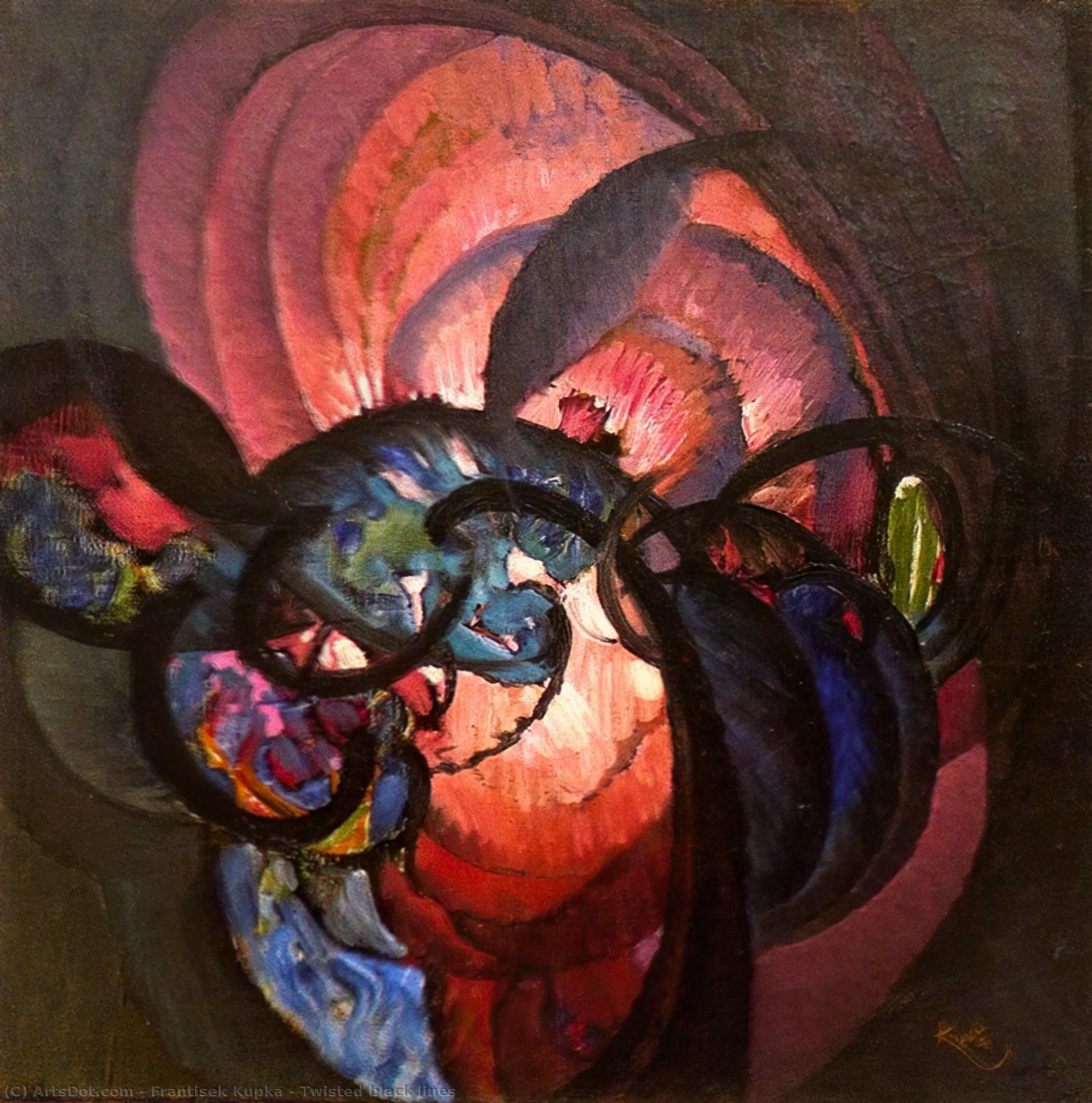
Vibrant abstract artwork by František Kupka featuring swirling pink, red, and blue petals in a dynamic floral composition, showcasing the pioneer of abstraction's exploration of color and form – discover this captivating piece.
A Symphony of Color: Exploring "Twisted Black Lines" by František Kupka
František Kupka’s “Twisted Black Lines” stands as a pivotal moment in the evolution of abstract art, a vibrant testament to the artist's relentless pursuit of pure form and color. This captivating work, brimming with dynamic energy and an almost hallucinatory palette, invites viewers into a realm where traditional representational concerns dissolve, leaving only the raw essence of visual experience. The painting’s immediate impact lies in its audacious use of color – a riotous explosion of pinks, reds, blues, greens, yellows, and oranges that coalesce around a central, flower-like structure. This isn't merely a depiction of flora; it’s an exploration of chromatic relationships, a deliberate orchestration of hues designed to evoke emotion and stimulate the senses.
The Dawn of Abstraction: Kupka’s Journey
- A Pioneer’s Path: Born in 1871 in Opočno, Bohemia, František Kupka initially trained within the confines of academic art traditions. His early works, characterized by meticulous technique and historical subject matter, reveal a disciplined hand but lack the radical experimentation that would define his later career.
- Parisian Influence: A crucial turning point arrived in 1894 with Kupka’s relocation to Paris. Immersed in the city's vibrant artistic scene – attending the Académie Julian and studying under Jean-Pierre Laurens – he began to dismantle conventional notions of representation, influenced by the intellectual currents of the fin de siècle.
- Spiritual Exploration: Kupka’s artistic journey was deeply intertwined with spiritual concerns, reflecting a desire to transcend the material world through color and form. This pursuit led him toward increasingly abstract explorations, anticipating movements like Orphism and Cubism.
Decoding the Composition: Form, Color, and Symbolism
The central flower-like structure dominates the canvas, its “twisted black lines” – a recurring motif in Kupka’s work – acting as both structural elements and visual disruptions. These lines aren't merely decorative; they introduce an element of tension and dynamism, preventing the composition from settling into static harmony. The smaller flower to the right offers a counterpoint, suggesting a duality or perhaps a reflection on the nature of growth and decay. The inclusion of a bird and two circles adds layers of symbolic meaning, potentially representing aspiration, spirituality, or the interconnectedness of all things – interpretations open to individual contemplation.
Technique and Emotional Impact
"Twisted Black Lines" exemplifies Kupka’s innovative approach to painting. He employed a technique characterized by bold brushstrokes and a layering of colors that creates a palpable sense of movement and vibration. The vibrant hues aren't blended smoothly; instead, they retain their individual character, contributing to the overall energetic effect. The result is an artwork that doesn’t simply depict a scene but actively *feels* – evoking feelings of joy, wonder, and perhaps even a touch of unease. This piece resonates with the viewer on an emotional level, inviting them to participate in the artist's exploration of color and form. It represents a bold step towards abstraction, solidifying Kupka’s place as one of the most important figures in the history of modern art.