A Glimpse into Post-War Socialist Realism
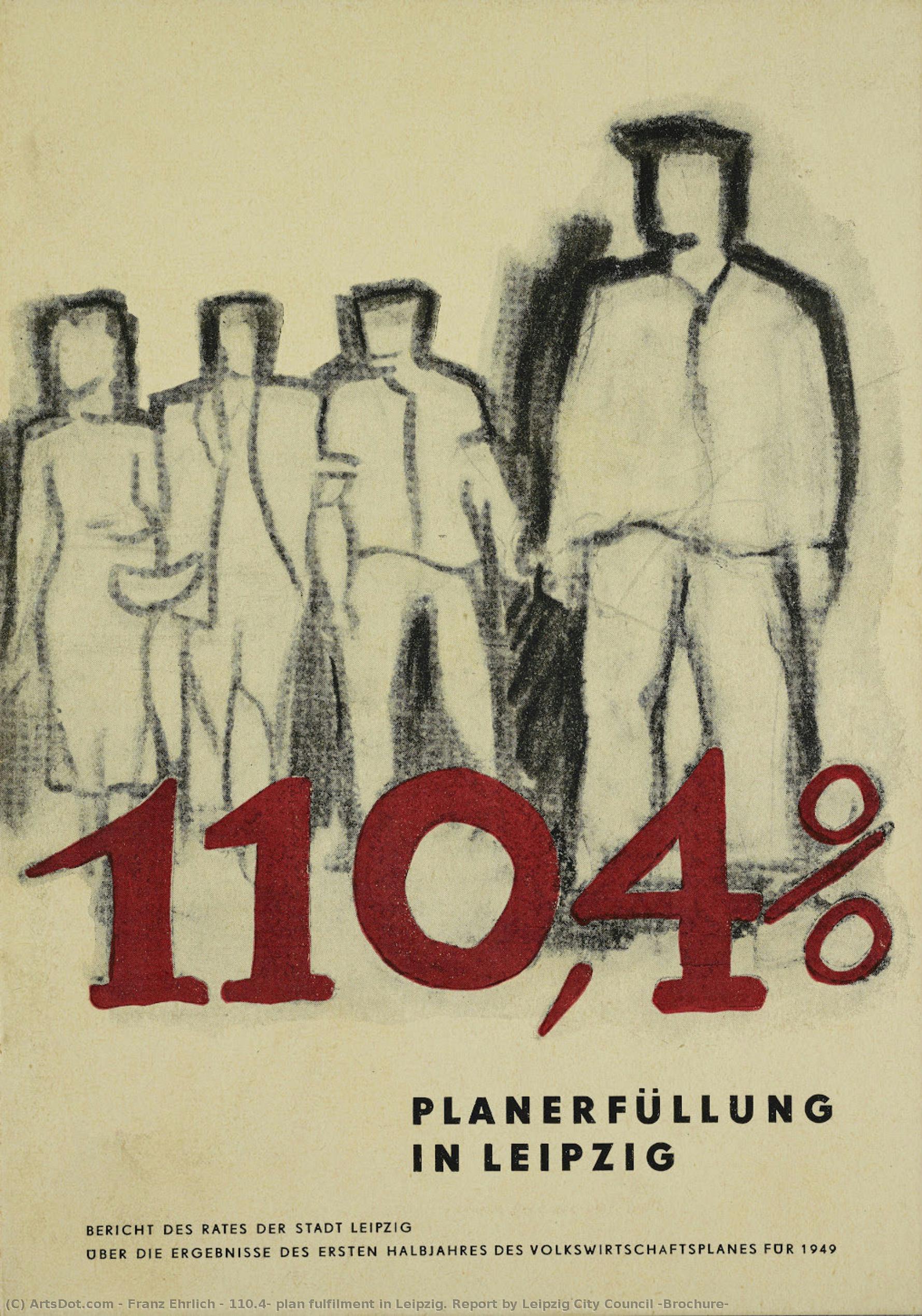
This arresting piece, "110.4% plan fulfilment in Leipzig. Report by Leipzig City Council," offers more than just a depiction; it presents a carefully curated moment of civic aspiration frozen in time. Created in 1949, this work emerges from the immediate aftermath of global upheaval, carrying the weight and earnest optimism characteristic of post-war German art. The very title suggests an adherence to collective goals—a tangible measure of success presented as public record. Viewing it now allows us a unique window into the ideological currents that shaped daily life and artistic output in East Germany during this pivotal era.
Composition and Technique: The Power of the Group Portrait
The composition itself is strikingly formal, featuring five figures arranged with deliberate symmetry across the frame. They stand not as individuals lost in private contemplation, but as representatives within a collective narrative. Franz Ehrlich, known for his graphic sensibilities honed at the Bauhaus, employs a style that blends documentary realism with an underlying sense of monumental purpose. The black and white medium lends the work an immediate gravitas, stripping away the distraction of color to focus intensely on form, gesture, and shared presence. One can almost feel the texture of the print media used, suggesting it was intended for public display—a visual testament meant to be absorbed by the community.
Symbolism of Achievement and Community
The symbolism woven into this scene is rich with socio-political undertones. The concept of "plan fulfilment" transcends mere economics; it speaks to ideological alignment, communal effort, and the shared belief in a collective future. Each figure, positioned within relation to the others, embodies a role within the larger societal machine. It invites the viewer to question: what does 'fulfillment' truly mean when measured by external metrics? The artwork subtly elevates the mundane act of reporting into an almost heroic tableau, suggesting that civic participation itself is an art form worthy of commemoration.
Echoes for the Modern Collector
For those who appreciate art with deep historical resonance, this piece offers a compelling narrative anchor. While its origins are firmly rooted in mid-20th-century socialist realism, its enduring power lies in its universal exploration of community and ambition. Reproducing such an important document allows one to bring a sophisticated piece of cultural history into a contemporary setting—be it a gallery wall or a thoughtfully designed interior space. It serves as a powerful conversation starter, prompting dialogue about progress, collective identity, and the enduring human need for shared purpose.