A Visionary’s Genesis: Decoding Franz Marc's Creation History II
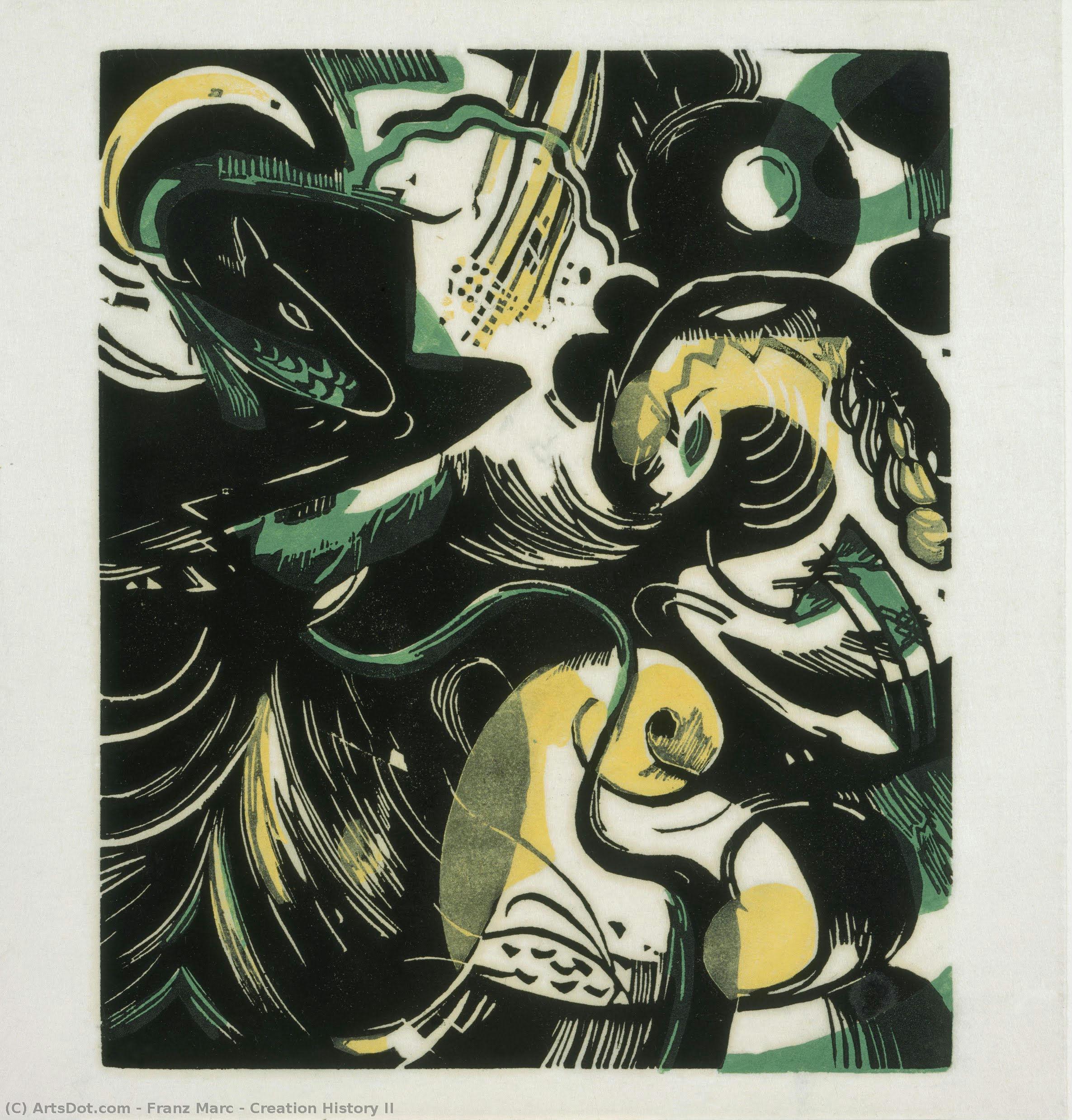
Franz Marc’s woodcut, Creation History II, is not merely an image; it’s a glimpse into the soul of an artist grappling with profound spiritual and existential questions. Created in 1914, amidst the looming shadow of World War I, this work transcends simple representation, venturing into the realm of symbolic narrative and abstract form. The piece, relatively small in scale at just 24 x 20 cm, possesses a monumental emotional weight, born from Marc’s deeply held beliefs about the interconnectedness of all living things and his search for a primal, unspoiled state of being.
The Language of Animals: Symbolism and Spiritual Quest
Marc was not interested in depicting animals as they *appeared*, but rather as they *were* – vessels of pure spirit, untainted by the corruption he perceived in human society. In Creation History II, this philosophy is powerfully expressed through a dynamic composition populated with birds, snakes, and fragmented human figures. The sinuous forms of the serpents, often associated with temptation and earthly knowledge, intertwine with the soaring avian shapes, representing aspiration and spiritual freedom. These are not literal depictions but archetypal representations – symbols drawn from mythology, religion, and Marc’s own intensely personal iconography. The inclusion of human figures, rendered in a less defined manner than the animals, suggests humanity's fallen state, distanced from the natural harmony embodied by the creatures. The entire scene feels like a visual echo of the biblical creation story, but one filtered through Marc’s unique lens of spiritual yearning and premonition.
Woodcut as Revelation: Technique and Expression
The choice of woodcut as a medium is crucial to understanding the impact of Creation History II. Unlike painting, which allows for subtle gradations of color and texture, woodcut demands stark contrasts – black and white, light and shadow. This inherent limitation forces a distillation of form, an emphasis on essential shapes and lines. Marc exploits this quality brilliantly, creating a sense of raw energy and primal force. The angularity of the cuts, the deliberate roughness of the textures, contribute to the work’s unsettling yet captivating atmosphere. It's as if the very act of carving into the wood released something ancient and powerful, mirroring the creative forces at play in the depicted scene. This technique also aligns with Marc’s broader artistic trajectory towards abstraction; he was increasingly interested in reducing forms to their essential elements, believing this would reveal a deeper spiritual truth.
A Precursor to Tragedy: Historical Context and Lasting Legacy
To view Creation History II is to stand at a pivotal moment in history. Europe was on the brink of unimaginable conflict, and Marc, deeply sensitive and attuned to the anxieties of his time, channeled these feelings into his art. His belief in the inherent goodness of nature served as a counterpoint to the growing militarism and societal unrest he witnessed. Tragically, Marc himself would not survive the war; he was killed in action in 1916, just two years after creating this powerful work. His untimely death cemented his status as a martyr for artistic expression and a visionary whose ideas continue to resonate today. Creation History II stands as a testament to his enduring legacy – a hauntingly beautiful exploration of creation, spirituality, and the fragile balance between humanity and the natural world.