A Serene Encounter: Exploring Franz Marc’s “Deer in the Reeds”
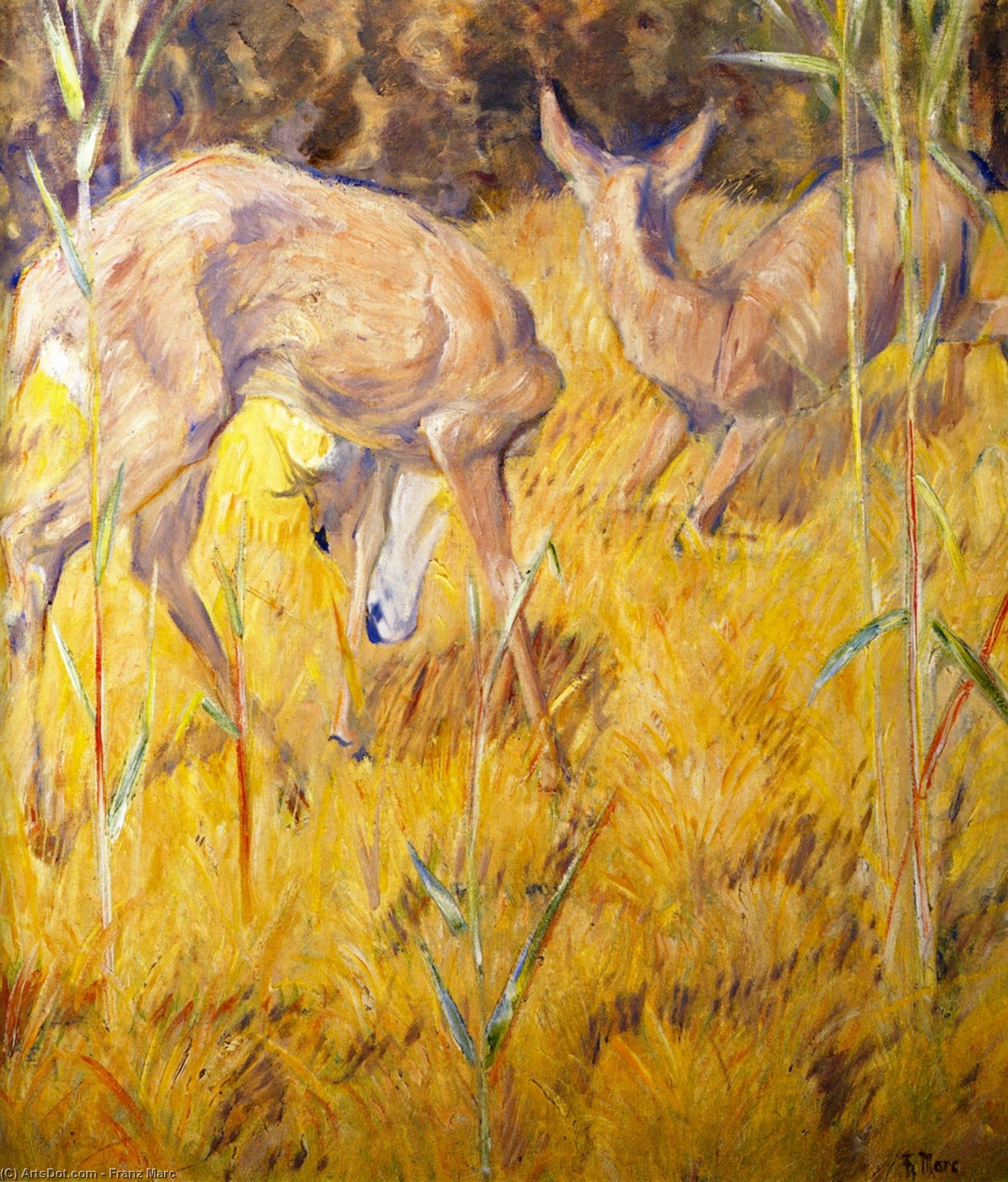
Franz Marc's 1909 painting, *Deer in the Reeds*, is a captivating example of early Expressionism, revealing the artist’s burgeoning style and profound connection to the natural world. This oil on canvas (89 x 79 cm), currently housed at the Bayerische Staatsgemaldesammlungen in Munich, Germany, offers more than just a depiction of wildlife; it's an invitation into a realm of tranquil beauty and symbolic resonance.
Artistic Style & Technique: A Bridge to Abstraction
Marc’s artistic journey was marked by a gradual move away from representational painting towards abstraction. *Deer in the Reeds* sits at this pivotal point, showcasing his evolving style. While still grounded in recognizable forms, the work demonstrates a deliberate simplification of shapes and an increasing emphasis on color to convey emotion. The visible brushstrokes and impasto technique – applying paint thickly – create texture and dynamism, bringing the reeds and deer to life. The palette is rich and harmonious, utilizing warm yellows and greens to evoke a sense of late afternoon light filtering through the tall grasses.
Composition & Symbolism: Harmony in Nature
The composition centers on two deer standing close together, their gazes directed slightly off-canvas, creating a feeling of quiet contemplation. The dense arrangement of reeds forms a natural frame around the animals, drawing the viewer’s eye inward. Marc wasn't merely interested in depicting what he *saw*, but rather what he *felt* about nature. Deer, for Marc, represented gentleness and innocence – qualities he deeply valued. The surrounding reeds symbolize both shelter and the cyclical nature of life, hinting at themes of vulnerability and peaceful coexistence.
The painting’s serene atmosphere invites introspection and a reconnection with the natural world.
Historical Context: A Founding Figure of Expressionism
Franz Marc was a key figure in the German Expressionist movement, and a co-founder of *Der Blaue Reiter* (The Blue Rider), a journal and artist group that championed artistic freedom and spiritual expression. This period saw artists rejecting traditional academic styles in favor of subjective experiences and emotional intensity. Marc’s work, alongside that of Kandinsky, Macke, and others associated with *Der Blaue Reiter*, challenged conventional notions of beauty and representation. He sought to express an inner vision of the world, believing animals possessed a purity and spiritual depth often lacking in human society.
Emotional Impact & Interior Design Considerations
*Deer in the Reeds* evokes feelings of peace, tranquility, and reverence for nature. Its harmonious color palette and gentle subject matter make it an ideal addition to various interior spaces.
- Living Rooms: The painting’s calming presence would complement a natural or bohemian-inspired décor.
- Bedrooms: Its serene atmosphere promotes relaxation and restful sleep.
- Studies/Home Offices: The artwork can inspire creativity and provide a visual escape from the demands of work.
A high-quality reproduction of *Deer in the Reeds* would serve as a stunning focal point, adding depth and sophistication to any room. Its timeless appeal ensures it will remain a cherished piece for years to come. Consider pairing it with natural wood tones, earthy textures, and soft lighting to enhance its inherent tranquility.