Discover Franz Marc (1880-1916), a German Expressionist pioneer & Der Blaue Reiter co-founder. Explore his iconic animal paintings, vibrant colors, and spiritual themes. Learn about his legacy!
A Moment Frozen in Time: Exploring Franz Marc’s Deer in the Snow II
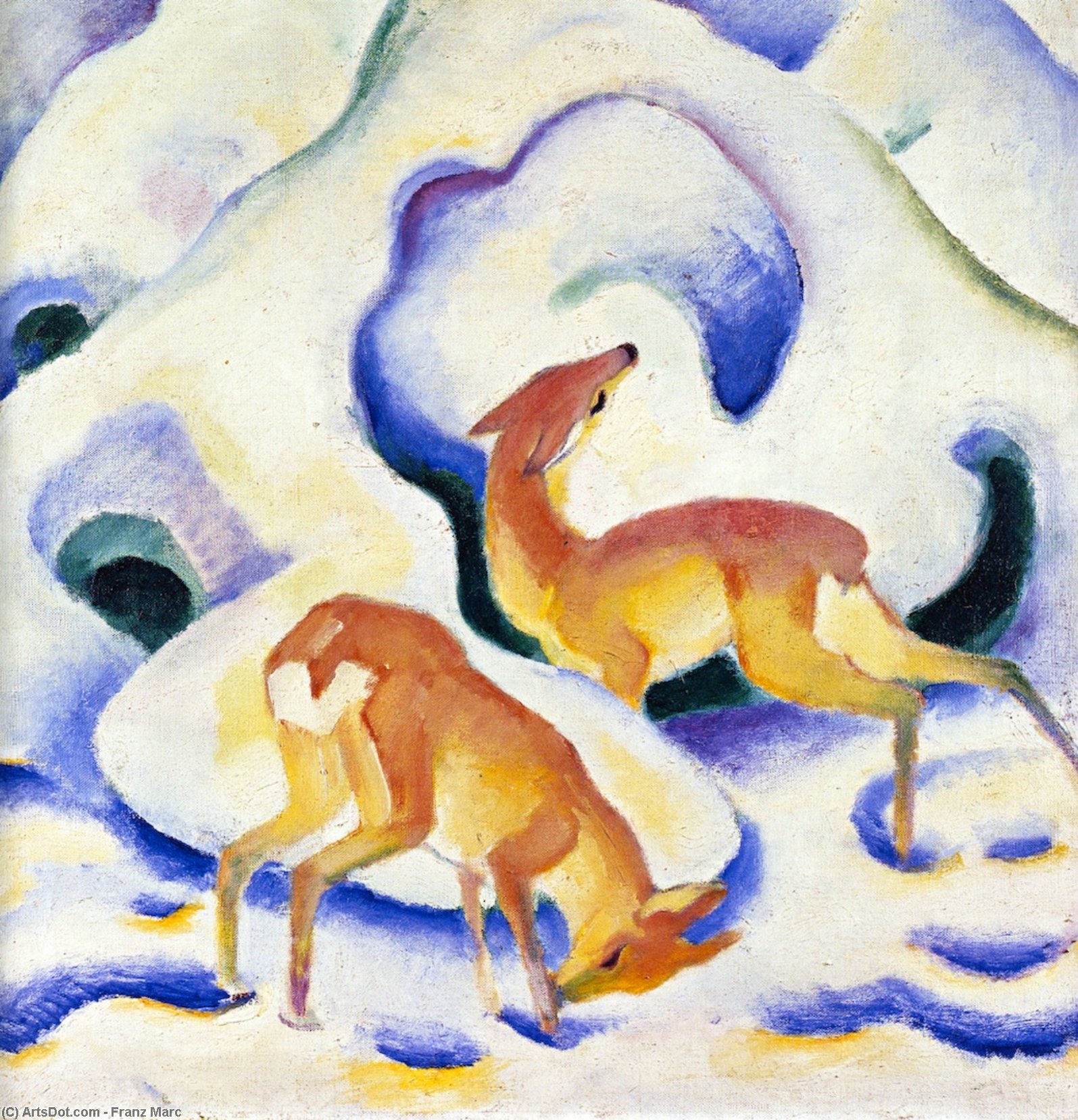
Franz Marc's "Deer in the Snow II," painted in 1911, stands as a quintessential emblem of Expressionist art—a testament to its ability to distill profound emotion into deceptively simple forms. More than just a depiction of animals amidst winter landscapes, this artwork delves into themes of spirituality and interconnectedness, reflecting Marc’s deeply held belief that art could serve as a conduit for accessing the inner realm. Its enduring appeal lies in its masterful execution and its place within the broader context of artistic innovation during a pivotal period in European history.
Composition and Technique: Embracing Abstraction
Marc skillfully employs oil on canvas to capture the serene beauty of a snowy woodland scene. Two deer dominate the composition, positioned close together—one standing upright with bowed head, embodying contemplation; the other lying down beside it, radiating tranquility. Adding to this quiet drama are two birds perched atop branches, subtly reinforcing the overarching atmosphere of peace and harmony. Unlike representational art striving for photographic accuracy, Marc abandons detailed realism in favor of bold colors and abstracted shapes—a hallmark of Expressionism’s rejection of academic conventions. The artist prioritizes conveying feeling over precise observation, allowing viewers to experience the essence of the subject matter rather than merely seeing it. This deliberate simplification enhances the painting's emotional impact, inviting contemplation on themes of vulnerability and resilience.
Symbolism Rooted in Spiritual Belief
The snowy landscape itself isn’t simply a backdrop; it symbolizes purity and stillness—elements crucial to Marc’s spiritual worldview. Deer, frequently interpreted as symbols of innocence and grace within Expressionist iconography, represent the divine presence amidst earthly concerns. Their posture conveys humility and reverence, mirroring Marc's own quest for transcendence. The birds further amplify this symbolism, representing messengers of hope and renewal – a visual reminder that even in winter’s bleakness, life persists with unwavering beauty. Marc’s artistic choices resonate deeply with Jungian psychology, exploring archetypal imagery to tap into universal human experiences.
Historical Context: Expressionism's Bold Assertion
“Deer in the Snow II” emerged during the height of Expressionist fervor—a movement born from disillusionment with societal norms and fueled by a desire for artistic liberation. Artists like Marc sought to express inner turmoil and spiritual anxieties through emotionally charged imagery, rejecting the detached objectivity championed by Impressionists. Staedtische Galerie im Lenbachhaus in Munich proudly houses this artwork, recognizing its significance as a cornerstone of modern art history—a place where visitors can appreciate the legacy of Franz Marc’s pioneering vision.
Emotional Resonance: A Window into Inner Reflection
Ultimately, “Deer in the Snow II” transcends mere visual representation; it invites viewers to engage in introspection. The painting's muted palette and deliberate abstraction encourage contemplation on themes of solitude, vulnerability, and connection—elements that resonate powerfully across cultures and generations. It’s a piece designed not just to be seen but felt—a reminder that art can illuminate the complexities of human experience and inspire us to embrace the beauty inherent in simplicity.