A Symphony in Ochre and Crimson: The Spiritual Pulse of Franz Marc
In the pantheon of German Expressionism, few works capture the raw, spiritual yearning of the early twentieth century as po
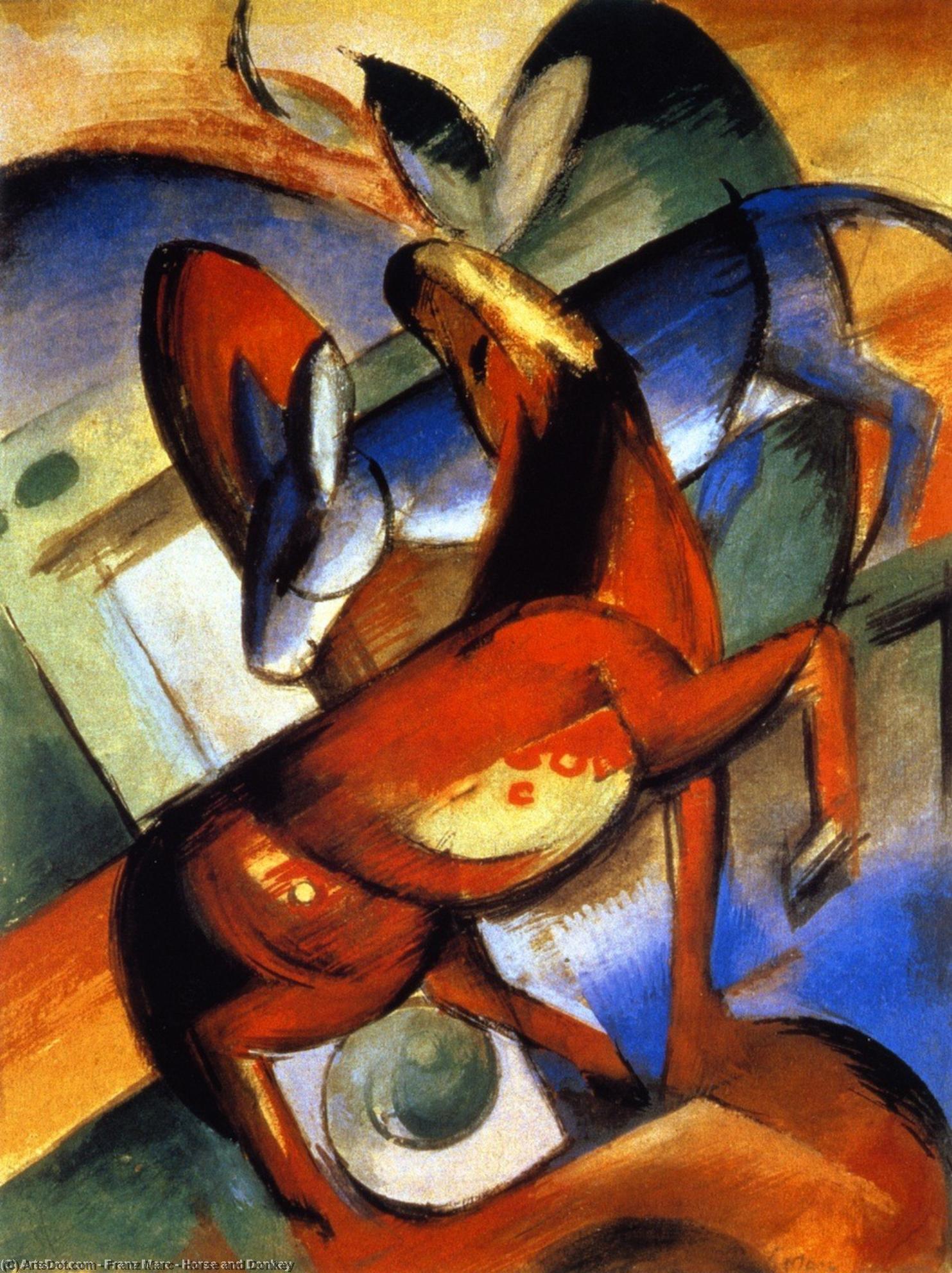
of Franz Marc’s “Horse and Donkey.” Painted in 1912, this masterpiece serves as a visual distillation of an era caught between the stability of the past and the turbulent uncertainty of a modernizing world. At first glance, the viewer is met with an arresting encounter between two animals, yet to look deeper is to enter a realm where color transcends physical reality to communicate profound emotional truths. The canvas does not merely depict creatures; it orchestrates a dialogue of souls, inviting anyone from the passionate art collector to the discerning interior designer to contemplate the interconnectedness of nature and spirit.
The composition is a masterclass in the Expressionist technique, where Marc deliberately moves away from photographic accuracy toward a more primal, symbolic language. He employs a bold, reductive palette that vibrates with energy. The deep, passionate crimson of the horse stands in striking contrast to the earthy, grounding ochre tones that define the landscape. These colors are not applied with subtle gradients but as distinct, rhythmic blocks of pigment. Through thick, deliberate brushstrokes, Marc creates a sense of texture and weight, where every stroke feels like an intentional heartbeat. The use of geometric simplification—circles and squares that subtly shape the forms of the animals—mirrors the movement’s rejection of academic realism, offering a modern aesthetic that remains timelessly elegant in any curated space.
Symbolism and the Echoes of a Changing World
To understand “Horse and Donkey,” one must understand the intellectual climate of 1912 Germany. This was a period profoundly shaped by the philosophical tremors of Friedrich Nietzsche, whose ideas regarding the death of traditional certainties forced artists to seek new sources of meaning. For Marc, this meaning was found in the purity of the animal kingdom. He viewed animals as being untainted by the anxieties and artificiality of human civilization, representing a state of primordial innocence. In this painting, the interaction between the horse and the donkey becomes a meditation on vulnerability and strength. The horse, often a symbol of nobility and vitality, engages with its companion in a way that suggests a shared, silent understanding of the natural order.
For those looking to integrate such a powerful piece into a sophisticated interior, the painting offers more than just visual impact; it provides an emotional anchor. The balance of warm reds and stable earth tones allows the work to command attention without overwhelming its surroundings, making it an ideal centerpiece for a room designed for reflection or intellectual stimulation. It is a window into a moment in history when art sought to bridge the gap between the physical world and the divine, offering a sense of profound peace amidst the chaos of modern life.