A Symphony in Scarlet: Franz Marc’s “Mountains” – A Window into the Soul
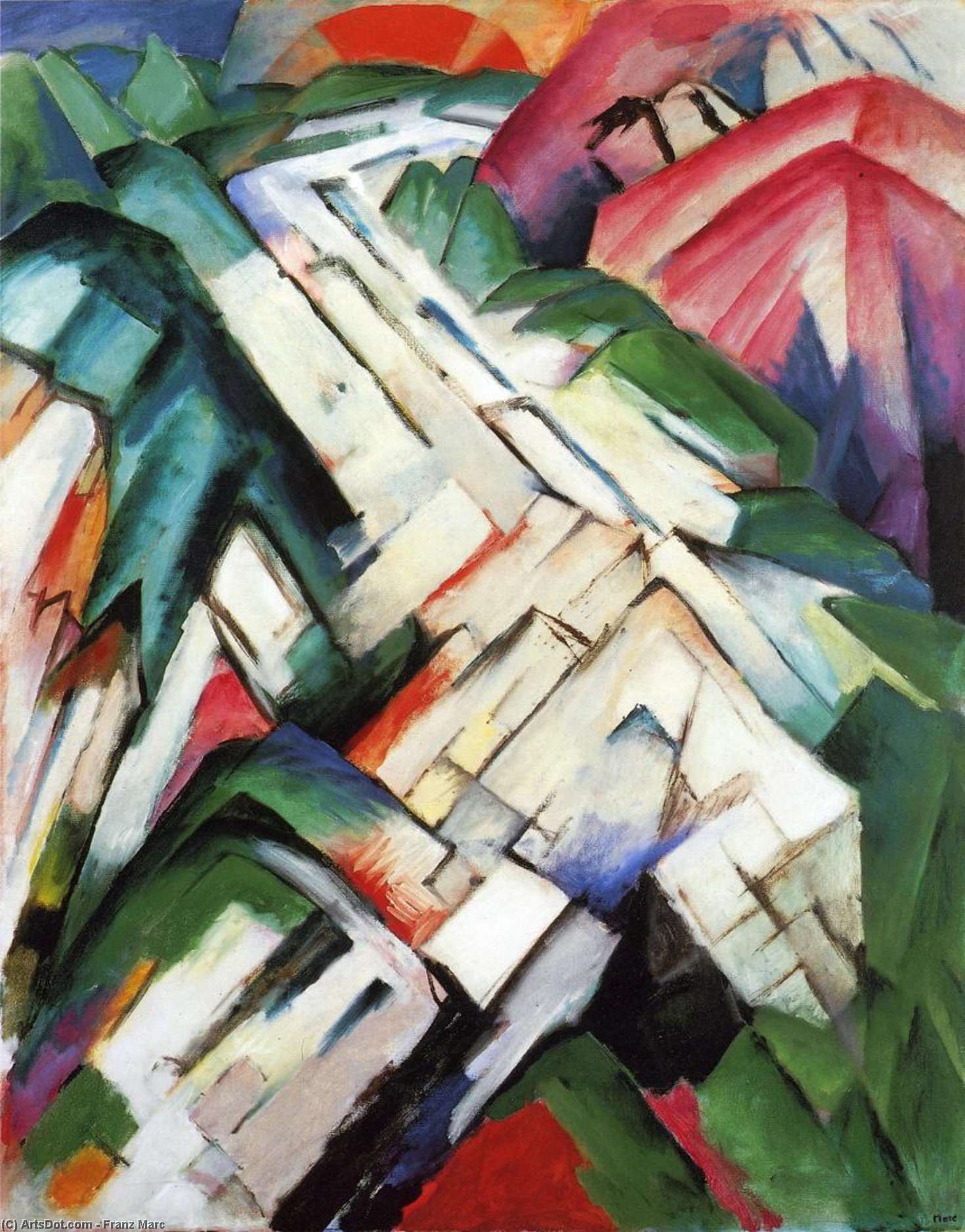
Franz Marc's "Mountains" (also known as Stony Path / Landscape), painted in 1911, isn’t merely a depiction of a landscape; it’s an intensely felt experience rendered in oil on canvas. This work, now residing within the esteemed San Francisco Museum of Modern Art, stands as a pivotal example of German Expressionism, encapsulating the movement's core tenets: a profound engagement with emotion and spirituality through the lens of nature. Marc, born in Munich in 1880, possessed an almost preternatural ability to translate inner states into vibrant color and form, and “Mountains” is arguably one of his most potent expressions of this gift. The painting immediately commands attention not just for its striking composition but for the sheer audacity of its red – a hue that pulsates with energy, suggesting both the raw power of the natural world and perhaps, a deeply felt emotional current.
The Language of Color and Form: Marc’s Expressionist Vision
Marc's approach to landscape painting was radically different from the prevailing academic styles of his time. He wasn’t interested in meticulous realism; instead, he sought to capture the *feeling* of a place – its essence, its spirit. This is vividly realized in “Mountains.” The dominant red isn’t simply applied; it's layered and textured, creating an almost sculptural effect on the mountain forms. The trees, rendered with looser brushstrokes and varying shades of green and brown, provide a grounding element, anchoring the viewer within the scene while simultaneously emphasizing the monumental scale of the mountains. Notice how Marc utilizes negative space – the areas *around* the elements – to create a sense of depth and breathlessness, drawing the eye into the heart of the composition. The solitary figure in the foreground, partially obscured by shadow, adds an element of mystery and invites contemplation about human connection with nature.
Roots in Spirituality: Marc’s Theological Influences
Understanding Franz Marc requires acknowledging his early intellectual explorations. Initially considering a career in theology, Marc wrestled with questions of faith and the relationship between humanity and the divine. This spiritual questioning profoundly shaped his artistic vision. He believed that art could be a pathway to experiencing something beyond the purely material world – a way to access a deeper truth. The simplified forms and intense colors of “Mountains” can be interpreted as attempts to strip away the complexities of everyday life, revealing a more fundamental reality. There’s a palpable sense of searching within the painting, a yearning for connection with something larger than oneself—a sentiment deeply rooted in his earlier theological inquiries.
A Legacy of Color and Emotion: Marc's Place in Art History
“Mountains” is more than just a beautiful landscape; it’s a cornerstone of the German Expressionist movement. Marc, alongside artists like Edvard Munch and Wassily Kandinsky, pushed the boundaries of artistic expression, prioritizing emotional impact over objective representation. His work paved the way for later movements such as Fauvism and Surrealism. The Franz Marc Museum in Kochel am See, Germany, serves as a vital repository for his oeuvre, offering visitors a comprehensive understanding of his life and art. For those seeking to delve deeper into this fascinating period of artistic innovation, exploring Marc’s work alongside that of contemporaries like Jane Wilson – whose own landscapes often share a similar focus on emotional resonance – provides invaluable context. Consider how Wilson's approach, while distinct, similarly seeks to capture the intangible qualities of the natural world.
ArtsDot offers meticulously crafted hand-painted reproductions of “Mountains,” allowing you to bring this powerful and evocative artwork into your home or office. Each reproduction is created with the same attention to detail and vibrant color palette as the original, ensuring that you experience the full emotional impact of Marc’s masterpiece.