Franz Marc’s “The Holy Calf”: A Descent into Surreal Symbolism
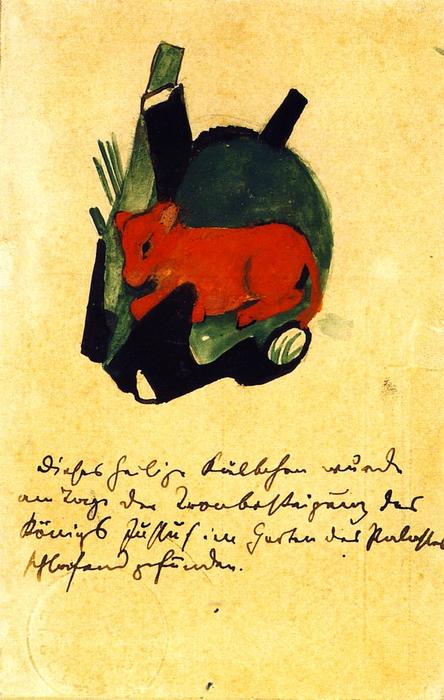
“The Holy Calf,” painted in 1913 by Franz Marc, stands as a haunting testament to the burgeoning Expressionist movement and its preoccupation with capturing inner emotional states through vivid color and distorted form. More than just an image on canvas; it’s a visual meditation on mortality, confinement, and the unsettling beauty of confronting primal instincts—themes deeply rooted in Marc's lifelong fascination with the animal kingdom and his spiritual quest for transcendence. This artwork exemplifies the core tenets of Der Blaue Reiter, the influential artist group that championed Marc’s revolutionary approach to painting.
- Subject Matter & Composition: The centerpiece is a monumental red animal figure—a bovine form rendered in loose brushstrokes—positioned within a stark rectangular enclosure reminiscent of a coffin or tomb. This juxtaposition immediately establishes a tension between life and death, innocence and corruption. The background consists of aged parchment paper overlaid with handwritten German text, adding an element of intellectual contemplation alongside the visceral visual experience.
- Style & Technique: Marc’s style is unmistakably Expressionist, prioritizing emotional intensity over realistic representation. Thick, impasto brushstrokes dominate the surface, conveying a palpable sense of urgency and dynamism. The artist eschews meticulous detail, opting instead for gestural marks that capture the essence of feeling—a deliberate rejection of academic conventions in favor of subjective perception.
- Color Palette & Texture: Marc’s masterful use of color is paramount to the artwork's impact. Predominantly crimson red dominates the composition, symbolizing passion, vitality, and perhaps even primal fear. The textured surface of the parchment paper contributes to the overall atmosphere of decay and age, mirroring the symbolic representation of time passing and confronting inevitable decline.
- Historical Context: Created during a period of significant artistic upheaval—the early years of World War I— “The Holy Calf” reflects the anxieties and spiritual disillusionment prevalent in European society at the time. Marc’s preoccupation with animal symbolism aligns with broader philosophical currents exploring the relationship between humanity and nature, questioning anthropocentric assumptions.
- Symbolism & Emotional Impact: The enclosed calf represents vulnerability and sacrifice—a poignant reminder of mortality—while simultaneously embodying a primal connection to the earth and its rhythms. The rectangular enclosure serves as a visual metaphor for confinement and repression, highlighting the artist’s desire to liberate art from restrictive boundaries. Ultimately, “The Holy Calf” compels viewers to confront uncomfortable truths about existence and invites contemplation on the spiritual significance of confronting our deepest fears.
This striking reproduction captures the essence of Marc's artistic vision—a bold exploration of emotion and symbolism that continues to resonate with audiences today.