A Symphony of Blue and Spirit: Exploring Franz Marc's "Two Little Blue Horses"
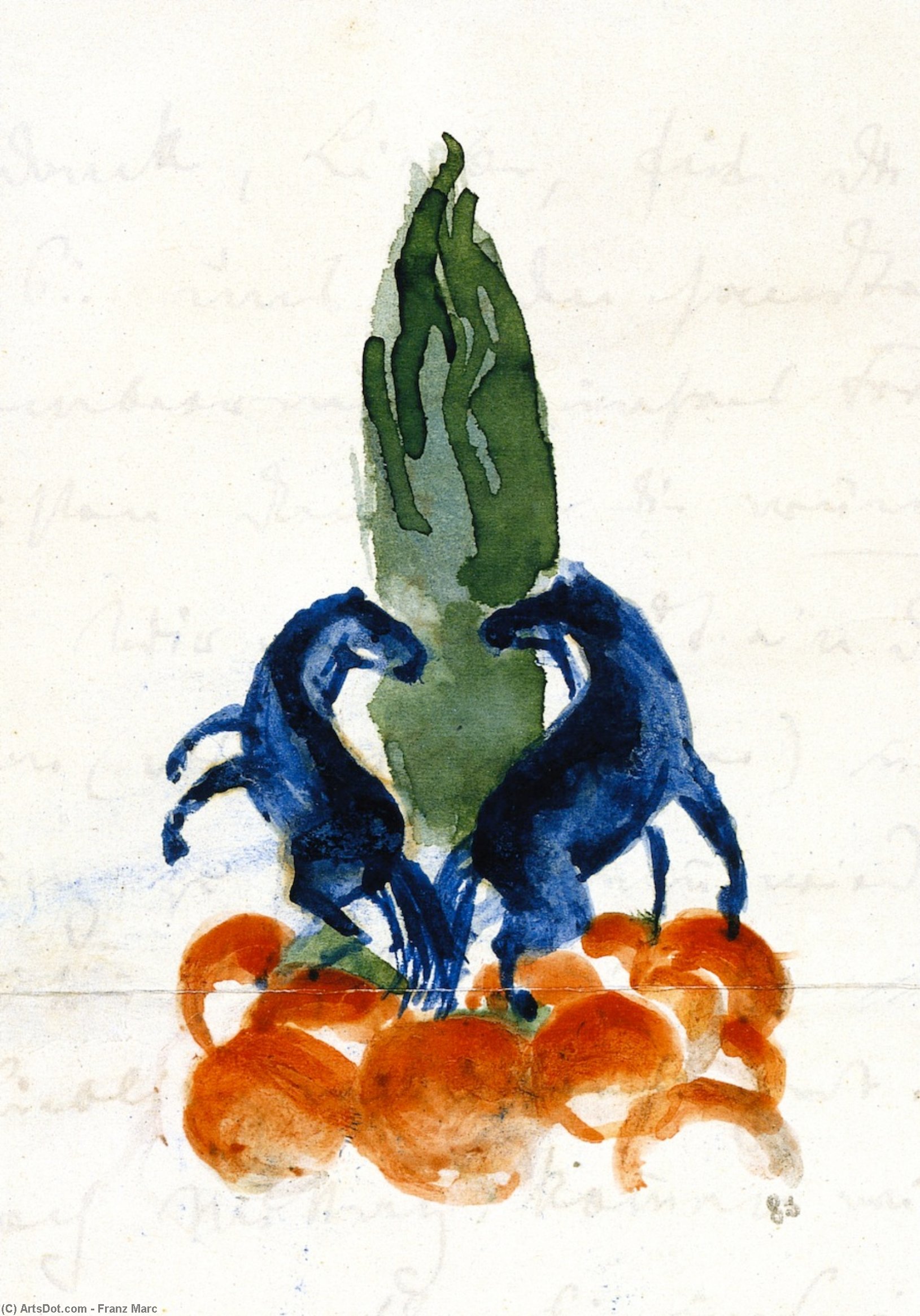
Franz Marc’s “Two Little Blue Horses,” painted in 1913, is more than just a depiction of equine figures; it’s a profound meditation on the spiritual connection between humanity and the natural world – a cornerstone of German Expressionism. Created during a pivotal moment in art history, this work embodies Marc's deeply held belief that animals possessed an inherent purity and wisdom, offering a pathway to understanding the divine. The painting’s immediate impact lies in its arresting use of color; the dominant blues, ranging from cerulean to indigo, evoke a sense of tranquility and otherworldly beauty, while the subtle whites highlight the horses’ muscular forms and imbue them with a luminous quality.
Expressionist Vision: Capturing Inner States
Painted just before Marc's untimely death in 1916, “Two Little Blue Horses” exemplifies the tenets of Expressionism. Unlike Impressionism’s focus on fleeting moments and optical accuracy, Expressionism sought to convey subjective emotions and inner experiences through distorted forms and intense color palettes. Marc deliberately departs from realistic representation, prioritizing the emotional resonance of his subject matter over photographic detail. The slightly elongated bodies of the horses, coupled with their almost dreamlike stillness, suggest a state of heightened awareness, inviting the viewer to contemplate the deeper meaning behind their presence.
- Technique: Marc employed a thick impasto technique, applying paint in heavy layers to create a tactile surface and enhance the vibrancy of his colors. This approach is particularly evident in the horses’ coats, where individual brushstrokes contribute to a sense of movement and texture.
- Color Palette: The deliberate use of blue – a color often associated with spirituality, melancholy, and the infinite – dominates the composition, creating a powerful emotional effect.
- Composition: The arrangement of the horses, close together yet distinct, suggests a shared experience or a symbiotic relationship, reinforcing the painting’s symbolic weight.
Symbolism in the Landscape
Beyond the immediate depiction of two blue horses, the artwork is rich with symbolism rooted in Marc's spiritual beliefs. The scattered red fruits – a recurring motif in his work – represent fertility, life, and the cyclical nature of existence. Their placement around the horses further emphasizes this connection to the earth and its bounty. The plant with green leaves serves as a grounding element, anchoring the scene within a natural context and highlighting the harmony between animal and vegetation. Marc frequently used animals to symbolize Christ-like figures, representing innocence, sacrifice, and redemption – a theme deeply influenced by his theological studies.
Historical Context and Legacy
"Two Little Blue Horses" was created during a period of significant artistic and intellectual ferment in Germany. The rise of Expressionism coincided with growing anxieties about modernity, industrialization, and the perceived loss of spiritual values. Marc’s work reflects this broader cultural context, offering a poignant response to the challenges of his time. His exploration of animal symbolism resonated deeply with audiences seeking alternative forms of spirituality and artistic expression. Today, “Two Little Blue Horses” remains a powerful example of German Expressionism's enduring legacy, celebrated for its emotional intensity, symbolic depth, and masterful use of color – qualities that continue to captivate viewers and inspire artists worldwide.