The Aura of Aristocracy: A Glimpse into 19th-Century Grandeur
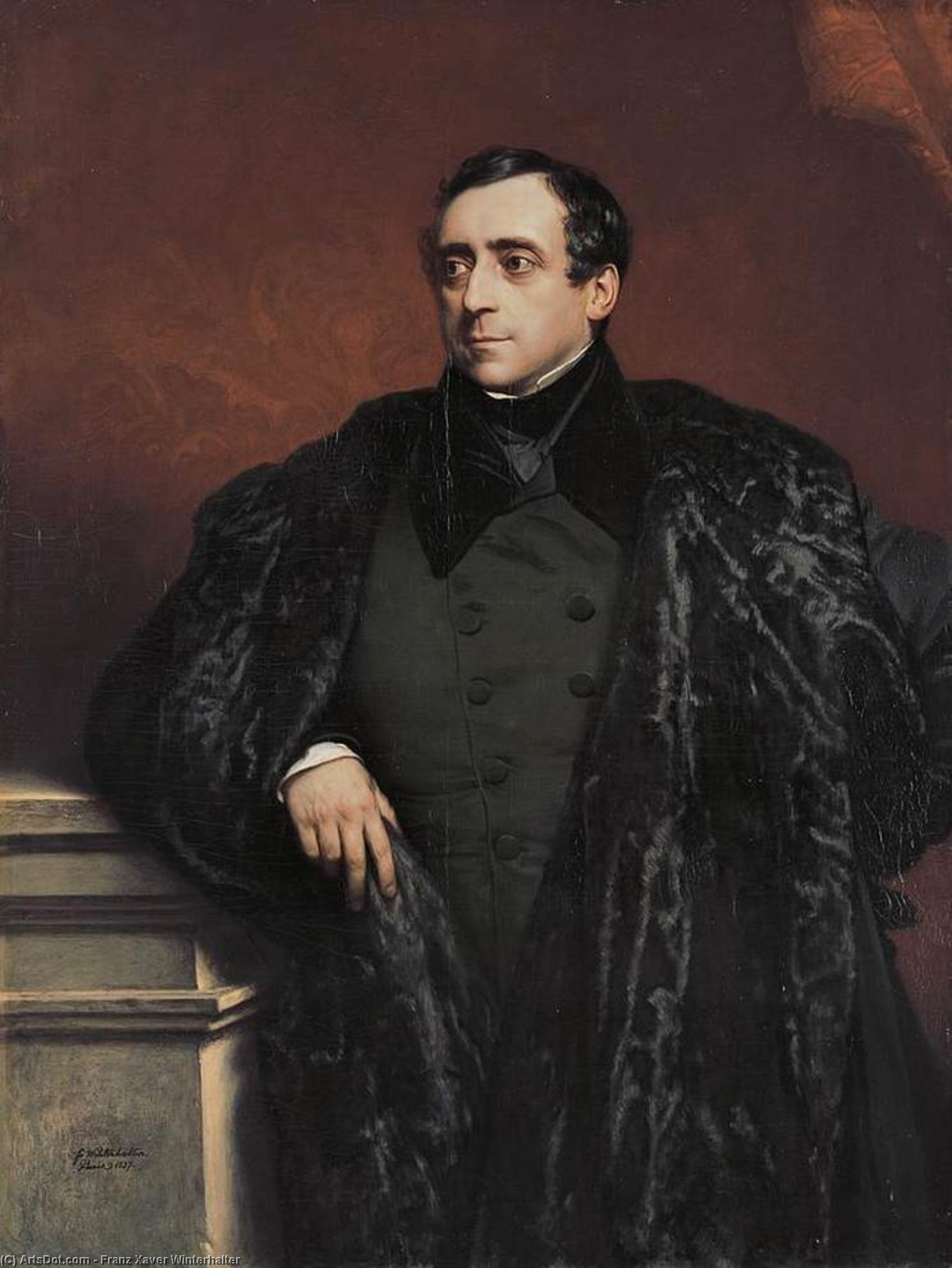
To stand before Franz Xaver Winterhalter's portrait of Count Jenison-Walworth is to step directly across the threshold of mid-nineteenth-century European high society. This painting is far more than a mere likeness; it is a meticulously constructed tableau of status, wealth, and profound dignity. The subject himself commands attention, positioned with an inherent gravitas that speaks volumes about his station in life. Winterhalter, the master chronicler of royalty and aristocracy, captures not just the man, but the very weight of expectation that accompanied such titles during an era obsessed with visible markers of success. Observe the composition: the slight lean against a stately column anchors him within a believable, yet idealized, architectural space, lending depth and permanence to the scene.
Mastery in Shadow and Silk: Technique and Texture
The technical brilliance displayed here is breathtaking. Winterhalter employed an oil medium with a dedication to detail that borders on the obsessive. Notice how the light, seemingly originating from an unseen source above and to the left, sculpts the contours of his face, highlighting the thoughtful set of his jaw and the richness of his gaze. This masterful use of chiaroscuro allows the dark palette—the deep blacks, rich browns, and muted reds—to achieve a profound sense of dimensionality. Contrast this darkness with the startling purity of the white collar, which acts as a visual breath point for the eye. Furthermore, the textural interplay is exquisite: the smooth, almost liquid quality of the fine coat fabric plays against the palpable plushness suggested by the fur lining, while the background wall offers a subtle, atmospheric recession into warmer tones.
Symbolism of Status and Introspection
The symbolism woven throughout this portrait speaks to the cultural values of its time. The formal attire, particularly the heavy cloak, is an overt declaration of affluence and established lineage. Yet, despite the outward display of power, the subject’s expression suggests a deeper current—a thoughtful introspection beneath the veneer of public duty. This duality is what gives the piece its enduring emotional resonance. It invites the modern viewer to question the nature of status itself: Is it defined by the finery, or by the quiet depth suggested in the eyes? The somber mood evoked by the dark tones lends an air of timeless mystery, making the portrait feel both historical and deeply personal.
A Legacy for the Modern Collector
For those who appreciate the confluence of history, portraiture, and unparalleled craftsmanship, this work remains a pinnacle. Owning or displaying a high-quality reproduction of Count Jenison-Walworth is to curate an atmosphere of cultivated elegance within any space. It serves not merely as decoration, but as a conversation piece—a tangible link to the grand salons and powerful figures of the nineteenth century. The meticulous rendering ensures that even in reproduction, the viewer feels the weight of Winterhalter’s skilled hand, allowing the drama, the dignity, and the sheer artistry of this portrait to permeate your environment.