A Chronicle of Courage: Frederic Remington's General Leonard Wood
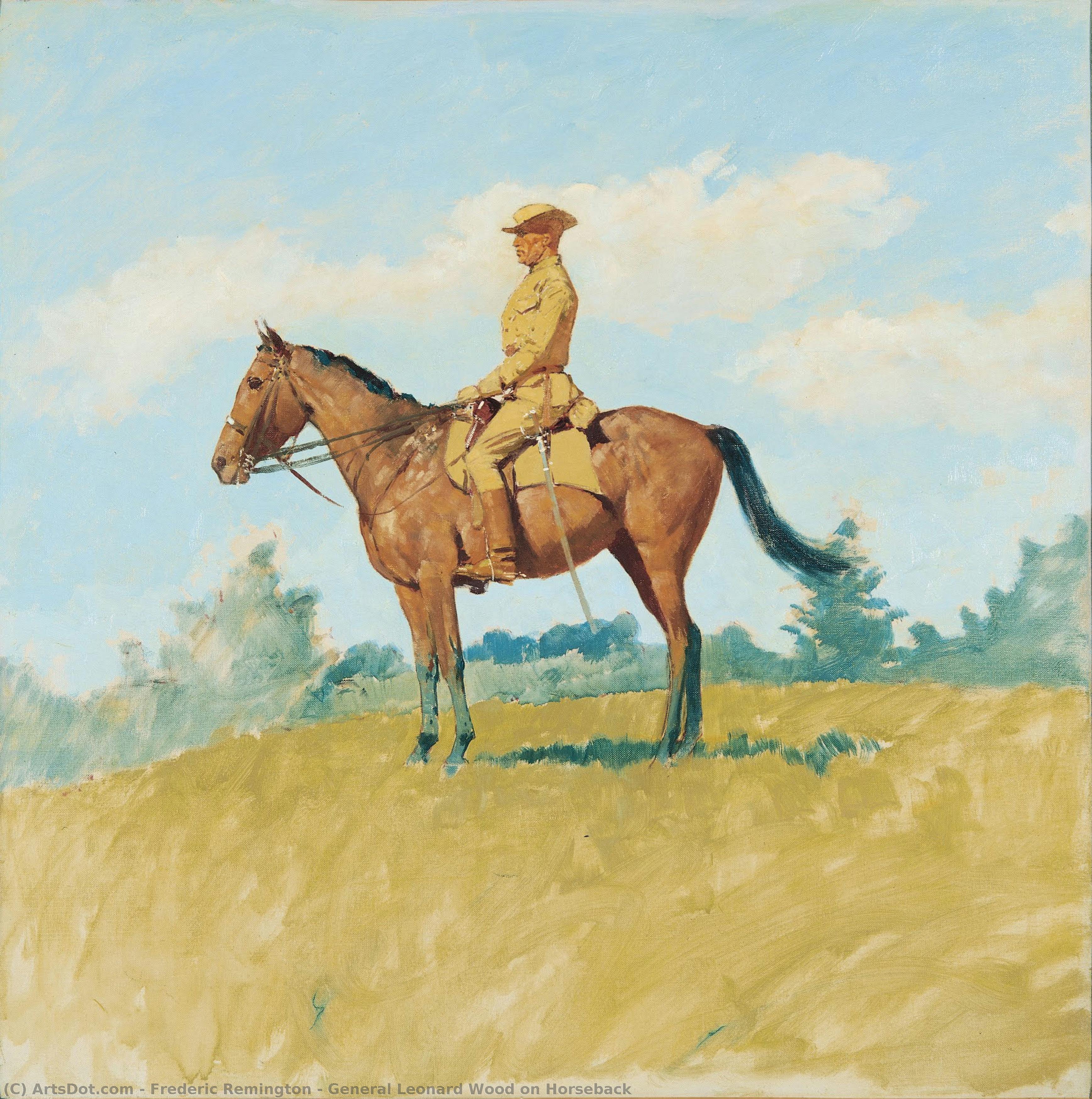
Frederic Remington’s “General Leonard Wood on Horseback,” painted in 1909, offers more than just a portrait; it’s a potent distillation of the American West at the dawn of the 20th century. This evocative work captures General Wood, a prominent figure in the U.S. Army during the period leading up to World War I, not as a detached military strategist, but as a man inextricably linked to the rugged landscape and spirit he commanded. Remington, deeply immersed in the burgeoning mythology of the West, skillfully renders Wood’s authority and quiet strength against a backdrop that speaks volumes about the nation's evolving identity.
The Artist and His Subject: A Meeting of East and West
- Remington’s Background: Born in Canton, New York, Frederic Remington’s artistic journey was remarkably unconventional. He wasn’t a native of the Wild West he so brilliantly depicted; instead, he was an Easterner who meticulously studied and romanticized frontier life. His lineage – French Basque ancestry combined with New England Republican roots – provided a fascinating counterpoint to his subject matter.
- A Captive Audience: Remington's fascination with military themes stemmed from his father’s Civil War service and his own restless spirit. He meticulously researched the lives of soldiers and frontiersmen, translating these observations into powerfully expressive paintings.
- Wood as Icon: General Leonard Wood was a key figure in the U.S. Army during this era, known for his leadership and involvement in the development of military strategy. Remington’s portrayal elevates Wood beyond a mere military man, presenting him as an embodiment of American resilience and determination.
Technique and Composition: A Masterclass in Western Realism
Remington's masterful technique is immediately apparent in “General Leonard Wood on Horseback.” Executed with a characteristic boldness, the painting showcases his signature style of realistic depiction blended with a romanticized vision. The use of thick impasto – particularly noticeable in the horse’s musculature and the general’s uniform – creates a palpable sense of texture and movement. The composition is carefully balanced, drawing the viewer's eye to Wood as the central figure while utilizing the natural elements—the grassy field, the trees, and the sky—to establish a strong sense of place. The inclusion of two birds soaring above adds an element of grace and freedom, subtly contrasting with the grounded authority of the general.
Symbolism and Emotional Impact: A Portrait of an Era
Beyond its technical brilliance, the painting resonates with deeper symbolic meaning. Wood’s posture – seated confidently atop his horse – represents leadership, control, and a connection to the land. The setting itself—a vast, open field—suggests both opportunity and danger, reflecting the challenges and possibilities of the American West. The painting captures a pivotal moment in history, a time when the United States was grappling with its identity as a rising world power. “General Leonard Wood on Horseback” is not simply a portrait; it’s a powerful statement about courage, duty, and the enduring allure of the frontier—a timeless image that continues to captivate viewers today.