A Wilderness Echo: Frederic Remington’s “Packing and Paddling in the Adirondacks”
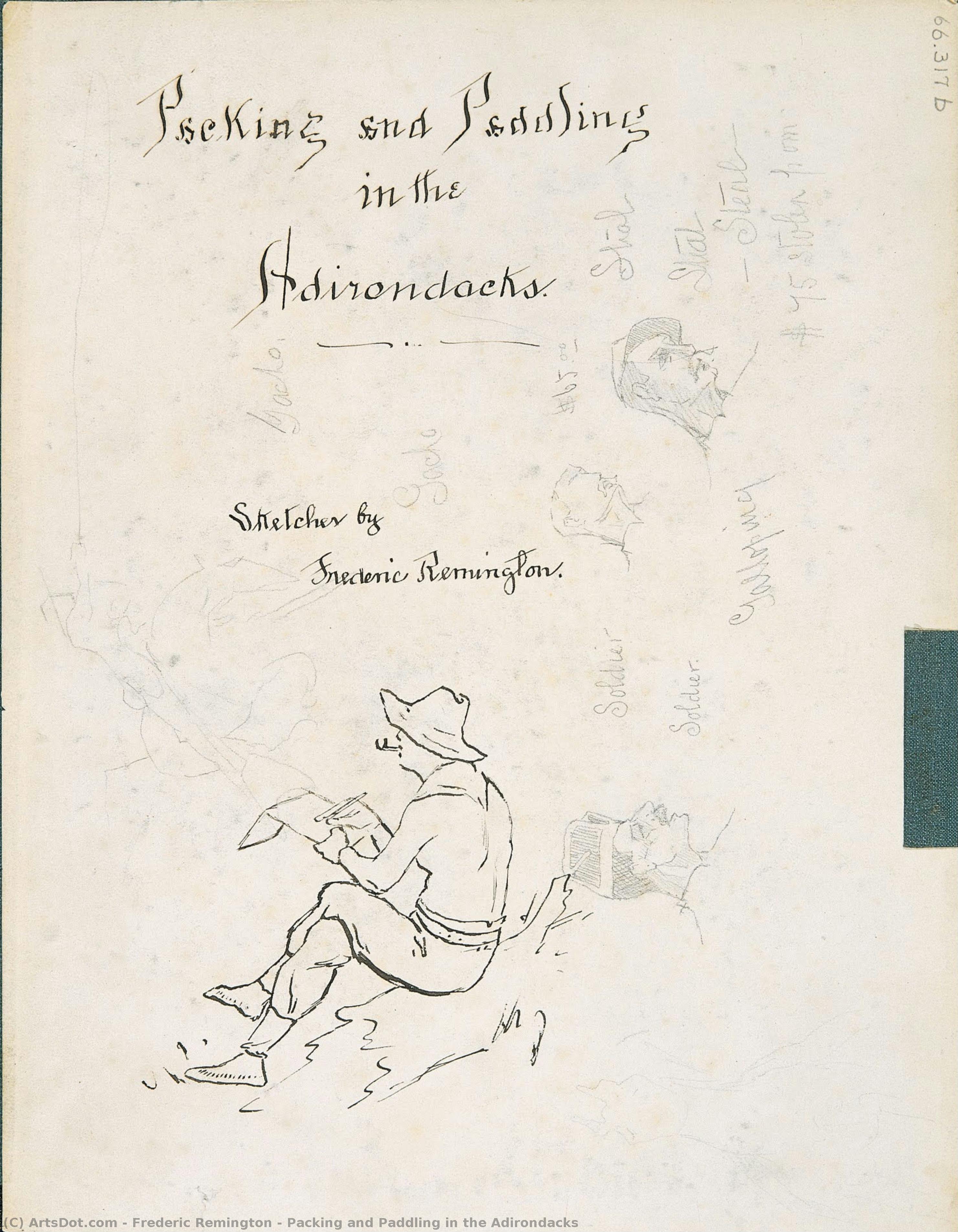
Frederic Remington's "Packing and Paddling in the Adirondacks," painted around 1885, isn’t merely a depiction of a lakeside scene; it’s a vibrant snapshot of an evolving American identity grappling with its relationship to the vast wilderness. Born in Canton, New York – a town nestled on the fringes of the Adirondack Park – Remington possessed a deep-seated fascination with the frontier and the burgeoning spirit of outdoor recreation that was transforming the nation. This painting captures a pivotal moment: the rise of the Adirondacks as a desirable escape for those seeking respite from urban life, fueled by publications like William H.H. Murray’s “Adventures in the Wilderness,” which romanticized the region's beauty and accessibility.
The scene unfolds with remarkable immediacy. A group of men, rendered in Remington’s signature robust style, are engaged in a variety of activities – paddling canoes, casting lines, and preparing for a day of fishing. The composition is dynamic, filled with movement and suggestion. Notice the careful attention to detail: the worn leather of the paddles, the sturdy construction of the canoes, and the weathered faces of the men, reflecting both determination and a comfortable familiarity with their surroundings. Remington’s masterful use of light and shadow creates a palpable sense of atmosphere – the cool, dappled shade beneath the trees contrasts sharply with the bright sunlight on the water, evoking the feeling of a crisp autumn day.
The Painter's Perspective: Technique and Style
Remington’s style in “Packing and Paddling” is distinctly rooted in his experience as an artist documenting the American West. He employed a technique characterized by bold brushstrokes, a flattened perspective, and a focus on capturing action and character. The painting isn’t concerned with photographic realism; instead, it prioritizes conveying the *feeling* of being present in this wilderness setting. Remington's use of color is particularly noteworthy – earthy tones dominate the palette, reflecting the natural landscape, while subtle hints of red and orange suggest warmth and vitality. The figures are not idealized heroes but rather ordinary men enjoying a shared experience, adding to the painting’s authentic charm.
Remington's background as an illustrator for magazines like *Harper’s Weekly* heavily influenced his work. He was adept at translating complex narratives into visually compelling images, and this skill is evident in “Packing and Paddling.” The scene feels almost staged, inviting the viewer to become a silent observer of this everyday moment in the Adirondack wilderness.
Symbolism and Shifting Values
Beyond its immediate depiction of outdoor recreation, "Packing and Paddling" speaks to a broader cultural shift. Prior to Remington’s work, the Adirondacks were often viewed through a lens of conservationist ideals – as a pristine wilderness deserving of protection. However, Remington's portrayal subtly shifts this perspective, suggesting a more harmonious coexistence between humans and nature. The men aren’t conquering or dominating the landscape; they are simply enjoying it, engaging with it in a way that feels both natural and respectful.
The inclusion of figures like “Casey Commandant of Cheyenne Scouts” (as noted in some related research) hints at the growing interest in Native American culture and their connection to the land. Remington’s work often explored themes of frontier life, including interactions between settlers and indigenous peoples, reflecting a complex and evolving understanding of America's past.
A Legacy of Wilderness Inspiration
"Packing and Paddling in the Adirondacks" remains a powerful image, encapsulating the allure of the American wilderness during a transformative era. It’s a testament to Frederic Remington’s ability to capture not just the physical landscape but also the spirit of adventure and the evolving relationship between humanity and nature. Reproductions of this iconic painting continue to resonate with collectors and interior designers seeking to evoke a sense of rustic charm, timeless beauty, and connection to the natural world – a reminder that the wilderness still holds a profound appeal for those who seek solace and inspiration in its vastness.