The Essence of the American West Captured
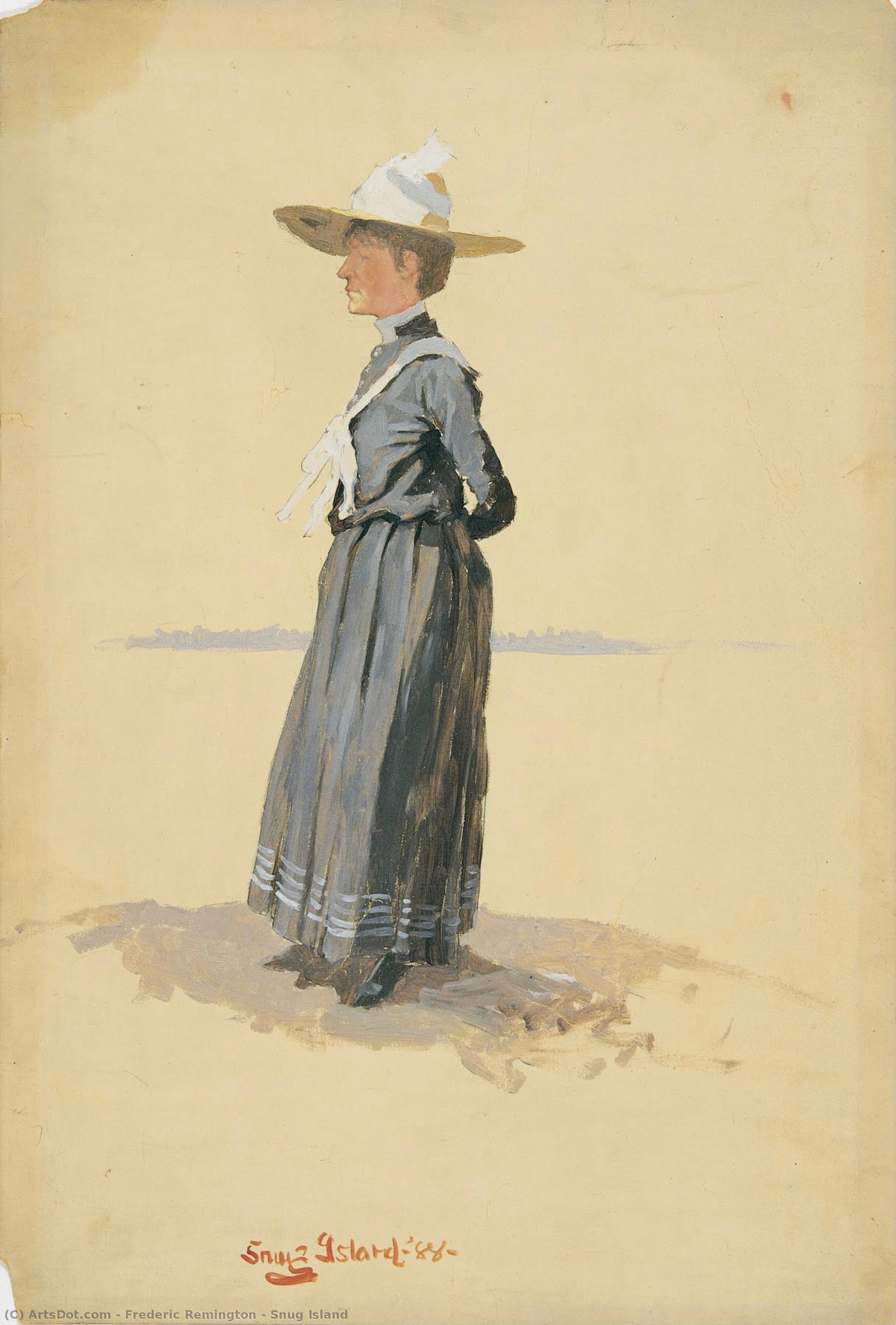
Frederic Remington’s “Snug Island,” painted in 1888, isn't merely a depiction of a lakeside scene; it’s a profound meditation on solitude, resilience, and the quiet dignity of life amidst the vastness of the American frontier. The painting immediately draws the viewer into a moment of serene contemplation – a woman, elegantly dressed yet undeniably grounded in her surroundings, sits patiently by a small cabin nestled within a dense, shadowed forest. This isn’t the romanticized image of the cowboy or the rugged frontiersman so often portrayed; instead, we encounter a portrait of domesticity and inner strength, subtly imbued with the spirit of the West.
Remington, a master observer of the American West, spent his career documenting its changing landscape and diverse inhabitants. Initially celebrated for his dynamic depictions of cowboys and Native Americans, he later sought to capture more intimate scenes – moments of quiet reflection and domestic life that offered a counterpoint to the often-violent narratives of frontier existence. “Snug Island” exemplifies this shift in focus, revealing a softer, more contemplative side to the artist’s vision.
A Study in Color and Technique
Executed in watercolor on paper, “Snug Island” showcases Remington's remarkable skill in capturing atmospheric effects. The palette is deliberately muted – deep greens, browns, and blues dominate, creating a sense of cool twilight and enveloping stillness. Remington’s brushwork is loose and expressive, particularly evident in the rendering of the trees and foliage, which seem to writhe with subtle movement despite the overall tranquility. He employs broken color techniques, layering washes of pigment to build depth and luminosity, mimicking the dappled light filtering through the forest canopy.
The woman’s figure is rendered with a delicate touch, her form subtly defined against the darker background. Remington's use of highlights – particularly on her face and hands – draws attention to her presence without overwhelming the scene. The composition itself is carefully balanced, with the cabin anchoring the lower portion of the painting and the woman’s figure occupying the central space, creating a harmonious visual relationship.
Symbolism and Narrative Depth
The identity of the woman remains deliberately ambiguous, adding to the painting's enduring appeal. She is believed to be Frederic Remington’s wife, Eva Caten Remington, a woman known for her quiet strength and unwavering support of his artistic endeavors. The cabin itself represents sanctuary – a place of refuge from the harsh realities of frontier life. It speaks to the importance of family, community, and the simple pleasures of domesticity.
The surrounding forest, dense and shadowed, evokes both mystery and protection. It’s a space where one can find solace and introspection, mirroring the woman's contemplative posture. The painting subtly suggests that even in the most challenging environments, there is always room for peace and quiet reflection.
A Legacy of Western Art
“Snug Island” stands as a testament to Frederic Remington’s evolving artistic vision and his ability to capture the complexities of the American West. It's more than just a landscape painting; it’s a poignant portrait of human resilience, domesticity, and the enduring spirit of the frontier. Reproductions of this iconic work offer a beautiful way to bring a touch of Western serenity into any space, inviting viewers to pause, reflect, and connect with the timeless beauty of the American landscape.