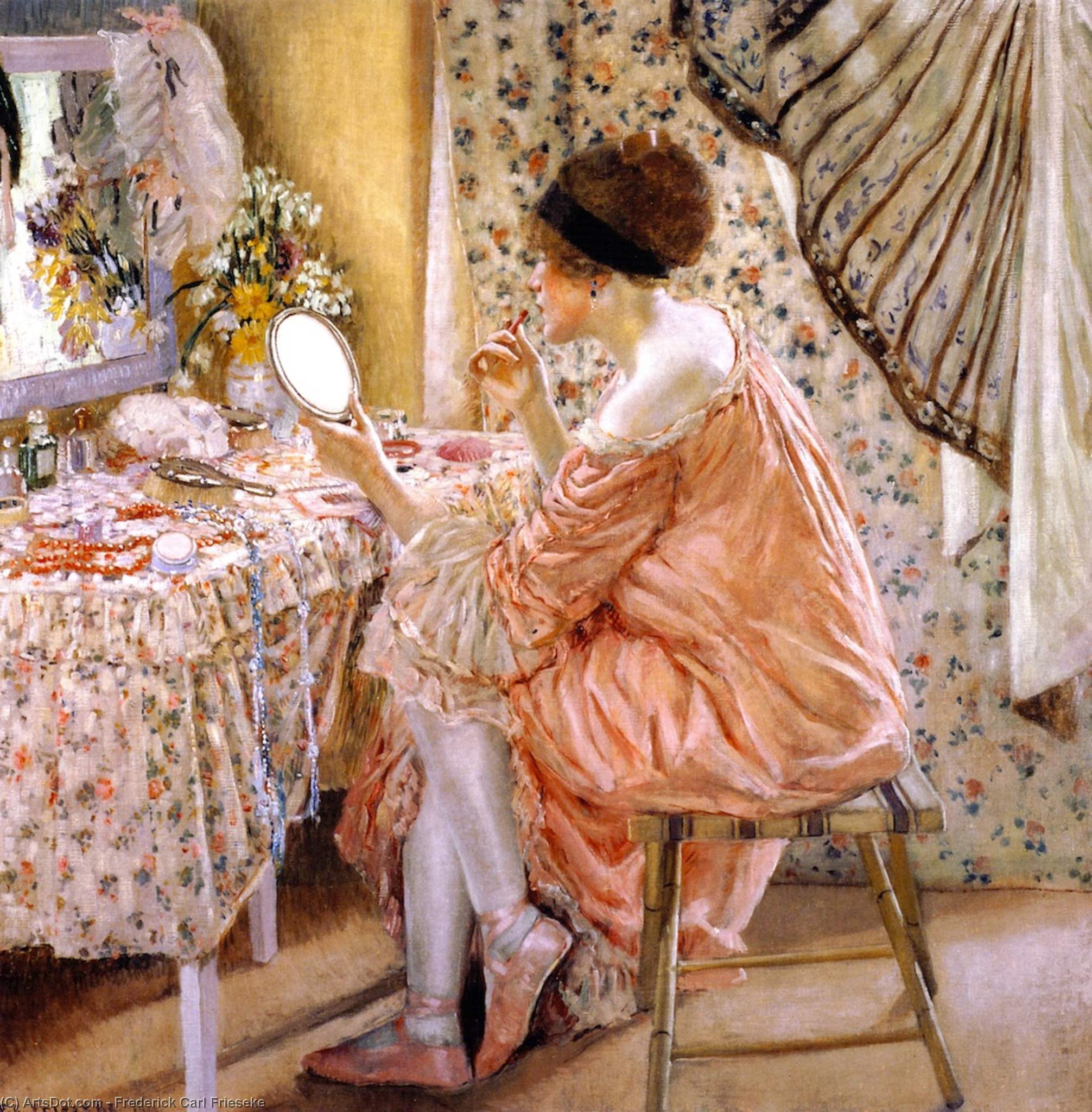
Frederick Carl Frieseke’s “Before Her Appearance” (La Toilette), created in 1913, is a captivating Impressionist masterpiece showcasing Frieseke's signature style—soft brushstrokes and radiant light—as he portrays a woman preparing for the day. Inspired by Monet and Renoir, this serene scene exemplifies Frieseke’s dedication to capturing fleeting moments of beauty. Discover high-quality reproducti
A Portrait of Quiet Preparation: Exploring Frederick Carl Frieseke's Masterpiece
Frederick Carl Frieseke, a luminary of American Impressionism, gifted us with “Before Her Appearance (La Toilette),” completed in 1913. More than just a depiction of a woman applying makeup—it’s an exquisitely crafted meditation on light, femininity, and the subtle beauty found within domestic tranquility. Frieseke's unwavering devotion to capturing the ephemeral effects of dappled sunlight is palpable throughout the canvas, establishing it as a cornerstone of his distinctive artistic style.
The Artist’s Technique: Soft Brushstrokes and Radiant Color
Frieseke’s approach was characterized by remarkably soft brushstrokes—a hallmark of Impressionism—allowing him to blend colors seamlessly and create an illusion of shimmering luminescence. He meticulously observed the way sunlight filtered through foliage, translating these observations onto canvas with a masterful sensitivity for color palettes. The artist favored muted hues, predominantly pinks and greens, harmoniously interwoven to evoke a sense of serenity and warmth.
A Scene Steeped in Symbolism: Femininity and Reflection
“Before Her Appearance” transcends mere visual representation; it’s laden with symbolic significance. The woman seated at the table embodies grace and composure as she prepares for an occasion—perhaps a meeting, perhaps simply embracing the day ahead. Crucially, the mirror reflects her image, symbolizing introspection and self-awareness. This element invites contemplation on identity and inner beauty, mirroring Frieseke's broader fascination with portraying women in idealized forms.
Historical Context: The Giverny Art Colony and Impressionistic Ideals
Frieseke’s work emerged during the zenith of the Giverny art colony—a vibrant hub for Impressionist artists led by Claude Monet. Frieseke absorbed Monet's influence, mirroring his commitment to capturing fleeting moments of natural beauty and prioritizing color over precise detail. “Before Her Appearance” embodies these core tenets of Impressionism, reflecting a desire to convey emotion and atmosphere rather than offering an objective portrayal of reality.
A Legacy Enduring Beauty: Frieseke’s Influence on Contemporary Art
“Before Her Appearance” continues to resonate with audiences today. Its delicate composition, luminous color palette, and evocative depiction of feminine grace solidify Frieseke's place as one of the most celebrated Impressionist painters. The painting’s inclusion in the Museum of Fine Arts Boston serves as a testament to its enduring artistic merit—a captivating piece that exemplifies the transformative power of Impressionistic vision.