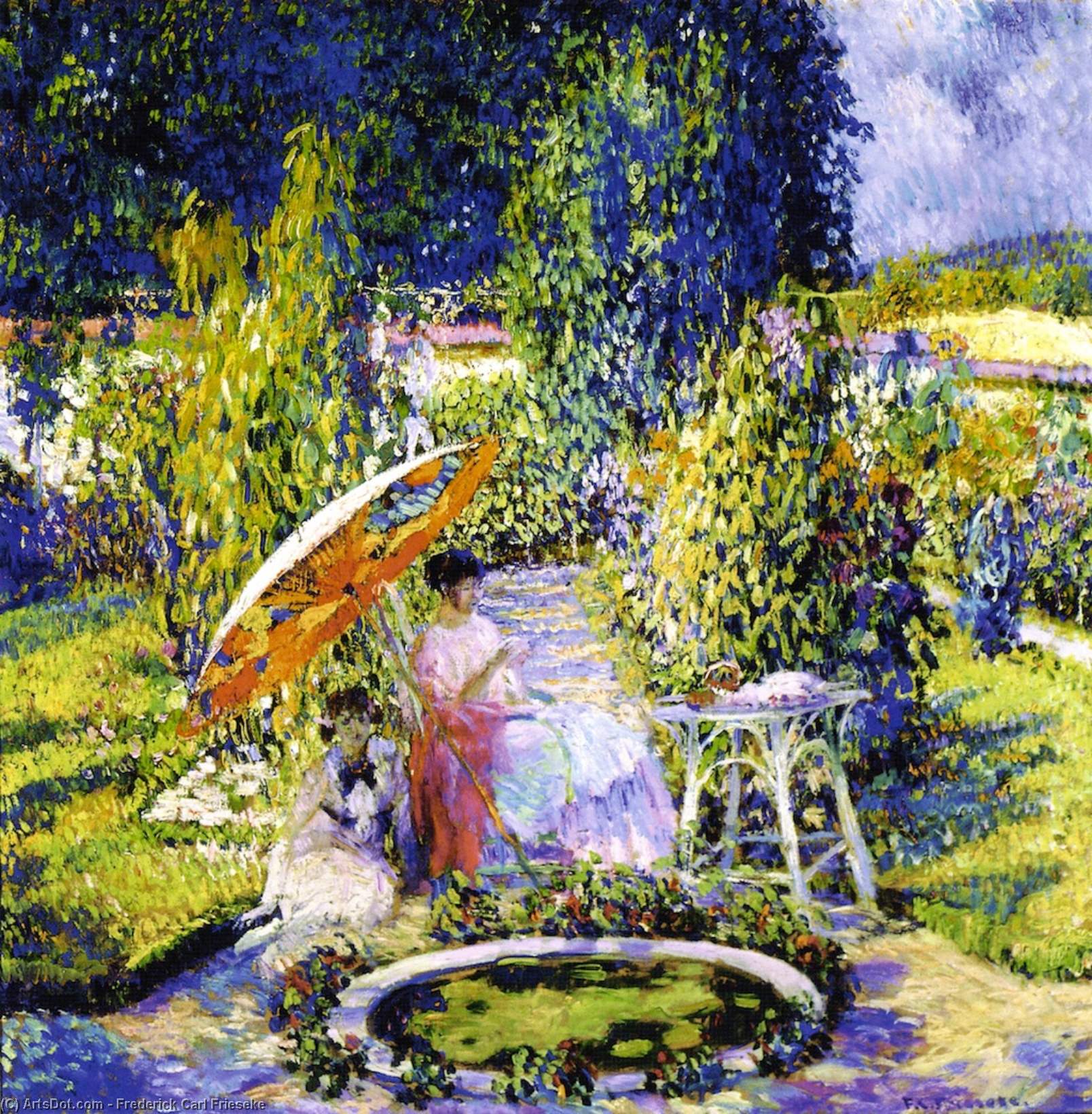
Frederick Carl Frieseke’s ‘The Garden Umbrella,’ created in 1910, captures the idyllic beauty of a Parisian garden scene. Painted in Impressionistic style, it showcases a woman seated beneath an umbrella, surrounded by lush greenery and blossoms – reflecting Frieseke's fascination with capturing sunlight and domestic life. Housed at Telfair Museum of Art, this artwork exemplifies Japonisme’s influ
The Garden Umbrella
Frederick Carl Frieseke’s “The Garden Umbrella,” completed in 1910, is more than just a picturesque depiction of a tranquil outdoor scene; it's a masterful embodiment of Impressionism and a poignant reflection on the burgeoning influence of Japanese aesthetics within Western art circles. Currently residing at the Telfair Museum of Art in Savannah, Georgia, this oil painting transcends mere visual representation to convey a profound sense of serenity and understated beauty.
- Subject Matter: The artwork centers around a woman seated beneath an umbrella in a lush garden setting. Alongside her is a dog, adding to the idyllic atmosphere.
- Style & Technique: Frieseke’s approach aligns perfectly with Impressionism—characterized by rapid brushstrokes and the prioritization of capturing fleeting moments of light and color. He skillfully employs broken color palettes, layering hues to create luminous effects that mimic the dappled sunlight filtering through foliage.
The painting's historical context is inextricably linked to the “Giverny Colony,” a gathering of American Impressionist painters led by Claude Monet who sought inspiration in France’s countryside. Frieseke, deeply influenced by Monet’s pioneering explorations of color and light, participated actively in this artistic movement.
- Symbolism: The umbrella itself serves as a powerful symbol—representing protection from the sun's glare but also suggesting contemplation and seclusion. It underscores the woman’s desire for respite from daily life and invites viewers to share in her peaceful moment.
- Japanese Influence (Japonisme): Frieseke’s incorporation of the Japanese parasol reflects the widespread fascination with East Asian art and design during the late 19th century. This trend, termed Japonisme, saw Western artists adopting decorative motifs and techniques from Japan—a testament to the cross-cultural exchange shaping artistic sensibilities at the time.
Emotionally, “The Garden Umbrella” evokes feelings of tranquility, nostalgia, and appreciation for natural beauty. Frieseke’s masterful use of color and brushwork captures not only the visual splendor of the garden but also the intangible essence of a moment of quiet contemplation—a timeless portrayal that continues to resonate with audiences today.
- Artist Overview: Frederick Carl Frieseke (1874-1939) was an American artist recognized for his distinctive Impressionist style, particularly his depictions of women and gardens.
- Museum Significance: The Telfair Museum’s acquisition of this painting underscores its importance within the broader canon of American Impressionism—a celebration of artistic innovation and a lasting legacy of visual artistry.
For those seeking to experience the beauty and sophistication of Frieseke's masterpiece, ArtsDot.com offers meticulously crafted oil painting reproductions that faithfully preserve the original artwork’s vibrancy and detail. Bringing “The Garden Umbrella” into your home is an opportunity to own a piece of art history—a visual reminder of serenity and artistic brilliance.