A Coastal Reverie: Frederick Childe Hassam’s “Beach at East Hampton”
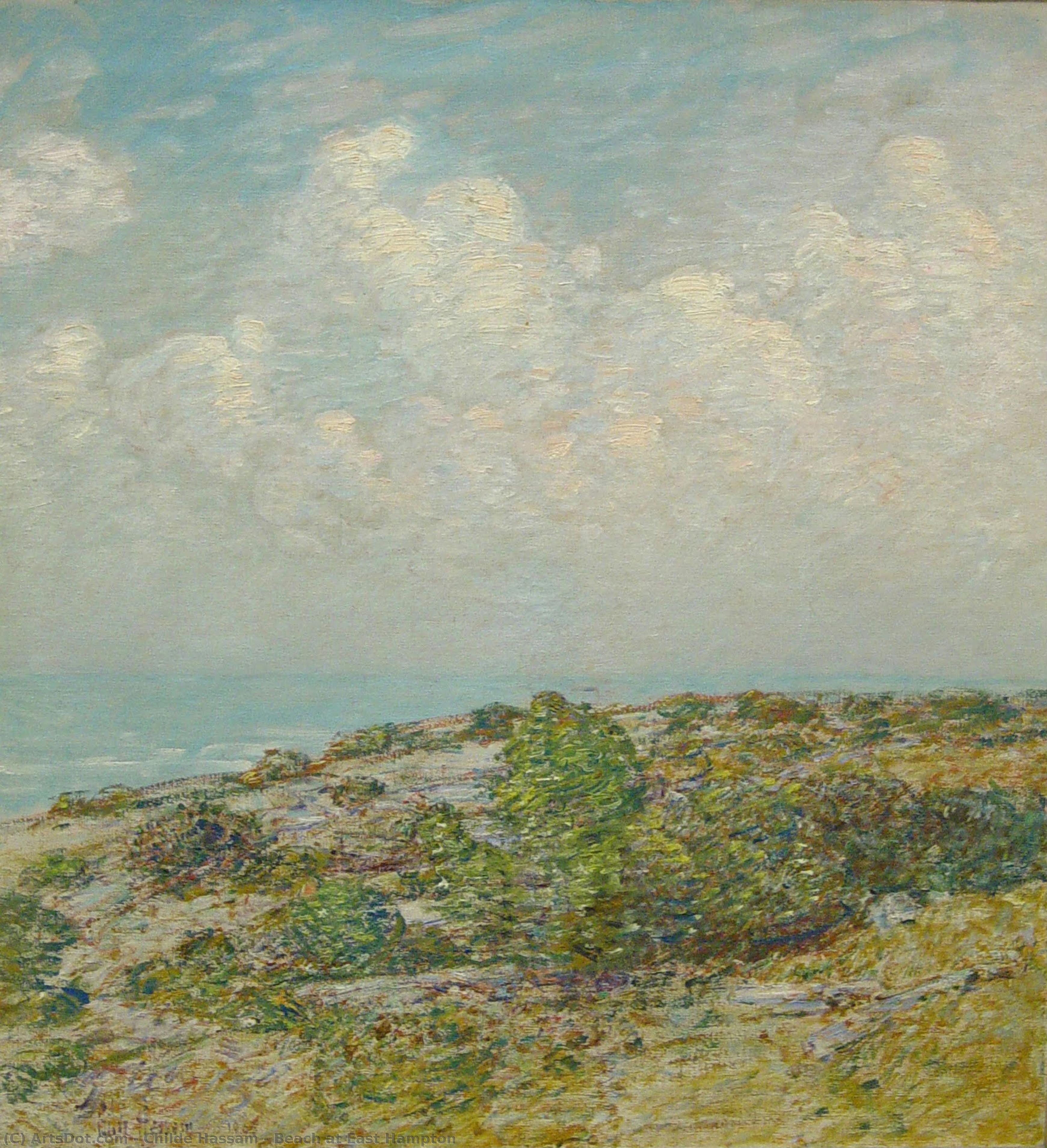
Frederick Childe Hassam's "Beach at East Hampton," painted in 1905, isn’t merely a depiction of a shoreline; it’s an immersive experience of the American coast captured through the lens of Impressionism. This evocative landscape transports us to Long Island, specifically the area surrounding East Hampton, where Hassam spent much of his artistic life and found profound inspiration in the interplay of light, atmosphere, and the natural world. The painting immediately draws the eye with its cool palette – a symphony of blues and greens dominating the canvas, punctuated by the warm ochres and whites of the dunes and sky. These aren’t sharply defined forms but rather suggestions of shape, blended together to create an atmospheric haze that perfectly embodies the fleeting effects of sunlight on water and sand.
Impressionistic Technique: A Dance with Light
Hassam's mastery lies in his ability to capture not just what he saw but *how* he perceived it. The brushstrokes are loose, visible, and deliberately unrefined – a hallmark of Impressionism’s rejection of academic precision. He employed short, broken strokes of paint, applied with a confident yet delicate touch, allowing the colors to mingle and create subtle shifts in tone. This technique isn't about meticulous detail; it’s about conveying the *impression* of light and movement. Notice how the waves seem to shimmer and ripple across the canvas, not through precise rendering but through variations in color and texture. The artist skillfully utilizes atmospheric perspective – distant elements recede into a hazy blue, suggesting depth without resorting to linear shading. This creates a sense of vastness and openness, inviting the viewer to step into the scene.
Symbolism and the American Landscape
"Beach at East Hampton" is more than just a pretty picture; it’s a reflection of Hassam's evolving understanding of the American landscape. Following his brief sojourn in Paris, he returned to America with a renewed appreciation for its unique beauty – not the grand vistas of Europe but the intimate details of coastal life and the ever-changing moods of the New England shoreline. The painting speaks to a burgeoning sense of national identity at the turn of the century, as Americans began to define their own artistic voice separate from European traditions. The beach itself represents escape, tranquility, and connection with nature – themes that resonated deeply with the growing American middle class seeking respite from urban life. The dunes, rendered in warm tones, offer a grounding element, anchoring the scene while simultaneously suggesting the dynamic forces of wind and water.
A Legacy of Light: Hassam’s Influence
Frederick Childe Hassam's "Beach at East Hampton" stands as a pivotal work in American Impressionism. His ability to capture the ephemeral qualities of light, atmosphere, and color profoundly influenced generations of artists who followed. The painting’s popularity helped establish Impressionism as a legitimate artistic movement within the United States, paving the way for other American painters to explore their own unique visions of the landscape. Today, it remains a beloved example of Hassam's skill and vision – a testament to his ability to transform a simple coastal scene into a deeply moving and evocative work of art. Reproductions of this piece continue to be sought after by collectors and interior designers alike, offering a touch of timeless beauty and serenity to any space.
Further Exploration