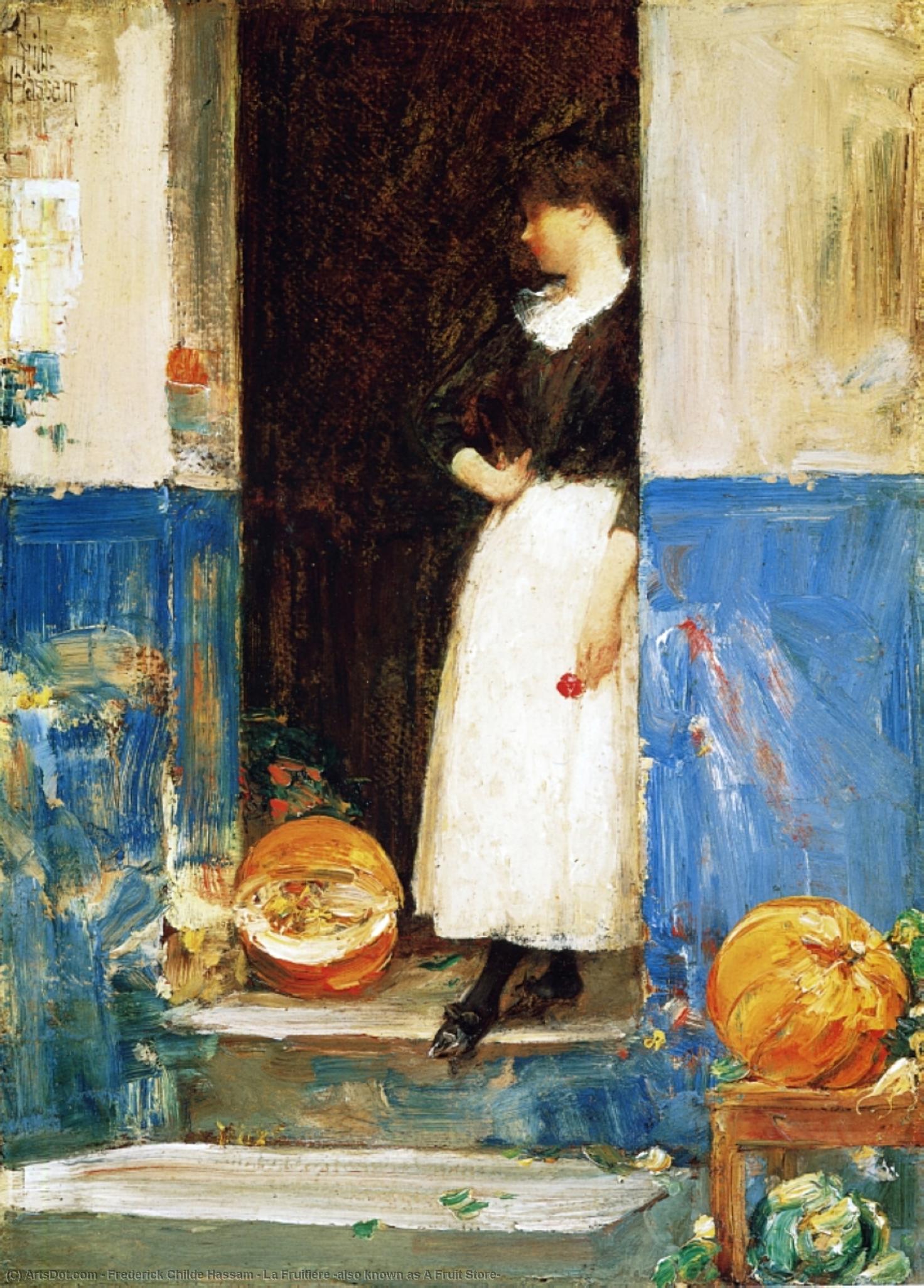
La Fruitiere (also known as A Fruit Store) - An Impressionistic Glimpse of American Life
Frederick Childe Hassam's "La Fruitiere," created in 1888, is a quintessential example of American Impressionism. This captivating painting offers a serene portrayal of everyday life, capturing a fleeting moment with remarkable sensitivity and skill. The artwork depicts a young woman standing on a porch or stoop, surrounded by pumpkins and autumnal foliage, creating a scene brimming with the warmth and abundance of the harvest season.
Composition and Artistic Technique
"La Fruitiere" is characterized by Hassam's masterful use of loose brushstrokes and an emphasis on capturing the fleeting effects of light and color. The figure of the woman dominates the foreground, her presence both grounded and contemplative. The pumpkins and background elements create a sense of depth, drawing the viewer into the scene. The lighting is soft and diffused, suggesting an overcast day that enhances the painting's tranquil atmosphere. Hassam’s technique involves layering paint to create texture and form, with visible brushwork adding to the impressionistic feel. He skillfully uses tonal variations to suggest perspective without resorting to strict realism.
Impressionism and Historical Context
This piece firmly belongs within the Impressionist movement, which emerged in France during the mid-19th century and quickly gained traction in America. Impressionists sought to capture the immediate sensory experience of a scene – the play of light, the fleeting moment – rather than striving for photographic accuracy. Hassam, influenced by European masters, adapted this style to depict distinctly American subjects, showcasing urban and coastal scenes that resonated with contemporary audiences. "La Fruitiere" reflects a period of burgeoning prosperity in America, where domesticity and everyday life were increasingly celebrated as worthy artistic subjects.
Symbolism and Emotional Impact
Beyond its aesthetic appeal, “La Fruitiere” carries subtle symbolic weight. The pumpkins represent harvest and abundance, traditional symbols of prosperity and gratitude. The woman’s posture conveys a sense of solitude or quiet reflection, inviting the viewer to contemplate her thoughts and feelings. The overall emotional impact is one of serenity and harmony; the painting evokes a feeling of peaceful contentment and appreciation for the simple pleasures of life. It's a moment suspended in time, offering a glimpse into a world characterized by gentle beauty and understated grace.
Similar Works by Frederick Childe Hassam
Frederick Childe Hassam was a prolific artist, leaving behind a rich legacy of American Impressionist paintings. Other notable works include "Woman Selling Flowers," "Reading," and "Gathering Flowers in a French Garden." These pieces further demonstrate his ability to capture the beauty of everyday life, often featuring women engaged in quiet activities. "La Fruitiere" stands as a testament to Hassam's skill in portraying the essence of American Impressionism – a style that continues to captivate and inspire art lovers worldwide.