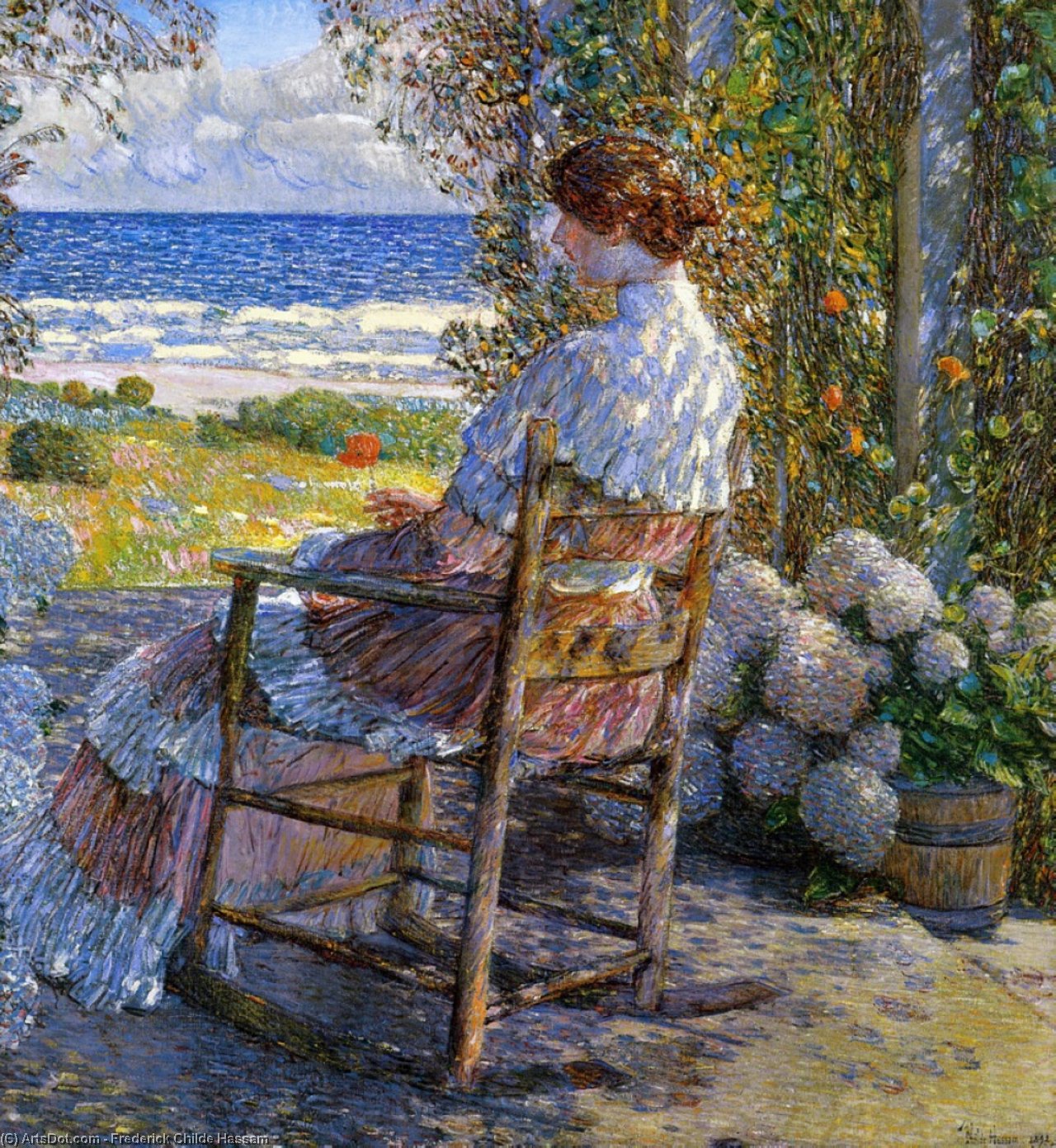
Frederick Childe Hassam’s serene Impressionist masterpiece captures a woman immersed in the tranquil beauty of the ocean—a captivating glimpse into American art history. Explore this evocative painting and bring its peaceful charm into your home.
Explore Frederick Childe Hassam's captivating Impressionist paintings (1859-1935). Known for vibrant city & coastal scenes, he pioneered American Impressionism and captured the essence of his time.
A Moment of Tranquility Captured: Exploring Frederick Childe Hassam’s “The Sea”
Frederick Childe Hassam's "The Sea," painted in 1892, stands as an exquisite embodiment of Impressionist ideals—a celebration of light, color, and the serene beauty of the natural world. More than just a depiction of a seaside vista, it’s a carefully crafted tableau that invites contemplation and evokes feelings of peace and solitude. Hassam's artistic vision wasn’t merely about accurately portraying what he saw; rather, he sought to convey an emotional response to his surroundings—a feat accomplished with remarkable subtlety through masterful brushwork and nuanced palette choices.
Composition and Visual Elements: Orchestrating Calmness
The painting’s composition immediately establishes a sense of tranquility. Dominating the canvas is a vast expanse of azure sky merging seamlessly into the ocean horizon, creating an unbroken band of color that draws the eye upwards. Within this expansive backdrop sits a woman seated comfortably in a chair—a focal point designed to draw the viewer's gaze inward. Two additional chairs flank her position, subtly reinforcing the feeling of intimacy and quiet reflection. Strategically placed elements like a potted plant on the right and a vase near the bottom left corner contribute to the overall atmosphere, injecting touches of organic life into the scene without disrupting the dominant mood. Hassam’s meticulous attention to detail ensures that every element contributes to the overarching impression of serenity.
Impressionist Technique: Light as Inspiration
Hassam's artistic style is firmly rooted in Impressionism, a movement characterized by its preoccupation with capturing fleeting moments of light and color. Unlike academic painters who prioritized precise realism, Impressionists aimed to depict sensory experience—the way light transforms surfaces and affects perception. Hassam achieves this goal through loose, expressive brushstrokes that blend pigments directly onto the canvas, resulting in textured surfaces and vibrant hues. The muted color palette—primarily blues and greens—further enhances the painting’s calming effect, mirroring the tonal qualities of the ocean and sky. Light plays a crucial role; dappled sunlight filters through the foliage of the plant and illuminates the woman's face, subtly animating the scene and conveying warmth amidst coolness.
Historical Context: The Dawn of American Landscape Painting
“The Sea” emerged during a period of significant artistic innovation in America—the late 1890s—marking a decisive shift away from European conventions toward a distinctly American aesthetic. Hassam’s work aligns with the broader trend of Impressionism's influence on American artists, who were increasingly drawn to capturing landscapes and urban scenes as subjects for their paintings. The painting reflects the burgeoning interest in plein air painting—working outdoors directly from nature—a practice championed by Impressionists like Claude Monet and Pierre-Auguste Renoir. Furthermore, it speaks to a broader cultural preoccupation with escapism and contemplation during the Victorian era, offering viewers a respite from societal pressures and an opportunity for aesthetic appreciation.
Symbolic Resonance: Quiet Contemplation and Connection to Nature
Beyond its visual beauty, “The Sea” possesses symbolic depth. The woman seated alone represents introspection and solitude—a deliberate choice by Hassam to convey a sense of inner peace and detachment from worldly concerns. The ocean itself symbolizes vastness, mystery, and the sublime—powerful forces that inspire awe and humility. By juxtaposing these elements, Hassam invites viewers to consider their relationship with nature and the importance of finding moments of stillness amidst the hustle and bustle of daily life. It’s a painting that lingers in the mind long after viewing, prompting reflection on themes of beauty, tranquility, and human connection.