A Winter Reverie in Union Square – An Impressionistic Masterpiece by Frederick Childe Hassam
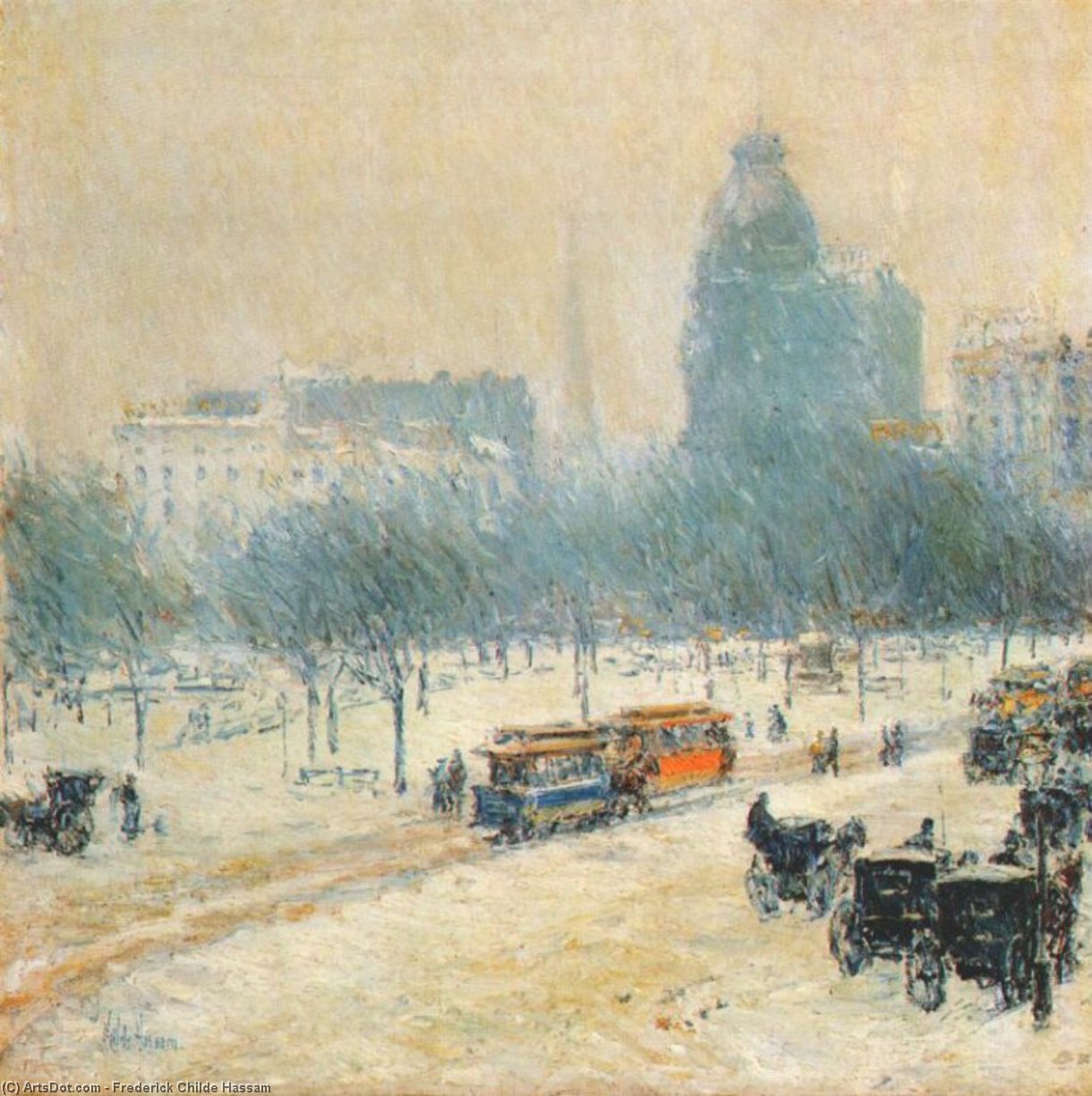
Frederick Childe Hassam’s “Winter in Union Square,” painted in 1892, is more than a depiction of a snowy urban scene; it's a poignant meditation on solitude, grandeur, and the subtle beauty found within the heart of American life. This evocative work, rendered with the signature loose brushstrokes of the Impressionist movement, transports us to a hushed Washington D.C. winter afternoon, capturing a fleeting moment of quiet contemplation amidst the bustle of city existence.
- Subject Matter: The canvas unfolds with a panoramic view of Union Square, dominated by the imposing Treasury Building – a symbol of American power and history – partially obscured by a blanket of fresh snow. Scattered figures, bundled in warm clothing, navigate the icy streets alongside horse-drawn carriages, creating a tableau of everyday urban life transformed by winter’s embrace.
- Style & Technique: Hassam's approach firmly anchors him within the American Impressionist movement. Rejecting the meticulous detail favored by academic painters, he prioritizes capturing the *impression* of light and atmosphere. The painting is characterized by short, broken brushstrokes – a wet-on-wet technique – that blend colors to create an ethereal effect, conveying the cold, shimmering quality of the snow and the diffused winter light.
The Painter’s Vision: Hassam's Unique Path
Born in Boston in 1859, Frederick Childe Hassam forged his own artistic path, diverging from the European tradition that dominated much of the late nineteenth century. Initially working as an illustrator for prominent American magazines like *Harper’s Weekly* and *Scribner’s Monthly*, he developed a keen eye for observation and storytelling – skills that would profoundly influence his later work. While a brief sojourn in Paris provided exposure to European artistic currents, Hassam ultimately found his inspiration in the landscapes and urban scenes of America. His paintings are not mere copies of reality; they are interpretations imbued with emotion and a distinctly American sensibility.
Symbolism and Emotional Resonance
“Winter in Union Square” resonates with a quiet melancholy, inviting viewers to contemplate the beauty of solitude and the passage of time. The muted color palette – dominated by blues, grays, and whites – reinforces this mood, while the blurred forms of the figures and carriages contribute to a sense of detachment and introspection. The grand scale of the Treasury Building subtly reminds us of America’s historical legacy, yet the scene's overall atmosphere suggests a moment of quiet reflection away from the pressures of public life. It is a painting that speaks to the human condition – our moments of peace amidst the chaos of existence.
Historical Context and Artistic Significance
Painted in 1892, “Winter in Union Square” reflects the burgeoning American Impressionist movement’s embrace of modern urban life. Hassam's work stands as a pivotal contribution to the development of American art, establishing a distinct national style that blended European influences with uniquely American themes and sensibilities. This piece exemplifies his ability to capture not just a visual scene but also the emotional essence of a particular moment in time – a testament to his artistic vision and enduring legacy.