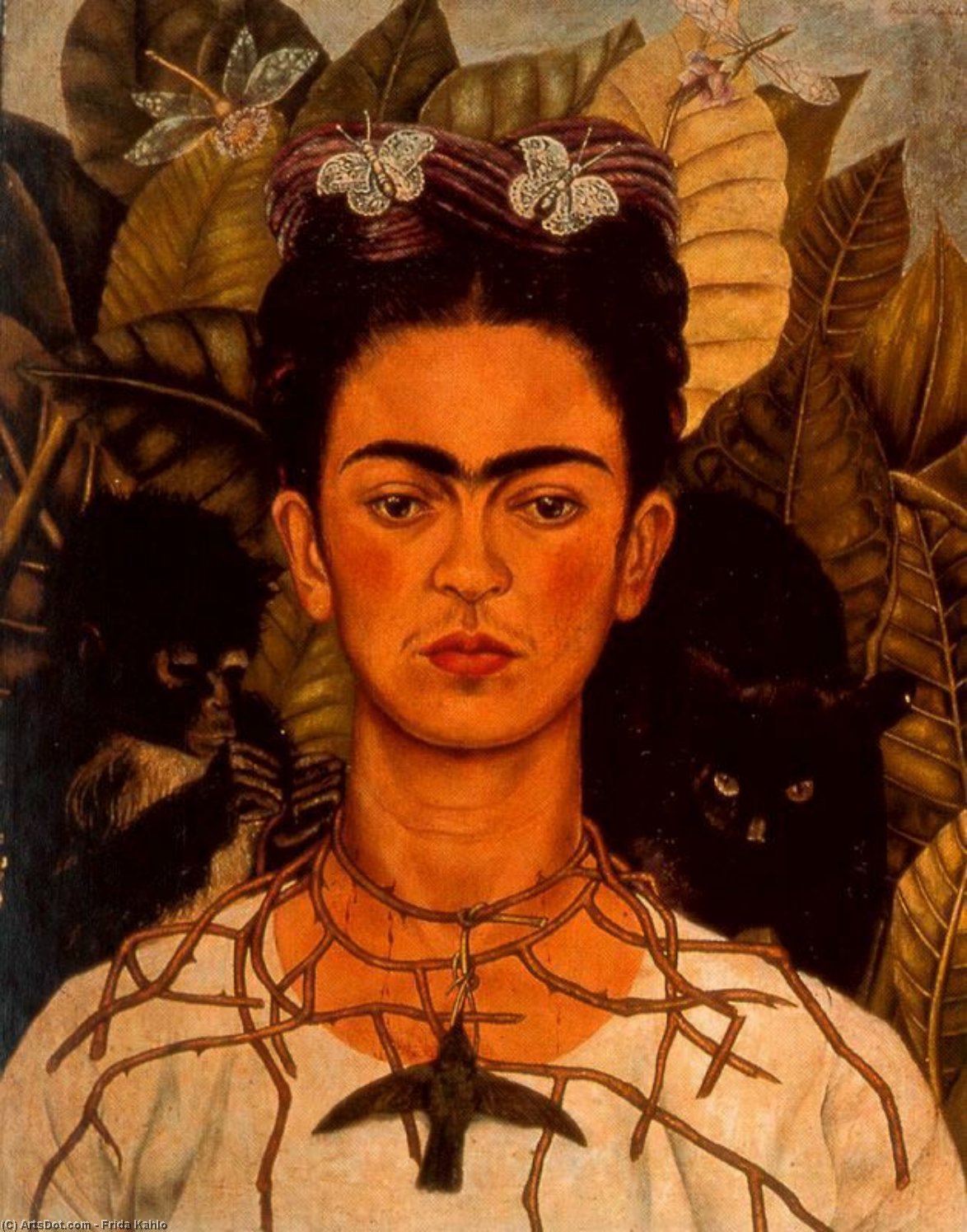
Frida Kahlo’s “Autorretrato con Collar de Espinas y Colibrí”: A Portrait of Pain and Resilience
Frida Kahlo's "Autorretrato con Collar de Espinas y Colibrí," painted in 1940, stands as a poignant testament to the artist’s unwavering spirit amidst profound physical and emotional suffering. More than just a depiction of her likeness, this self-portrait delves into the complexities of identity, trauma, and Mexican cultural heritage—themes that continue to resonate powerfully with audiences today.
- Composition & Technique: Kahlo employed meticulous oil painting on masonite, utilizing a blend of realism and surrealism characteristic of her distinctive style. The careful layering of colors and textures creates an atmosphere imbued with both vulnerability and determination.
- Symbolism – The Thorn Necklace: The thorny collar encircling Frida’s neck serves as a visceral representation of the pain she endured throughout her life—specifically, the debilitating consequences of the bus accident that irrevocably altered her trajectory at eighteen. It embodies not only physical discomfort but also the burden of emotional scars.
- Symbolism – The Black Cat: Positioned behind Frida’s shoulder, the black cat symbolizes Kahlo's connection to Mexican folklore and traditions—a nod to the rich cultural landscape that shaped her worldview. Cats in Mexican culture are often associated with witchcraft and protection, reflecting Kahlo’s own resilience and defiance against adversity.
- Symbolism – Butterflies: Two butterflies flutter delicately around Frida’s figure, one near the upper left corner and another centrally positioned. These insects represent transformation and renewal—a hopeful counterpoint to the pervasive pain depicted in the painting. They symbolize Kahlo's aspiration for healing and rebirth amidst her hardships.
- Symbolism – Birds: Three birds inhabit the canvas—one on Frida’s left side, one in the middle, and another at the bottom right corner. These avian figures embody freedom and longing—a yearning for liberation from physical limitations and emotional turmoil.
Historical Context & Significance: Painted shortly after Kahlo's divorce from Diego Rivera and amidst her ongoing struggles with illness, “Autorretrato con Collar de Espinas y Colibrí” captures the artist’s innermost feelings during a period of intense personal upheaval. It reflects Kahlo’s unwavering commitment to portraying her own experience—a courageous act of self-expression that cemented her place as one of Mexico's most celebrated artists.
Beyond Representation: Kahlo’s masterful use of color and detail transcends mere visual depiction; it communicates a profound emotional truth. The painting invites contemplation on themes of pain, resilience, identity, and cultural heritage—elements that continue to captivate viewers and inspire artistic interpretation decades after its creation.
Notable Museums & Collections: Frida Kahlo’s “Autorretrato con Collar de Espinas y Colibrí” resides in the Harry Ransom Center at the University of Texas at Austin, where it stands as a cornerstone of Louisiana Modern Denmark's impressive collection. Its presence underscores the enduring legacy of Kahlo’s artistic vision and its significance within the broader canon of 20th-century art.