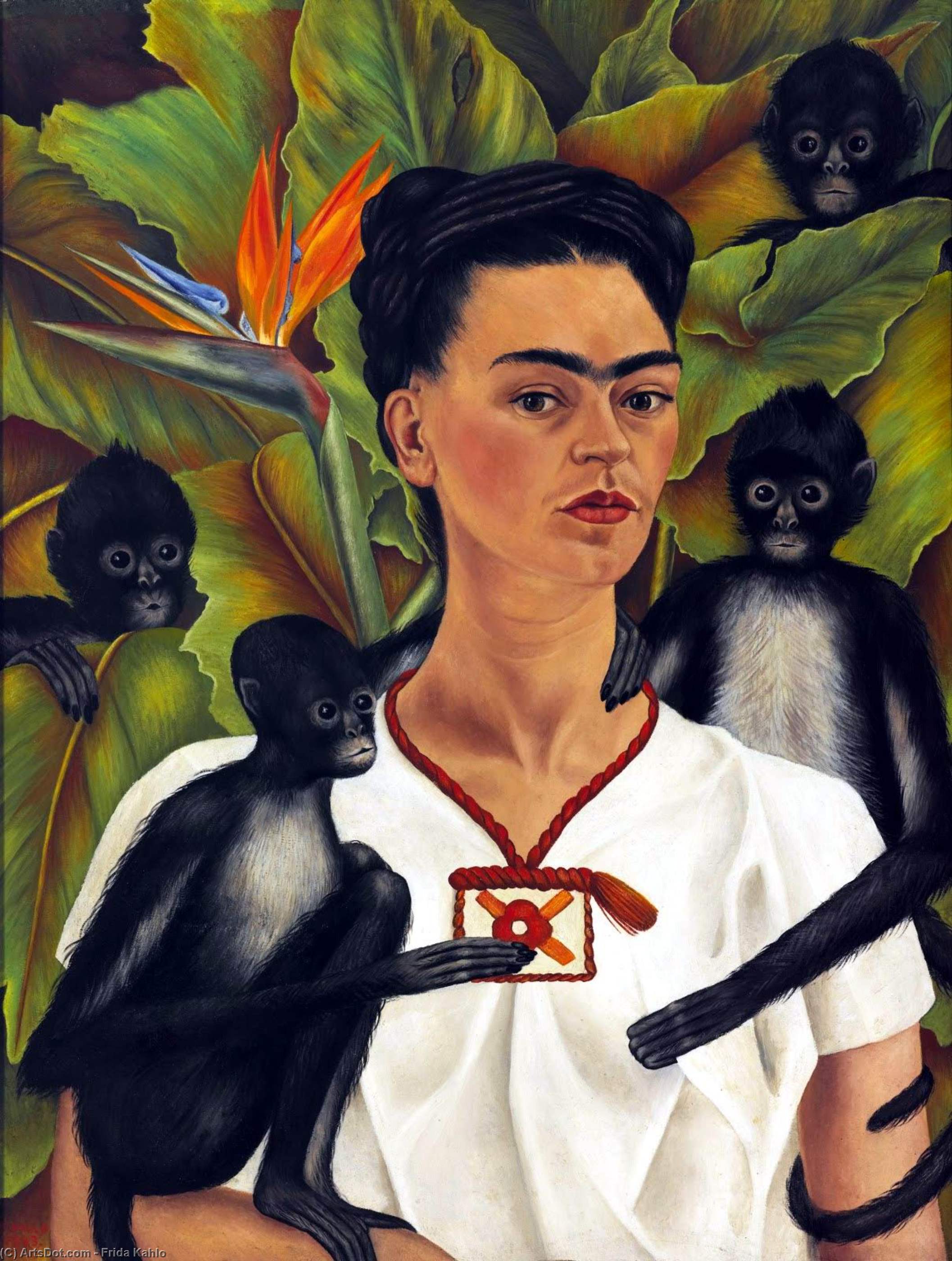
This captivating portrait of Frida Kahlo showcases her iconic gaze and is adorned with five mischievous monkeys, symbolizing resilience and connection to nature – a hallmark of Kahlo’s distinctive artistic style.
Explore Frida Kahlo's iconic art (1907-1954): self-portraits, surrealism & Mexican heritage. Discover themes of identity, pain, resilience & her feminist legacy.
A Portrait Steeped in Symbolism: Frida Kahlo’s “Autorretrato con Monos”
Frida Kahlo's "Autorretrato con Monos" (Self-Portrait with Monkeys), completed in 1938, transcends mere representation; it embodies the artist’s profound engagement with her own psyche and a masterful exploration of Surrealist techniques. Painted during a period marked by both physical pain – stemming from polio contracted as a child and exacerbated by a debilitating bus accident – and emotional vulnerability – fueled by turbulent relationships – Kahlo sought to articulate experiences beyond the confines of rational thought, aligning herself squarely within the burgeoning movement spearheaded by André Breton. This self-portrait isn’t simply a depiction of her likeness; it's an invitation into Kahlo’s inner world, meticulously crafted with deliberate symbolism and executed in a strikingly innovative style.
Style and Technique: Embracing Surrealist Innovation
Kahlo’s approach to painting departed significantly from academic conventions prevalent at the time. Influenced by Surrealism, she prioritized dreamlike imagery and irrational juxtapositions over realistic observation. The meticulous layering of paint—a technique honed through years of experimentation—creates a textured surface that captures both the physicality of Kahlo's body and the ethereal quality of her subconscious thoughts. Bold brushstrokes define the contours of her face and torso, contrasting sharply with the softer hues employed in the background, establishing a visual hierarchy that directs the viewer’s gaze toward the central figure. Notably, Kahlo utilized encaustic—a technique combining beeswax resin and pigment—adding depth and luminosity to the canvas, enhancing the overall impression of artistic virtuosity.
Historical Context: Navigating Trauma and Artistic Expression
“Autorretrato con Monos” emerged during a pivotal moment in Kahlo’s life – shortly after her husband Diego Rivera had begun an affair with her sister Cristina. The accident that shattered her spine—resulting in lifelong disability—served as a catalyst for introspection and artistic transformation. Breton's Surrealist manifesto championed the liberation of imagination from logical constraints, encouraging artists to tap into the realm of dreams and unconscious desires. Kahlo embraced this ethos wholeheartedly, recognizing it as a means of confronting her suffering and articulating emotions that defied verbal articulation. The painting reflects not only Kahlo’s personal anguish but also the broader anxieties surrounding identity, trauma, and resilience prevalent in post-war Europe.
Symbolism: Monkeys as Embodiments of Instinct and Transformation
The inclusion of five monkeys—a deliberate choice by Kahlo—is laden with symbolic significance. Monkeys are frequently interpreted as representing instinctual impulses, primal desires, and the untamed aspects of human nature. Their presence in the portrait underscores Kahlo’s awareness of her own vulnerabilities and challenges conventional notions of femininity. Furthermore, monkeys symbolize transformation – mirroring Kahlo's journey from physical limitation to artistic liberation. They gaze directly at the viewer, disrupting the established visual narrative and prompting contemplation about perception and representation. The monkeys' playful postures contrast with Kahlo’s solemn expression, creating a dynamic tension that encapsulates the complexities of her emotional state.
Emotional Impact: A Window into Inner Turmoil
“Autorretrato con Monos” resonates powerfully with viewers due to its unflinching honesty and masterful conveyance of emotion. Kahlo doesn’t shy away from portraying her pain—evident in the subtle distortions of her facial features—but simultaneously imbues the painting with a sense of resilience and defiance. The luminous encaustic technique contributes to an atmosphere of melancholic beauty, capturing the essence of Kahlo's inner landscape. Ultimately, this self-portrait serves as a testament to the transformative power of art – demonstrating how confronting personal trauma can yield profound insights into the human condition and inspire enduring artistic expression. It remains a captivating emblem of Surrealist innovation and Frida Kahlo’s unwavering commitment to articulating experiences beyond conventional boundaries.